

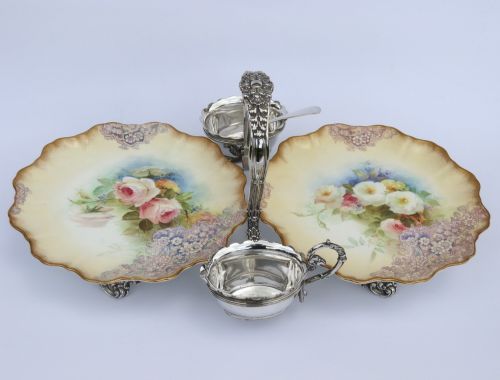


Silver Centrepiece Stand
When you search for a silver centrepiece stand, you are looking at heavy table ornaments designed to anchor a formal dining room.
Silver Centrepiece Stand
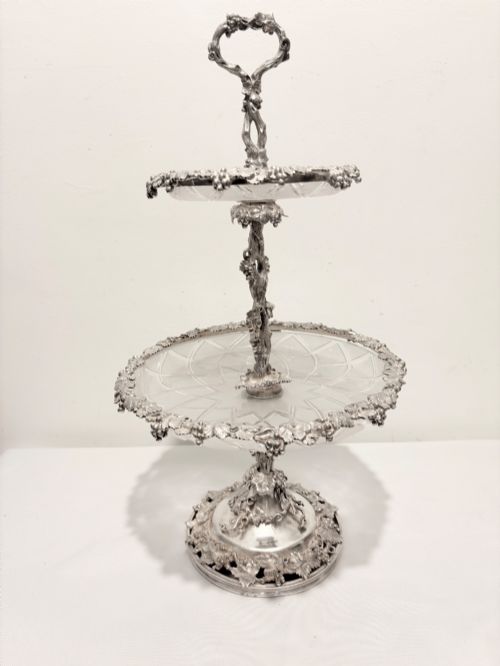
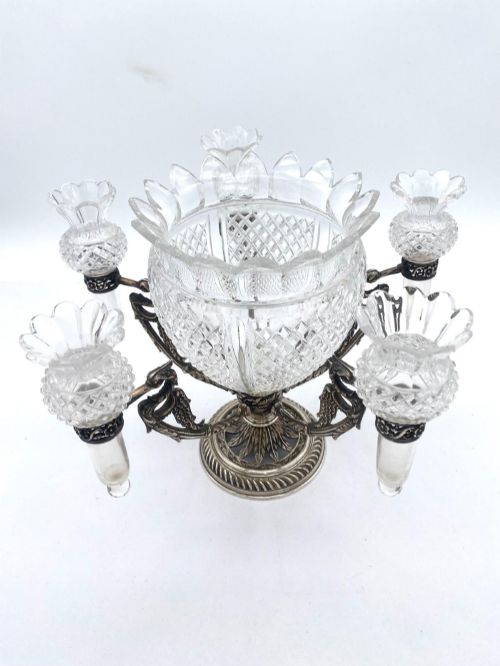
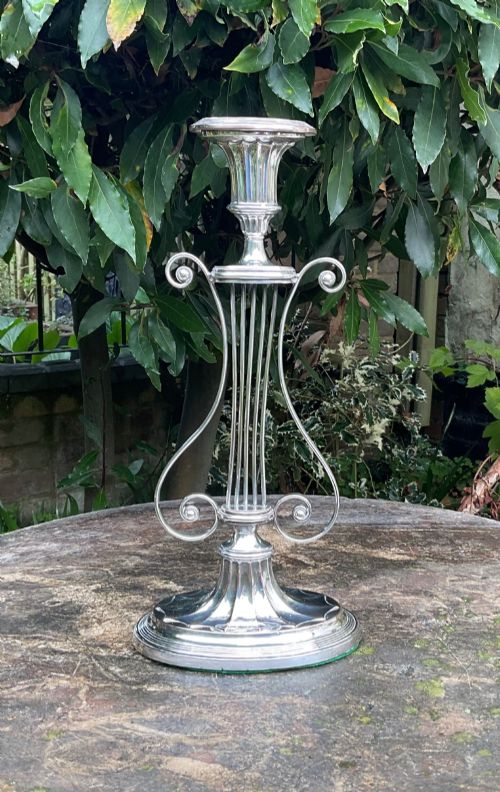
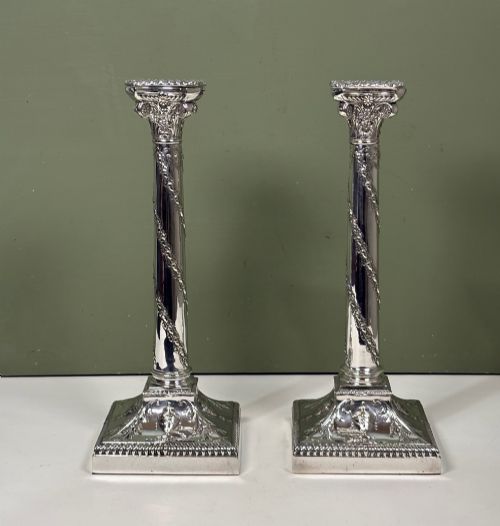
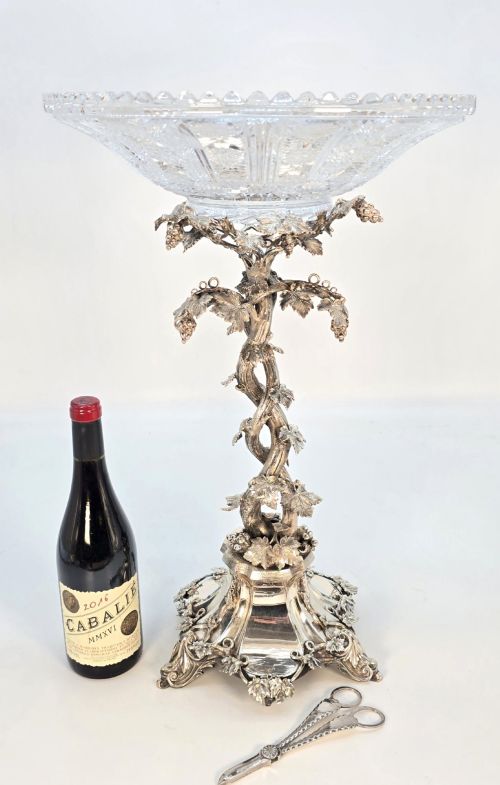
A silver centrepiece stand brings height and focal weight to a dining table, often incorporating bowls, glass inserts, or branching arms for display. The examples found here run from Georgian stands through Victorian and Edwardian iterations up to Art Deco designs, taking forms like epergnes, pedestals, and cruet sets.
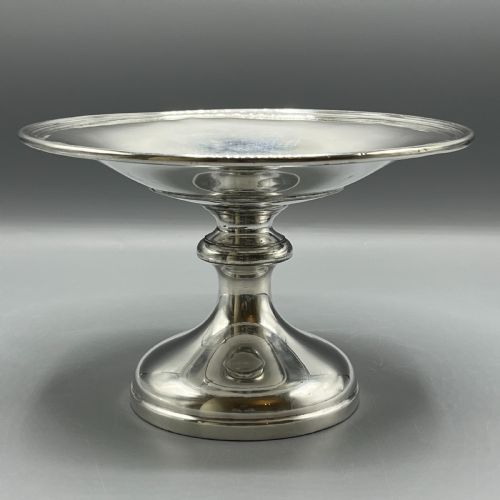
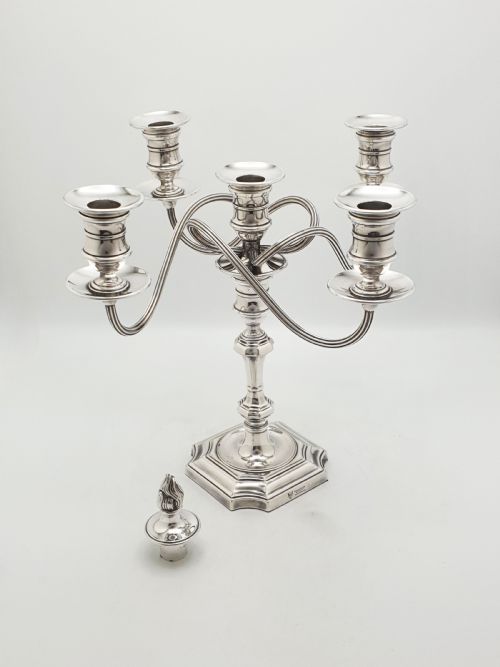
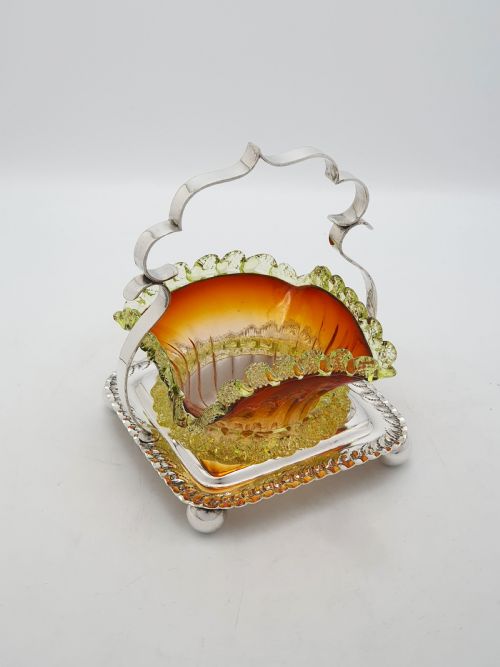
The most common versions met on this page are Edwardian and nineteenth-century silver plated stands, frequently paired with cut glass, amber glass, or vaseline glass inserts. Alongside these formal centrepieces, the selections include matching candelabra, fruit bowls, and tazzas designed to coordinate with the central display piece.
How they were made
Many of these pieces employ silver plate over a base metal, utilising techniques like Old Sheffield Plate or electroplating to achieve the lustre of solid silver at a different scale. Sterling silver and Continental silver standards also appear across the listings, shaped through casting, piercing, and wirework.
Makers integrated blown, cut, and etched glass into frames, mounting vessels of crystal, porcelain, or vaseline glass directly into metal collars and stands. Structural stability demanded weighted bases or robust pedestals to support multi-light branches and heavy glass bowls.
Silver Centrepiece Stand Retail Price Guide 2026
Typical asking prices for silver centrepiece stand among the pieces listed under this phrase on Sellingantiques today, from the lower quarter to the upper quarter. They describe what is for sale here now, not the wider market.
Continental silver fighting cockerels stand ready to guard the dining table.
What varies in quality
Quality rests in the crispness of the chased or cast ornamentation and the thickness of the silver deposition over the base metal. Superior examples retain their original glass inserts without chips, matching the exact contours of the silver mounts.
Design ambition dictates the upper tier of the range, where fluid Art Nouveau whiplash lines or complex multi-light candelabra frames show superior hand-finishing. Maker attributions to known firms like Walker and Hall or WMF also separate standard production items from masterworks.
Walker and Hall·Doulton Burslem·Mappin and Webb·Royal Worcester·Garrard and Co Ltd
The Silver Centrepiece Stand Glossary
- Epergne
- A large ornamental centrepiece featuring a central bowl with multiple hanging baskets or branching horns for fruit and flowers. These pieces often combine silver frames with coloured cut glass.
- Cruet set
- A matched collection of glass bottles mounted in a silver or silver plated stand for holding condiments, vinegar, and oil at the table. They frequently include handle frames for easy transport.
- Tazza
- A shallow ornamental bowl or dish raised on a high foot and a single pedestal. They function as display stands for fruit or small sweets on a dining table.
- EPNS
- Electroplated nickel silver, a common base metal method introduced in the nineteenth century for coating a durable alloy with a thin layer of pure silver.
Silver Centrepiece Stand: Frequently Asked Questions
What is a silver centrepiece stand used for?
These stands act as the visual anchor of a dining table, holding fruit, flowers, or sweetmeats during formal meals. They elevate the arrangement to allow conversation underneath.
Larger versions with branches also served to illuminate the table when fitted with candles.
How do I clean silver plate?
Silver plate requires gentle treatment with non-abrasive cloths and dedicated silver creams to preserve the underlying metal layer. Harsh scrubbing wears away the plating over time.
Glass inserts should be removed and washed separately in warm soapy water.
Are the glass bowls original?
Many pieces retain their period glass liners, which match the exact contours and collar dimensions of the metal frame. Cut glass, vaseline glass, and etched crystal are typical companions to these stands.
Replacements do occur, so inspecting how the glass sits in the mount helps determine period accuracy.
How do I date a silver plated stand?
Stylistic cues such as Neoclassical swags, Victorian floral chasing, or Art Nouveau whiplash curves provide the primary chronological markers. Maker marks stamped into the metal base offer further reference points.
Base metal techniques like Old Sheffield Plate point firmly to earlier manufacturing eras.