

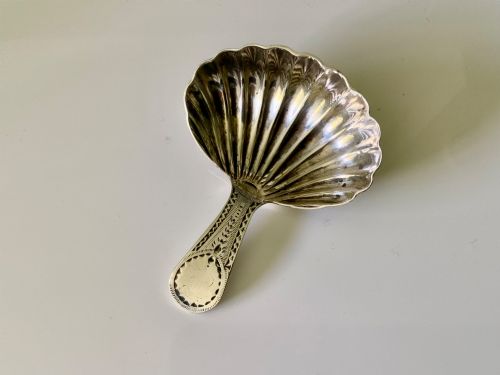
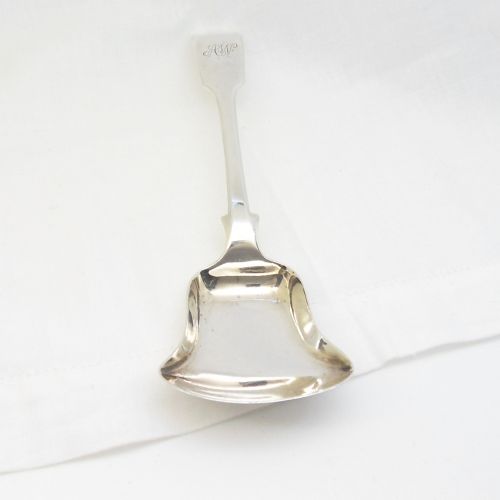
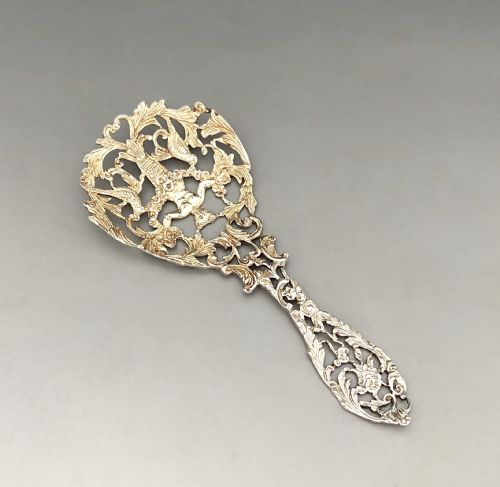

Silver Caddy Scoop Spoon
These silver caddy scoop spoon examples measure loose tea leaves and bring tactile history directly to the afternoon tea tray.
Silver Caddy Scoop Spoon
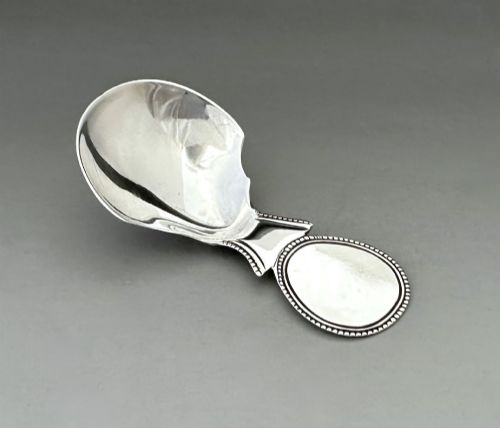
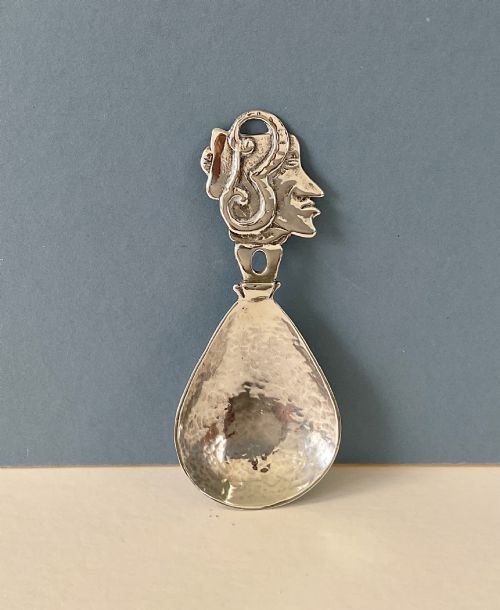
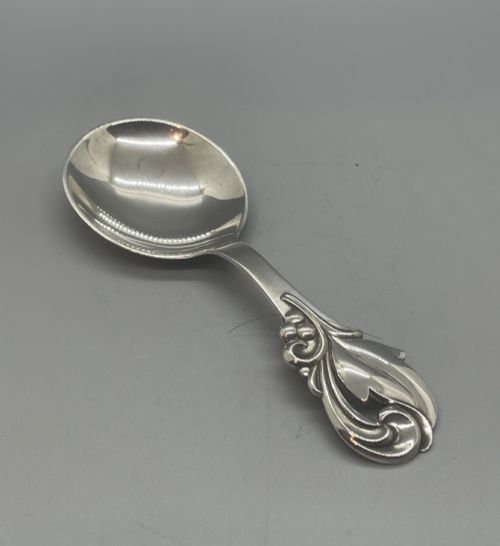
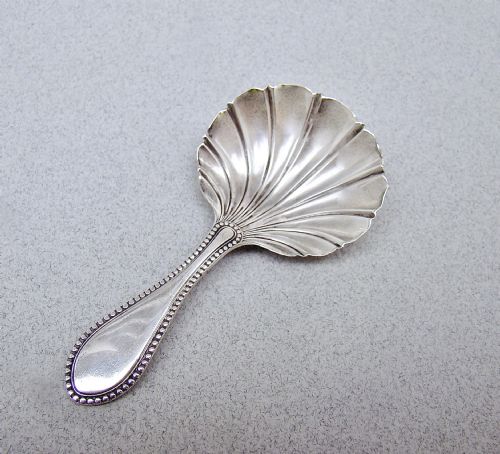
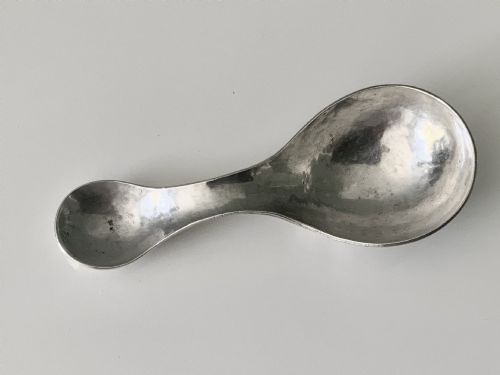
A silver caddy scoop spoon serves as a small utensil specifically designed to measure dry tea leaves from a storage caddy into a pot. When searching for this phrase, a buyer meets examples spanning the eighteenth, nineteenth, and twentieth centuries, originating from English, Irish, and Danish makers.
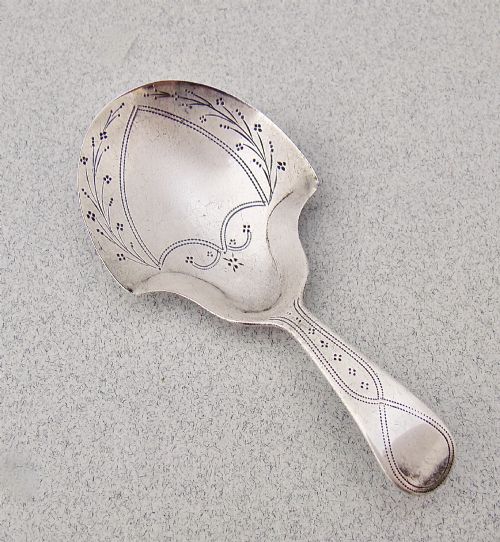
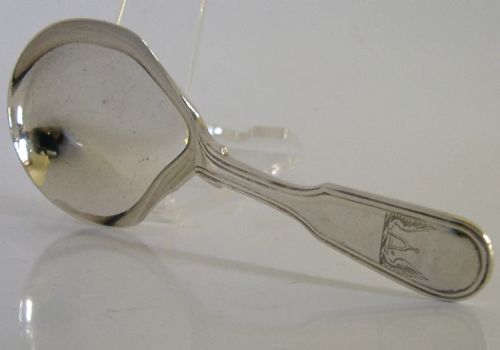
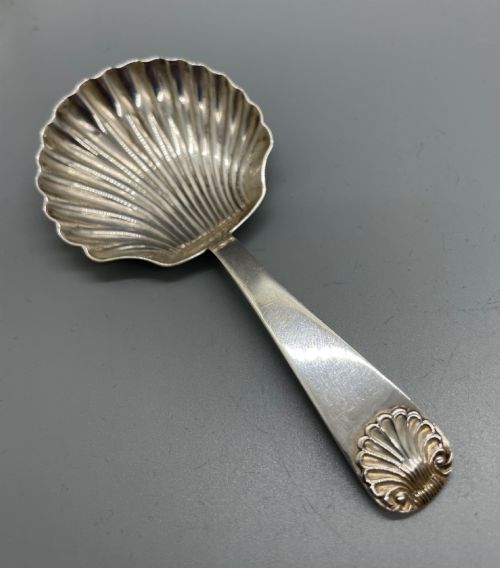
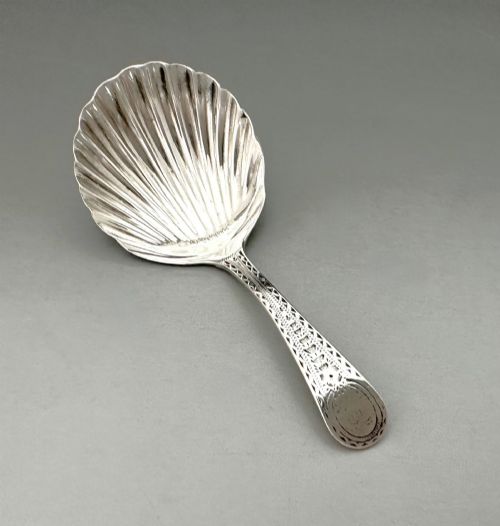
The most common version on this page is the Georgian sterling silver scoop, often featuring specialised bowl shapes like vine leaves, shells, or jockey caps alongside engraved handles. Victorian and Edwardian interpretations follow closely, maintaining utility while introducing distinct regional hallmarks from Birmingham, Sheffield, London, and Newcastle.
Later twentieth-century variants introduce Arts and Crafts, Art Nouveau, and Danish Modern aesthetics, occasionally incorporating enamel or parcel-gilt finishes. Collectors encounter both plain functional bowls and elaborate novelty designs intended for display alongside tea collectables.
How they were made
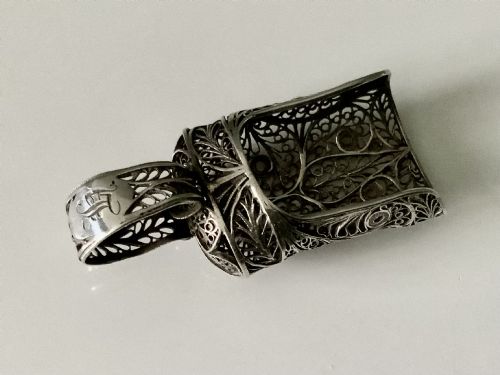
Silversmiths constructed these pieces predominantly from sterling silver, utilising hammering, casting, and piercing techniques to shape bowls and handles. Parcel-gilt and silver-gilt surfaces appear frequently, applying a thin layer of gold to the interior of the silver bowl to prevent corrosion from tannin in tea leaves.
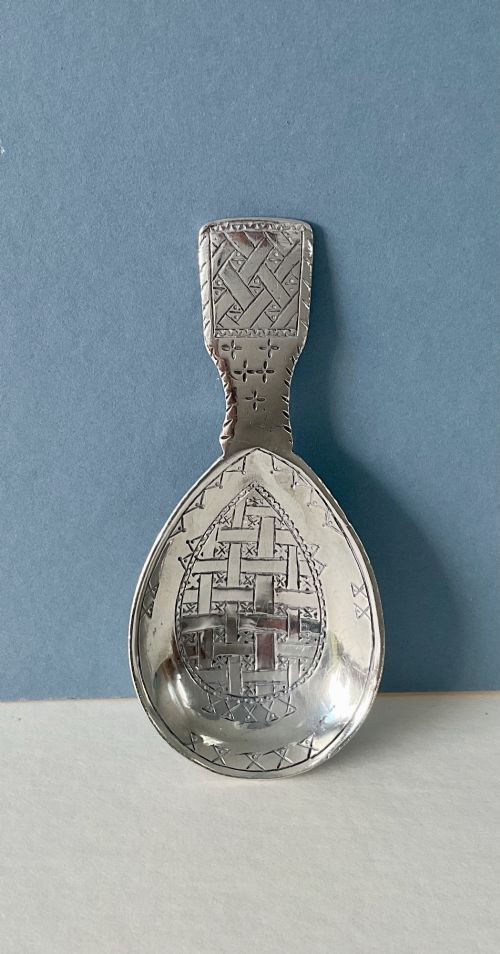
Enamel work appears on select twentieth-century examples, fusing coloured glass powder to the silver base under high heat. Hand-engraving decorates many handles and bowls, adding floral motifs or family crests using sharp gravers.
Silver Caddy Scoop Spoon Retail Price Guide 2026
Typical asking prices for silver caddy scoop spoon among the pieces listed under this phrase on Sellingantiques today, from the lower quarter to the upper quarter. They describe what is for sale here now, not the wider market.
Listings include sterling silver pieces from the Georgian, Victorian, and Edwardian periods, alongside twentieth-century Arts and Crafts, Art Nouveau, and Danish Modern designs.
What varies in quality
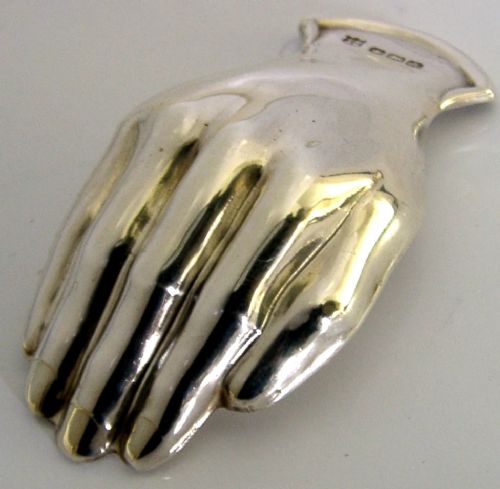
Quality in a silver caddy scoop spoon rests upon the crispness of the maker's stamp, the depth of the hand-engraving, and the integrity of the casting. Pieces by noted silversmiths exhibit superior weight, balanced proportions, and precise detailing in novelty forms such as jockey caps or hands.
Wear patterns tell part of the story, as heavy polishing over generations can soften engraved lines and thin the silver of the bowl. Original gilding that remains intact inside the bowl distinguishes better-preserved examples from those stripped by aggressive cleaning.
Joseph Willmore·John Walton·William Comyns·Mappin & Webb·George Unite·Samuel Pemberton·Georg Jensen·David Andersen·Martin Hall & Co·William Neale
The Silver Caddy Scoop Spoon Glossary
- Sterling silver
- An alloy containing ninety-two point five percent silver by mass, with the remainder consisting of copper or other metals. This standard guarantees the durability required for daily use on the tea table.
- Silver-gilt
- Sterling silver that has been coated with a thin layer of gold on its surface. This technique protects the silver from tarnishing when exposed to damp tea leaves.
- Hallmark
- A series of official marks stamped onto silver items to indicate the standard of purity, the assay office, and the year of manufacture. These symbols allow collectors to trace the exact origin of a piece.
- Parcel-gilt
- An object where only specific parts, such as the interior of the bowl, are gilded while the rest remains plain silver. This creates a contrasting two-tone effect.
- Novelty spoon
- A spoon shaped to resemble an object or figure, such as a hand, a jockey cap, or an acorn, rather than following a standard utilitarian form.
Silver Caddy Scoop Spoon: Frequently Asked Questions
How do I date a silver caddy spoon?
Dating a silver caddy spoon involves reading the hallmarks stamped onto the metal. These marks typically include a date letter, a city mark, and a maker's mark.
Style also provides clues, as Georgian pieces often feature bright-cut engraving, while Arts and Crafts or Art Deco examples show distinct twentieth-century forms. Comparing these details against official assay records reveals the year of production.
Why are some caddy spoons gilt?
Silver-gilt or parcel-gilt caddy spoons feature a thin layer of gold applied over the silver surface. This gold plating protects the underlying silver from reacting with the natural acids and tannins found in tea leaves.
Many Georgian and Victorian spoons utilised this technique inside the bowl to prevent staining and corrosion. It also added a decorative contrast to the polished exterior.
How should I display my caddy spoon?
Silver caddy spoons store safely in shallow display cases, flatware rolls, or specialised wall-mounted cabinets lined with tarnish-resistant fabric. Their compact size allows collectors to group multiple examples together by period or maker.
Avoiding direct sunlight and high humidity helps preserve the surface finish and any original gilding or enamel work.