



Silver Cabochon Pendant
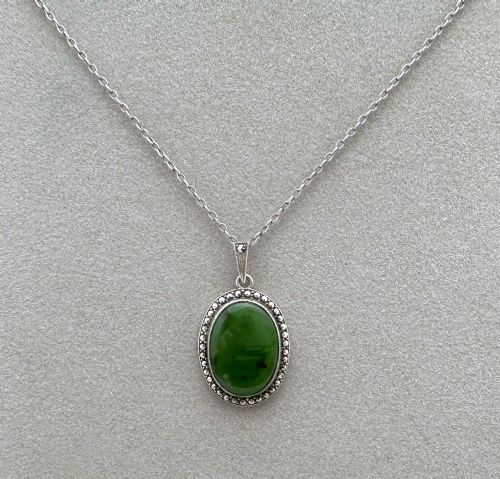
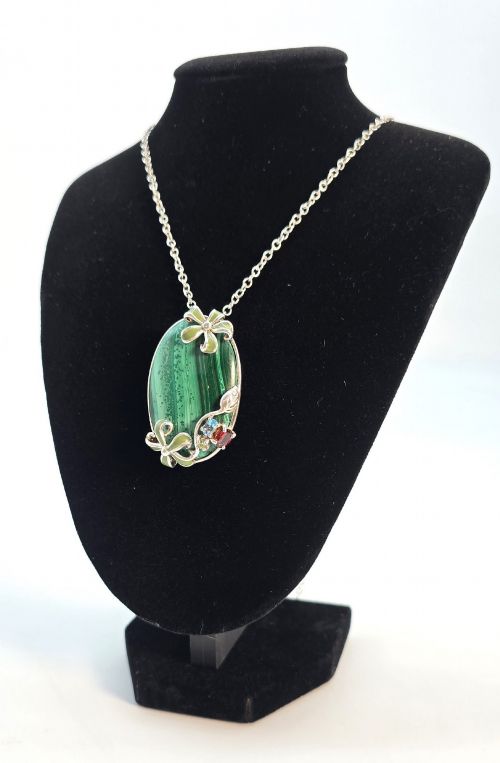
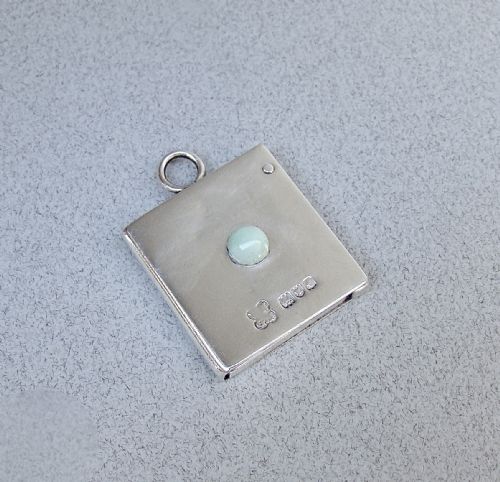
A silver cabochon pendant holds a polished, domed stone in metalwork spanning Victorian, Edwardian, and Arts and Crafts periods.

Silver Cabochon Pendant
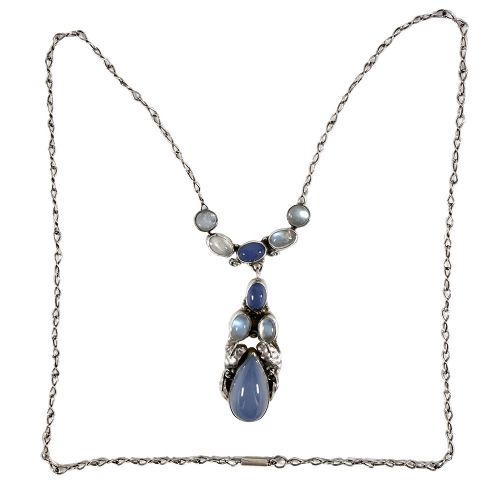
A silver cabochon pendant combines a smooth, convex-cut gemstone with silver framing, appearing across nineteenth-century and twentieth-century designs.
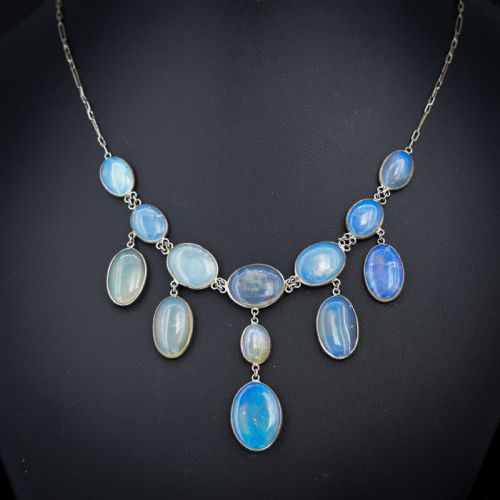
The search phrase points directly to wearable ornaments where moonstone, opal, turquoise, and chalcedony take centre stage without traditional faceting.
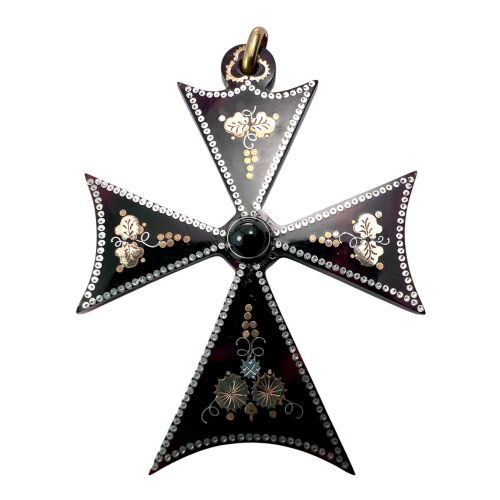
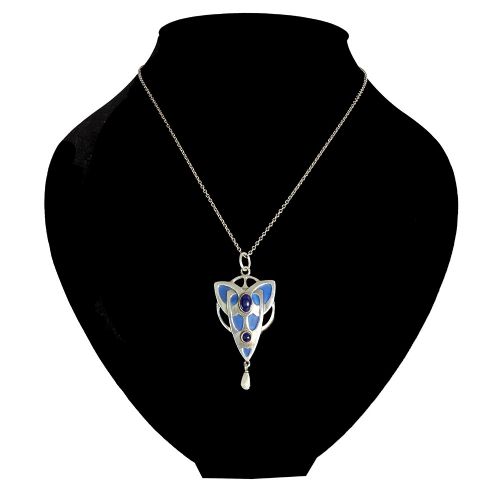
Examples on this page draw heavily from Arts and Crafts, Art Nouveau, and Edwardian aesthetics, frequently incorporating gold elements or enamel alongside the central stone.
How they were made
Goldsmiths and silversmiths shaped metal by hand, casting or hammering silver to secure unfaceted cabochon stones in bezels.
Makers integrated natural gems like moonstone, opal, and turquoise, often supplementing silver with gold highlights, pearls, and vitreous enamel.
Materials include silver, gold, enamel, diamonds, and pearls combined within Arts and Crafts and Art Nouveau frameworks.
What varies in quality
Quality rests on the depth of the metalwork and the visual harmony between the silver setting and the cabochon gemstone.
Attribution to known makers or distinctive design movements elevates certain pieces, separating standard production from exceptional studio craft.
W and G Neal·The Gaskins·Mary Thew·WH Haseler·Liberty and Co·Dorrie Nossiter·George Hunt·John Paul Cooper·Amy Sandheim·Georg Jensen·Levinger and Bissinger·Theodor Fahrner
The Silver Cabochon Pendant Glossary
- Cabochon
- A gemstone shaped and polished with a convex, rounded surface rather than faceted edges. This cut highlights the natural lustre of stones like moonstone and opal.
- Bezel setting
- A collar of metal that wraps around the perimeter of a gemstone to hold it securely in place. It forms a clean, smooth border typical of silver pendants.
- Festoon necklace
- A decorative chain arrangement featuring draped links, swags, or suspended drops. Edwardian and Arts and Crafts jewellers utilised this layout extensively.
- Silver gilt
- Silver that has been coated with a thin layer of gold. This technique adds warmth to the metalwork while retaining a silver base.
Silver Cabochon Pendant: Frequently Asked Questions
What is a cabochon stone?
A cabochon is a gemstone cut with a smooth, rounded top and a flat or slightly curved base. This style lacks facets, allowing light to pool across stones like moonstones and opals.
Craftsmen favoured this finish historically to display the interior play of colour or chatoyancy within natural minerals.
How do I date a silver pendant?
Dating relies on stylistic markers, hallmarks, and the specific cut and setting of the stones. Arts and Crafts and Art Nouveau pieces display characteristic hand-wrought textures and organic motifs.
Comparative analysis of maker marks and accompanying chain types helps narrow down the decade of manufacture.
Are these pendants handmade?
Many examples on this page originate from the Arts and Crafts and Art Nouveau movements, where handcrafting was a central philosophy. Artisans hammered the silver and set stones individually.
Studio jewellers often left subtle tool marks that distinguish their work from mass-produced items.
What stones are used most?
Moonstone, opal, and turquoise dominate these listings, frequently paired with chalcedony, amethyst, and pearls. These minerals suit the rounded cabochon profile.
Enamel work and gold accents often complement the primary gemstones in Edwardian and period pieces.