


Silver Bottle Stopper
A silver bottle stopper secures fine spirits and scents while bringing small, tactile moments of Victorian and Edwardian wit to the table.
Silver Bottle Stopper
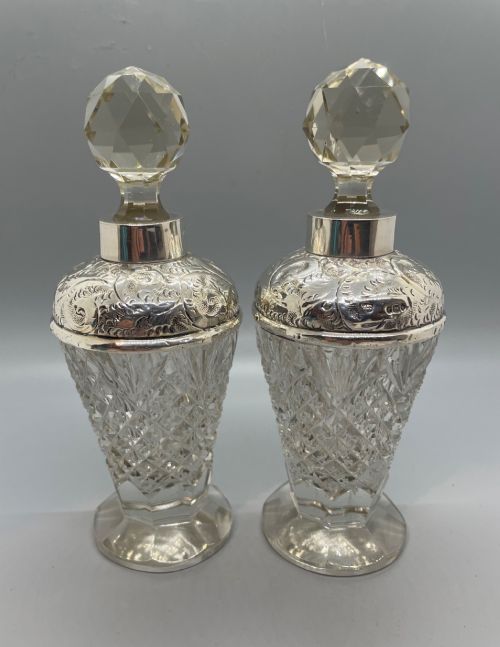
A silver bottle stopper represents a small yet characterful intersection of metalwork and glassware, designed to seal decanters, perfume bottles, and spirit jugs. The search phrase covers both dedicated stoppers sold independently and complete mounted vessels where the stopper forms an integral part of the design.
The versions most commonly met span the Victorian, Edwardian, and Art Deco periods, ranging from plain sterling silver collars on cut glass to whimsical novelty figures and figural animals. Makers applied these mounts to everything from heavy crystal decanters to delicate scent bottles.
Origins stretch across English workshops, Scottish thistle designs, and continental European pieces, utilising materials that combine functional cork with decorative silver and glass.
How they were made
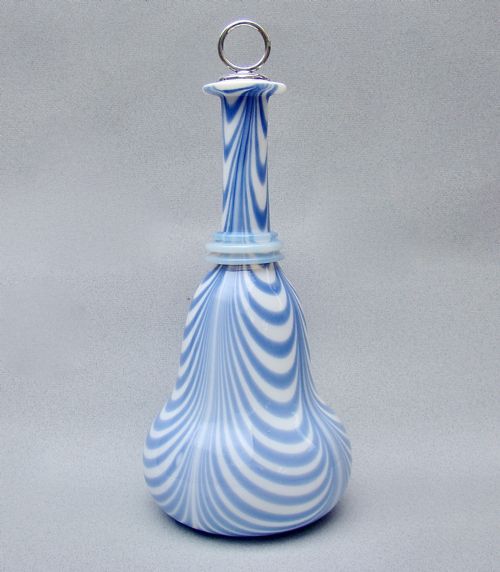
Craftsmen joined sterling silver, silver plate, and old Sheffield plate to cut glass, crystal, and occasionally Nailsea glass or Bristol blue glass. The metal portions often involved casting, chasing, or enamelling, particularly on novelty stoppers shaped like figures or animals.
Cork formed the essential lower plug portion of independent bottle stoppers to ensure a tight seal within the neck of the wine or spirit bottle. Silver collars on decanters were secured firmly around glass mouths, frequently paired with matching stoppers or locking mechanisms.
Victorian makers occasionally turned wine bottle stoppers into tiny stages for drinking revellers, sandwich board cats, and Scottish thistles.
What varies in quality
The integrity of the original pairing matters significantly; matching stoppers that retain their original cork and fit flush to the decanter neck elevate a piece above assembled sets with replacement parts.
Karl Palda·Hukin & Heath·Betjemann Brothers·Mappin & Webb·Joseph Angell·Charles Reily and George Storer·Asprey
The Silver Bottle Stopper Glossary
- Sterling Silver
- A silver alloy containing 92.5 percent pure silver by mass and 7.5 percent other metals, usually copper. This standard appears frequently in hallmarked collars and stoppers.
- Cut Glass
- Glass shaped and patterned by grinding and polishing wheels, creating sharp facets that catch the light. It forms the body of many decanters listed here.
- Old Sheffield Plate
- A composite material made by fusing a thin sheet of silver to a thicker copper base. It predates modern electroplating.
- Hallmark
- An official stamp applied by an assay office indicating the purity of the metal, the maker, and the year of testing. These marks help date the silver mounts accurately.
- Novelty Stopper
- A decorative bottle closure cast in a specific pictorial form, such as an animal, a human figure, or a thistle. Victorian makers produced these in striking detail.
Silver Bottle Stopper: Frequently Asked Questions
Are these bottle stoppers watertight?
Many historical stoppers rely on tapered cork or ground glass to create a friction fit inside the bottle neck. While they hold spirits effectively for serving, older corks can shrink or dry out over time.
For practical modern use, checking the condition of the underlying cork or adding a thin replacement layer ensures a secure seal without damaging the antique mount.
How do I date a silver mount?
Dating relies heavily upon the stamped hallmarks found on the sterling silver collar or stopper body. These official assay marks typically include a maker's mark, a standard fineness mark, and a date letter.
Style also provides strong clues, moving from ornate Victorian cast figures to geometric Edwardian collars and stylized Art Deco enamel work.
Can I clean the silver safely?
Silver components benefit from gentle cleaning with a soft microfibre cloth and a mild, non-abrasive silver polish. Care must be taken to avoid getting polish onto porous materials like cork or delicate glass enamels.
For pieces with old Sheffield plate or thin silver plating, aggressive rubbing should be avoided to prevent wearing through the top layer of silver.
Did these stoppers come with decanters?
Some stoppers were sold as independent novelty items meant to fit standard wine and spirit bottles of the era. Others formed an exact matched pair with a specific cut glass or crystal decanter.
When buying, it is worth observing whether the stopper fits the neck snugly and shares the same period style and wear patterns as the glass vessel.