




Silver and Glass Servers
Silver and glass servers bring together heavy metal mounts and brilliant vessels to grace the dining table with functional elegance.
Silver and Glass Servers
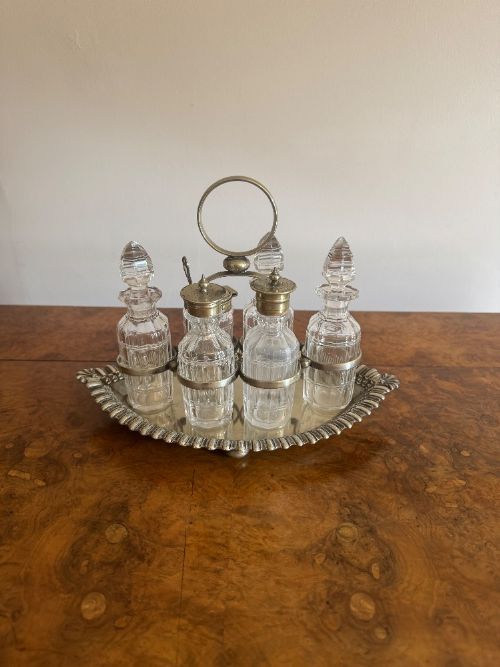
Silver and glass servers combine clear or coloured vessels with metal mountings to hold and dispense wine, condiments, butter, and cheese at the table. These functional objects range from tall claret jugs and whisky noggins to multi-bottle cruet sets and butter dishes with glass liners.
Edwardian and Victorian pieces dominate the selection, showing the heavy influence of nineteenth-century dining rituals that required specialised vessels for every course. Art Nouveau, Jugendstil, and Art Deco examples also appear, bringing floral curves and geometric lines to serveware.
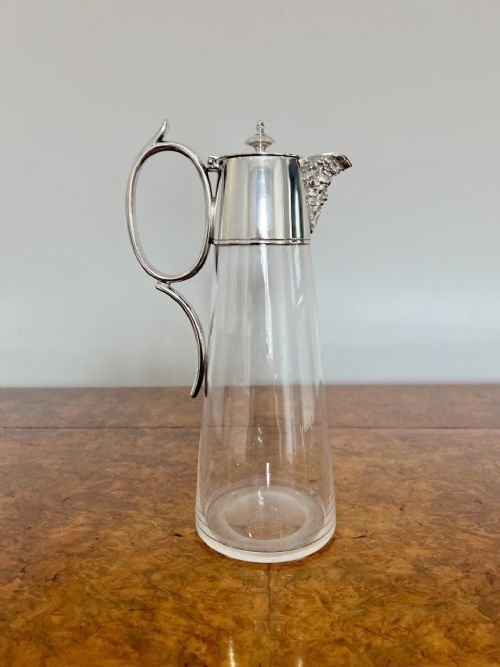
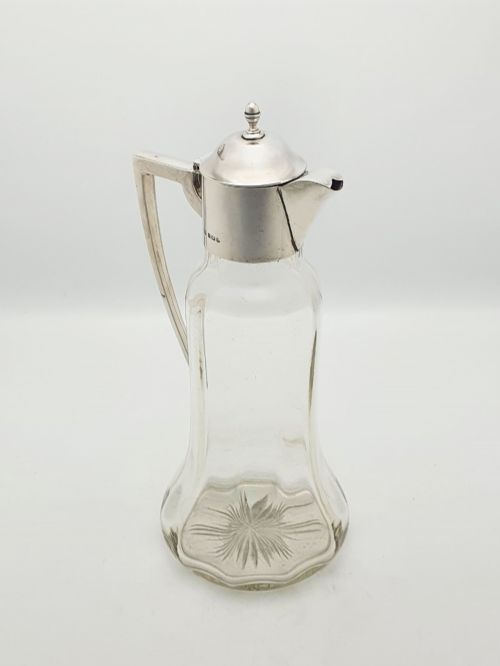
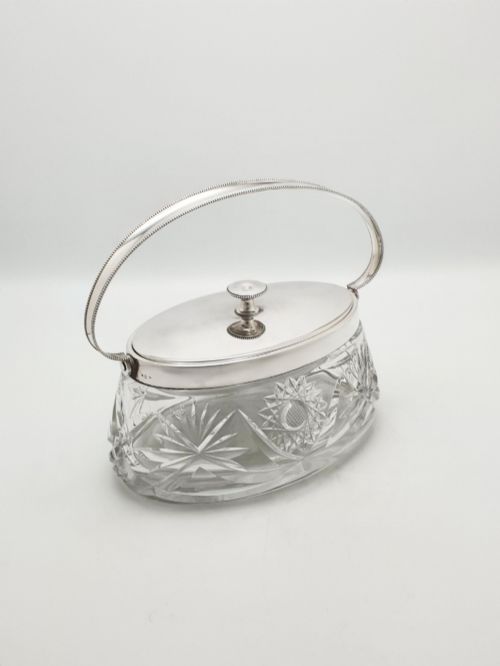
The objects most frequently met on this page are claret jugs and cruet sets, alongside butter dishes and biscuit barrels fitted with hinged lids and carrying handles. Each piece pairs a glass body with either sterling silver or silver plate mounts.
Materials and construction
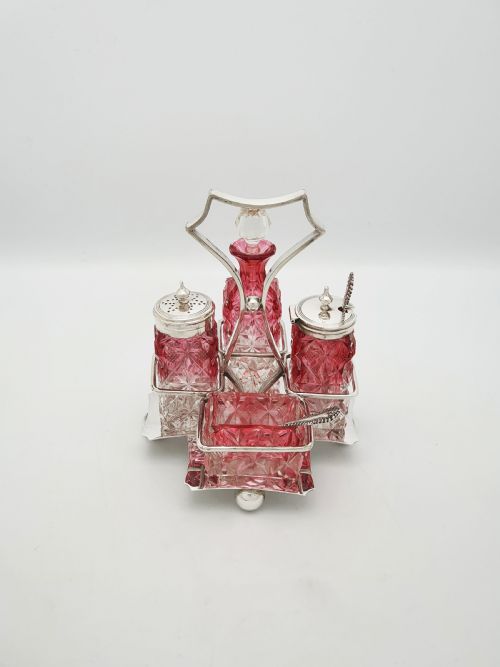
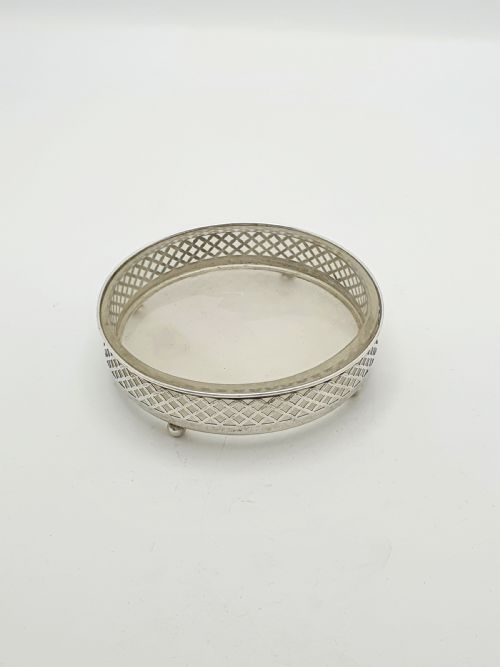
Makers combined blown and cut glass with sterling silver or silver plate, using starburst patterns and cranberry flashing to add depth to the transparent vessels. Metal mounts were pierced, chased, or left plain to secure the glass securely.
Silver plate over base metals provided an accessible alternative to solid sterling silver, particularly for large biscuit barrels and multi-bottle cruet sets. Handles and lids utilised hinges and collars fitted tightly around the glass necks.
Assessing quality
Quality depends on the crispness of the cut glass facets and the weight of the silver mounts, where thicker metal resists denting and holds hinges firmly in place. Maker marks indicate the standard of production, distinguishing standard commercial output from distinguished workshops.
The integration between the glass insert and the metal frame reveals the care taken in manufacture, with high-quality pieces showing precise alignment and original matching liners.
Walker and Hall·WMF
The Silver and Glass Servers Glossary
- Claret jug
- A vessel designed for pouring red wine at the table, typically featuring a glass body with a hinged silver lid and handle.
- Cruet set
- A matched collection of bottles or jars held in a metal frame for holding condiments such as oil, vinegar, salt, and mustard.
- Biscuit barrel
- A covered container designed for storing biscuits, often cylindrical and fitted with a swing handle and a matching metal lid.
- Cranberry glass
- Transparent glass coloured with gold chloride during production, resulting in a rich pinkish-red hue seen on Edwardian dishes and jugs.
- Rat tail
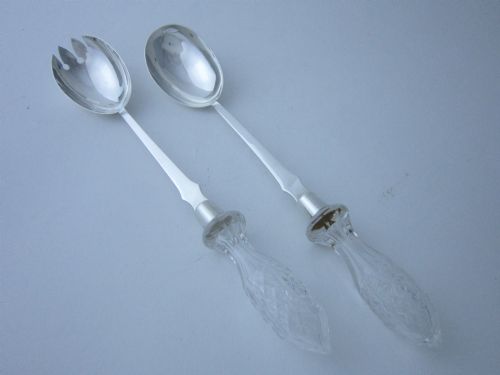
- A strengthening tongue of metal running down the back of a spoon bowl, found on salad servers from the Edwardian period.
Silver and Glass Servers: Frequently Asked Questions
What are silver and glass servers?
Silver and glass servers are dining table accessories that combine glass vessels with silver or silver-plated metal mounts. They include claret jugs, cruet sets, butter dishes, and biscuit barrels.
These pieces were designed to serve wine, condiments, and dry goods during formal meals. The combination of reflective glass and polished metal added visual weight to dining tables.
How were claret jugs used?
Claret jugs held red wine for pouring during dinner and after-dinner gatherings. The hinged lid allowed the host to dispense wine easily while keeping the contents covered.
Many examples feature handles and spouts integrated into the metal collar surrounding the glass neck. They sat on the dining table alongside water jugs and decanters.
How do I date these pieces?
Dating relies on hallmarks stamped into the silver mounts and the overarching style of the glass and metalwork. Victorian pieces often display heavy ornamentation, while Edwardian designs lean towards lighter mounts.
Art Nouveau and Art Deco items show distinct stylistic curves or geometric forms typical of the early twentieth century. Maker marks help narrow down the production decade further.