



Silk Upholstered Sofa
A silk upholstered sofa brings rich texture and period elegance to a room, offering historic seating shaped by centuries of craftsmanship.
Silk Upholstered Sofa
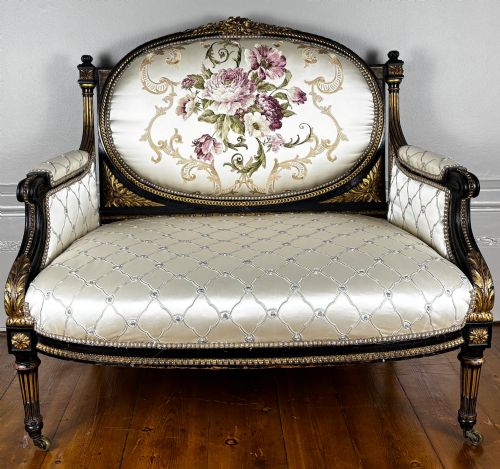
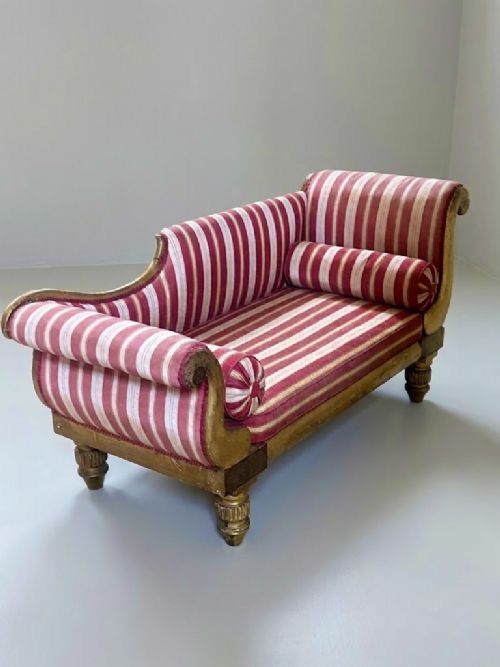
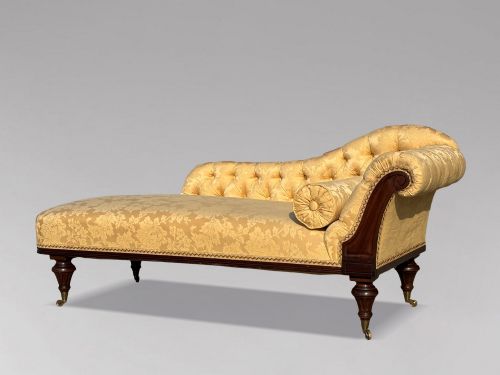
A silk upholstered sofa encompasses historic seating pieces upholstered in silk, silk damask, and antique striped silk fabrics. These pieces emerge across Georgian, Regency, Victorian, and nineteenth-century periods, spanning forms from settees and canapes to chaise longues and daybeds.
Buyers encountering this search phrase will most frequently meet nineteenth-century examples alongside Regency and Victorian pieces. Regional influences include French Napoleon III, Louis XV, Venetian Rococo, and German Rococo revival styles.
The underlying timber frames vary from mahogany and ebonised wood to giltwood and general wood construction. Formats range from expansive sofas to intimate love seats and miniature display pieces.
Materials and construction methods
Frames rely on solid timbers such as mahogany, ebonised wood, and giltwood, carved into distinct revival and period forms. Brass details sometimes accent the structural woodwork.
Upholstery centres on silk textiles, including silk damask and striped variants, secured to traditional sprung or stuffed seat foundations. Wood frames receive gilding, polychrome paint, or parcel gilt treatments.
Silk Upholstered Sofa Retail Price Guide 2026
Typical asking prices for silk upholstered sofa among the pieces listed under this phrase on Sellingantiques today, from the lower quarter to the upper quarter. They describe what is for sale here now, not the wider market.
Period styles span Georgian, Regency, Victorian, and French Napoleon III designs across various settee and chaise formats.
Evaluating the standard of execution
The refinement of the timber carving and the integrity of the giltwood or ebonised finish set finer examples apart. Crisp architectural details on Regency and Georgian frames reflect superior cabinet-making.
The quality of the silk upholstery, whether damask or striped fabric, and its harmony with the underlying period silhouette dictate the overall distinction of the piece.
Miles & Edwards
The Silk Upholstered Sofa Glossary
- Canape
- An ornamental French settee or sofa featuring an exposed wooden frame, typically carved in styles like Louis XV. It provides lighter formal seating than heavy upholstered English equivalents.
- Chaise Longue
- An elongated chair or daybed designed for reclining, combining seating with a built-in footrest. These pieces appear frequently in nineteenth-century boudoir and French styles.
- Giltwood
- Wood that has been covered with a thin layer of gold leaf or gilt powder. It is commonly found on decorative frames from the Regency and Victorian periods.
- Damask
- A reversible figured fabric woven on a jacquard loom, frequently utilised for historic upholstery. Silk damask provides a formal sheen characteristic of high-status seating.
- Ebonised wood
- Timber treated with a finish to simulate ebony, creating a dark, glossy surface. This technique appears on nineteenth-century French and English frames.
Silk Upholstered Sofa: Frequently Asked Questions
What periods do these sofas date from?
The available pieces span the Georgian, Regency, and Victorian eras, alongside nineteenth-century continental works.
Craftsmanship reflects shifting aesthetic movements, from Georgian mahogany framing to ornate French and Venetian revivals.
How do I identify a Regency sofa?
Regency pieces often incorporate classical architectural motifs, giltwood finishes, and substantial mahogany timbers.
They display the restrained yet formal proportions characteristic of early nineteenth-century British design.
Where were these settees used historically?
These seating pieces served in formal reception rooms, drawing rooms, and private boudoirs of grand residences.
Smaller formats like love seats and chaise longues were designed for intimate spaces and private relaxation.
What is a French canape?
A canape is a traditional French upholstered sofa characterised by an exposed, decorative wooden frame.
Styles such as Louis XV and Napoleon III bring elaborate carving and gilded surfaces to these formal seats.