



Signed Satsuma Ware
Signed satsuma ware brings intricate Japanese artistry into your home through finely painted earthenware decorated with enamel and gold leaf.
Signed Satsuma Ware
Signed satsuma ware comprises earthenware pottery originating from Japan, typically created during the nineteenth century and the Meiji period. These pieces span various forms including vases, decorative bowls, incense burners, and sculptures.
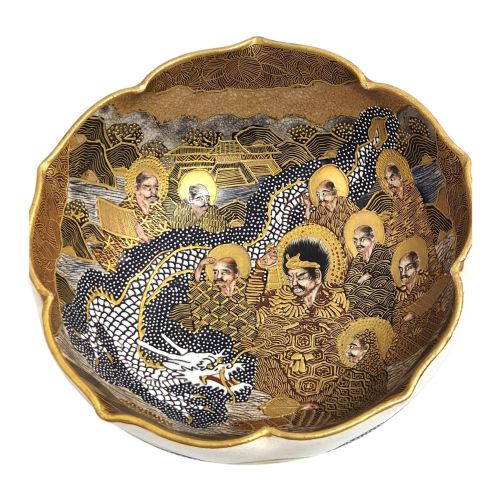
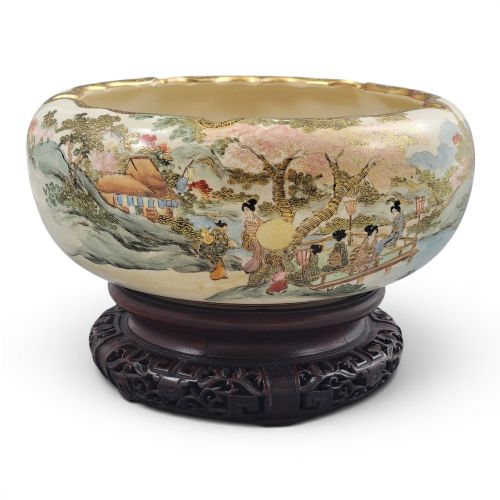
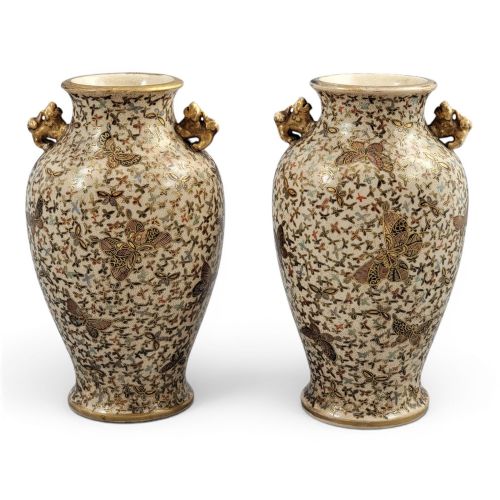
The objects frequently showcase elaborate hand-painted scenes featuring figures, dragons, flowers, and butterflies. Many examples on this page hail from Kyoto studios and bear the signatures of master artists alongside the Shimazu clan crest.
Buyers encounter diverse decorative objects ranging from miniature vases to monumental jars and large okimono figures. Earthenware bodies provide a distinctive ivory-coloured, crackled glaze canvas for detailed enamel and gilt ornamentation.
How they were made
Potters formed these items from earthenware clay before applying a specialised glaze that developed a fine network of cracks during firing. Artisans then painted intricate pictorial details using coloured enamels and gold leaf.
Workshops in Kyoto and other centres employed skilled painters to execute complex motifs such as landscapes, thousand butterflies patterns, and spiritual figures like Rakan. Finishing touches often incorporated rich gilt highlights and bronze elements on specific vessel types.
Signed Satsuma Ware Retail Price Guide 2026
Typical asking prices for signed satsuma ware among the pieces listed under this phrase on Sellingantiques today, from the lower quarter to the upper quarter. They describe what is for sale here now, not the wider market.
The available objects span diverse forms such as vases, incense burners, sugar bowls, and sculptural okimono figures created by Kyoto studios.
What varies in quality
Quality in signed satsuma ware rests upon the precision and complexity of the enamel painting and gilt work across the earthenware surface. Master signatures, such as those from renowned makers like Taizan, Kinkozan, and Shizan, indicate superior artistic execution.
The fineness of the crackle glaze and the balance of composition distinguish standard production pieces from monumental or finely detailed miniature studio works. Preservation of the delicate gold leaf and enamel layers directly influences the visual impact of each piece.
Hododa·Taizan·Kinzan·Shizan·Kinkozan·Kizan·Seiko-en Chokei·Yamashu·Nikko·Tagawa·Shozan
The Signed Satsuma Ware Glossary
- Satsuma
- A type of Japanese earthenware pottery traditionally characterised by an ivory-coloured crackled glaze. It serves as the primary ground for detailed polychrome enamel and gilt decoration.
- Okimono
- A Japanese decorative sculpture or ornament designed for display on a shelf or tokonoma alcove. These figural pieces often depict animals or subjects carved with fine detail.
- Koro
- A traditional Japanese incense burner, frequently featuring pierced covers and decorative handles. They appear in ceramic forms supported on feet.
- Shimazu Crest
- The heraldic symbol of the Shimazu clan, consisting of a cross within a circle. It frequently appears on satsuma ware associated with official production or patronage.
- Meiji Period
- The era in Japanese history spanning from 1868 to 1912, noted for opening trade with the West. Many of the finest decorative ceramics originate from this period.
Signed Satsuma Ware: Frequently Asked Questions
What is signed satsuma ware?
Signed satsuma ware consists of Japanese earthenware ceramic objects adorned with intricate enamel and gold leaf paintings. These items typically feature artist signatures and studio marks from the nineteenth century.
Craftsmen produced various forms including decorative bowls, vases, and incense burners for both domestic use and export. The distinct crackled glaze provides a traditional background for detailed figural and floral scenes.
How do I identify a Meiji period piece?
Meiji period pieces generally date between 1868 and 1912, aligning with an era of exceptional artistic output in Japanese ceramics. Look for characteristic signatures, studio marks, and the Shimazu crest painted on the base.
The style often combines elaborate gilt ornamentation with dense pictorial scenes depicting butterflies, landscapes, or mythological figures. Earthenware construction with finely crazed glaze remains consistent across authentic period examples.
Where were these ceramics made?
While the style originated in Satsuma Province, many of the finest pieces on this page were produced in Kyoto workshops. Major studios employed skilled artisans who specialised in miniature painting and elaborate gilt decoration.
Kyoto makers often signed their work with individual artist names or studio titles alongside the traditional Satsuma designation. This regional production represents a high point in decorative ceramic manufacturing.
How should I care for decorative bowls and vases?
Preserve these antique ceramics by keeping them away from direct sunlight and areas prone to extreme humidity changes. Dust them gently with a soft, dry cloth without applying water or cleaning solutions.
Avoid displaying them where they might experience knocks, as the earthenware bodies and enamel surfaces can chip. Careful handling ensures the delicate gold leaf and painted details remain intact.