

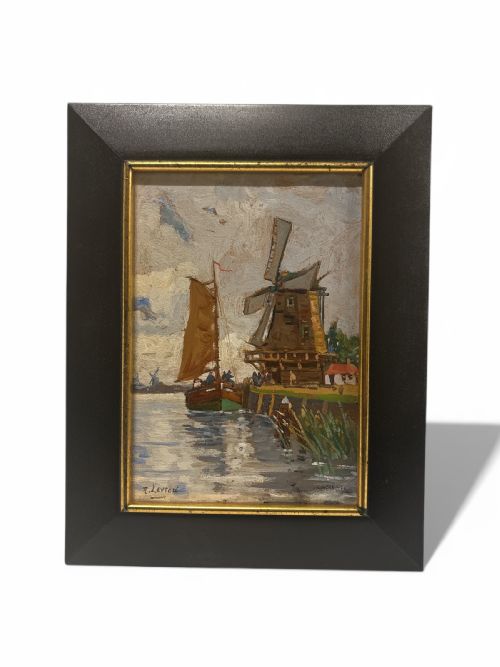
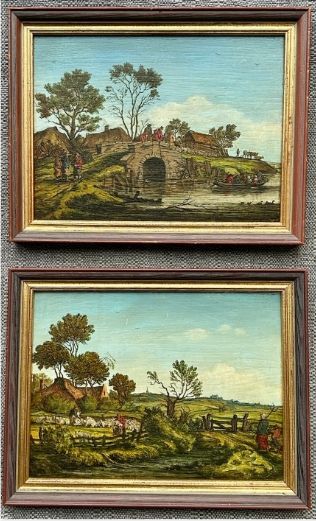
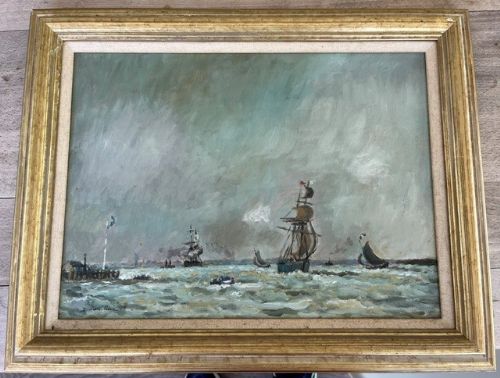
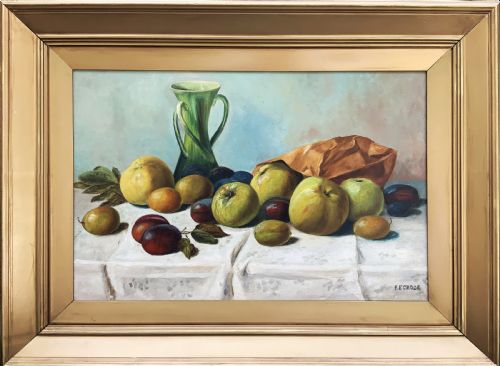


Signed Oil on Board
Signed oil on board paintings offer direct contact with the artist's hand through confident brushwork applied to rigid supports across various periods.
Signed Oil on Board
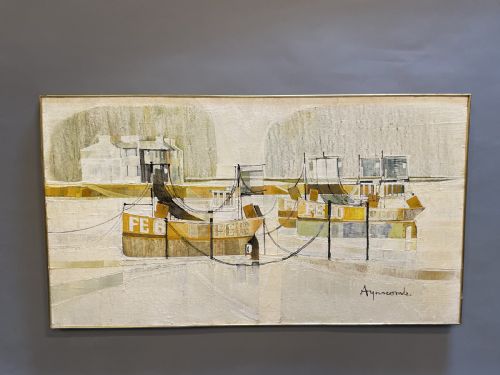
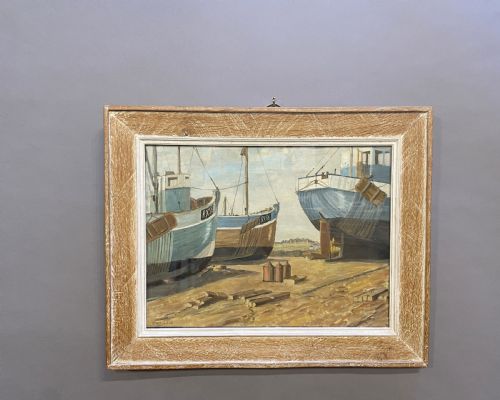
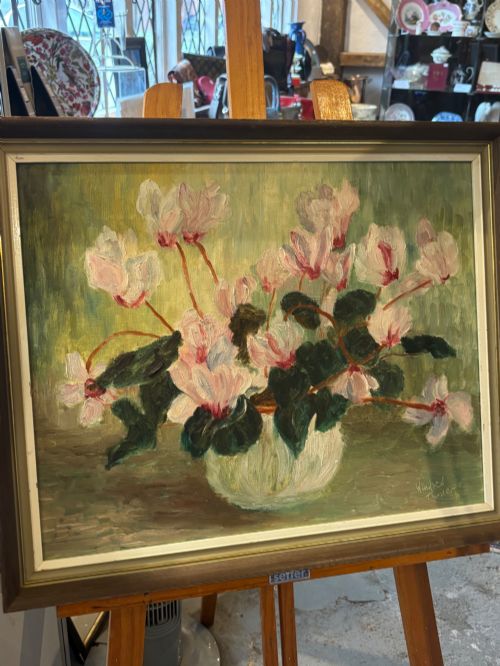
Signed oil on board works encompass original paintings executed directly onto wooden panels, compressed boards, and canvas laid onto rigid foundations. These pieces span from Victorian and Edwardian periods through mid-century modern, post-war British, and French schools. Subjects range from maritime coastal scenes and Yorkshire landscapes to intimate portraits, still life compositions, and industrial townscapes.
Buyers frequently encounter mid-century examples alongside 19th-century works and early 20th-century studies. The selection includes both intimate pastoral views and structured harbour scenes bearing legible signatures or historic attribution.
The category serves collectors seeking authentic autographic paintings that retain their structural rigidity without the canvas sagging typical of unlined fabric supports.
How They Were Made
Artists applied viscous oil paint loaded with pigment directly onto rigid supports such as wooden panels, prepared boards, or canvas laid onto heavy backing. This technique provided a firm resistance against the brush, allowing for both delicate impasto texture and smooth, flat application.
Finished works were frequently housed within wooden frames, sometimes finished with gilt decoration or ornate mouldings to complement the composition.
Several artists packed their boards into damp fields to capture sudden downpours, leaving the stubborn paint to dry over grazing sheep.
What Varies in Quality
Quality rests in the surety of the brushwork and the clarity of the composition, where confident handling transforms a simple landscape or portrait into a compelling study. Superior examples demonstrate a careful balance of tone and light that brings the subject to life on the rigid ground.
The distinction also lies in the integrity of the paint surface and the harmony between the painting and its original frame, distinguishing casual sketches from fully resolved gallery pieces.
Kenneth Cozens·R Leyton·Septimus Scott·Fred Yates·William Greaves·Benjamin Callow·Markey Robinson·William Burns·Albert E Jackson·Percy Hipkiss·Walter C Horsnell·Joseph Appleyard·Angus Rands
The Signed Oil on Board Glossary
- Oil on board
- A painting execution where oil paint is applied directly to a rigid wooden or composite board rather than stretched canvas.
- Impasto
- Paint applied thickly to a surface, leaving visible brush or palette knife marks that stand proud of the plane.
- Gilt
- A thin layer of gold leaf or gold-coloured pigment applied to the surface of wooden frames for decorative embellishment.
- Panel
- A flat piece of wood used as a rigid foundation for painting prior to the widespread adoption of stretched canvas.
Signed Oil on Board: Frequently Asked Questions
What is an oil on board painting?
An oil on board painting is a work of art created using oil-based pigments applied to a rigid backing material, such as wood, card, or composite board. This method provides a stable surface that does not require the tension adjustments common to stretched canvas.
Artists across the nineteenth and twentieth centuries favoured this medium for plein air sketching and finished studio works alike due to its durability and portability.
How do I date a signed painting?
Dating a signed painting involves examining the artist's active period, the style of the clothing or architecture depicted, and the physical characteristics of the board and framing materials. Signatures often evolve over an artist's career, offering comparative clues when checked against exhibition records.
Signatures accompanied by dates provide a direct reference point, while stylistic markers such as mid-century modern abstraction or Edwardian impressionism help narrow down the decade.
How should I display these paintings?
These works require placement away from direct sunlight and excessive humidity to protect both the oil pigments and the wooden board or frame. Maintaining a stable indoor environment prevents warping of the panel and fading of the colours.
Most pieces are best hung securely using appropriate wall fixings that support the combined weight of the board and its frame.
What does an indistinct signature mean?
An indistinct signature refers to a maker's mark that has worn down, been applied cryptically, or remains partially obscured by subsequent framing or conservation efforts. While it prevents immediate attribution, the handwriting style still offers clues regarding the period and regional school.
Many works with indistinct signatures are identified through stylistic comparison with documented paintings from the same artistic circle or geographic region.