





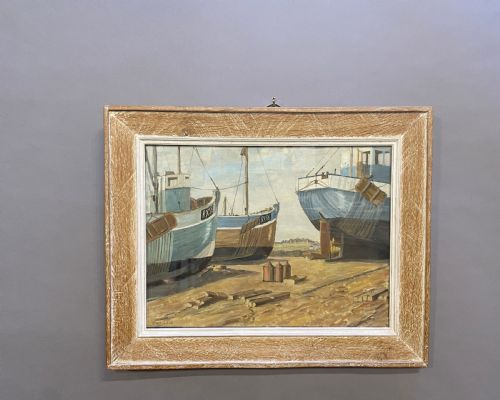

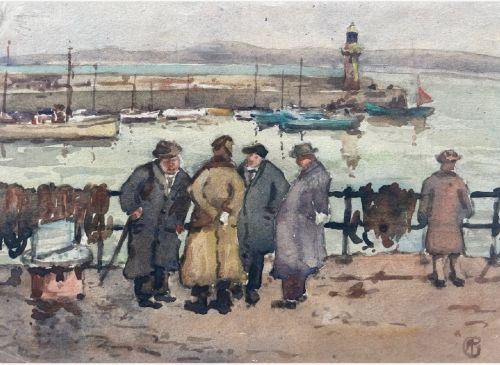

Signed Maritime Painting
When you search for a signed maritime painting, you find framed seascapes, harbour scenes and coastal views carrying an artist's hand.
Signed Maritime Painting
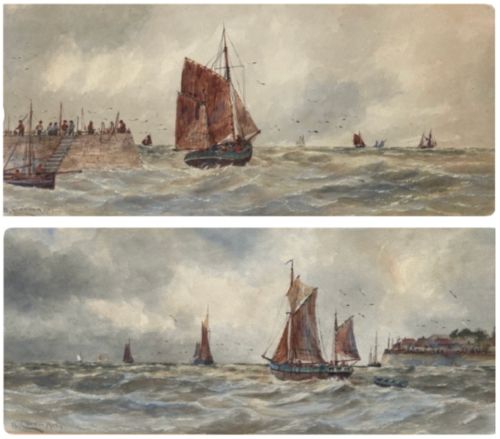
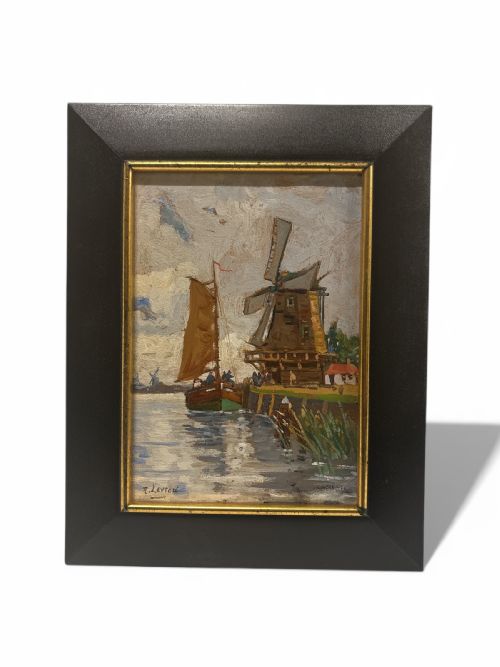
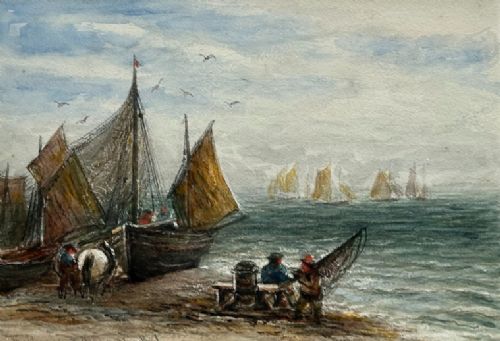
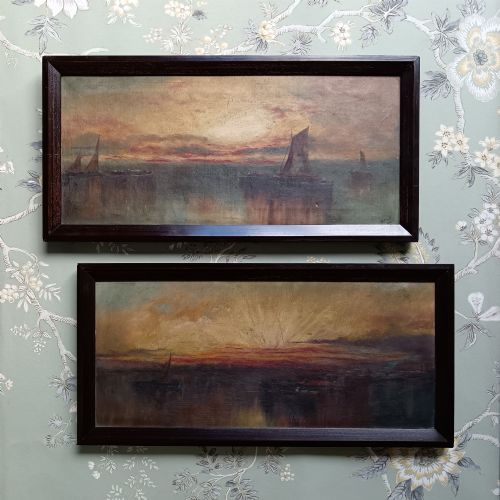
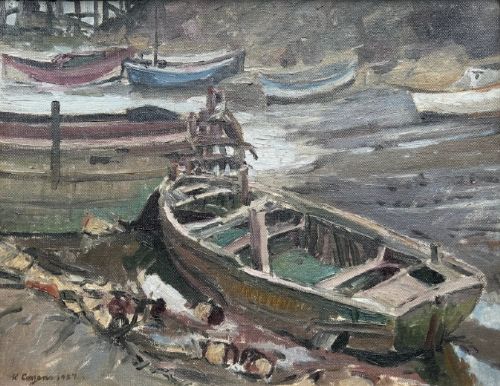
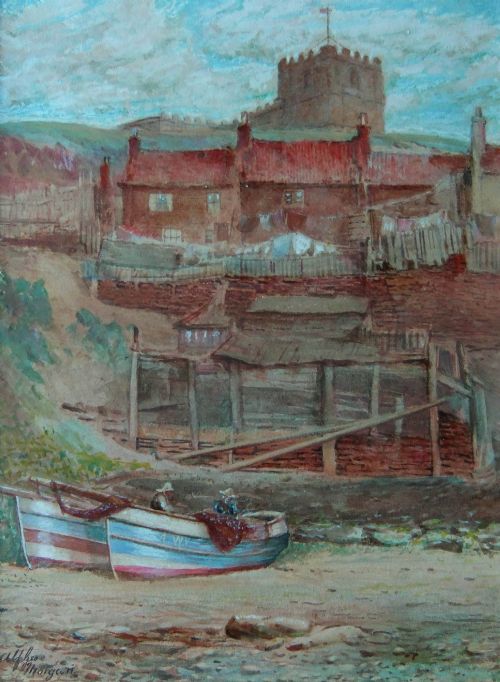
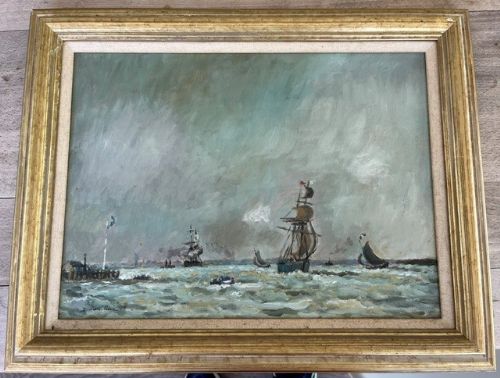
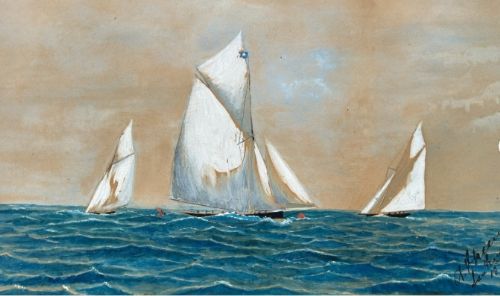
A signed maritime painting captures coastal life, harbours and vessels upon the water through the direct hand of an artist. Collectors seeking a signed maritime painting encounter framed watercolours and oil paintings originating from the nineteenth century through the mid-twentieth century.
The subjects span British and European fishing ports, racing yachts and quiet estuaries, often recording specific locations such as Whitby, St Ives or Venice. Works frequently take the form of watercolours on paper or oil paintings executed on canvas, board or wood panel.
How they were made
Artists applied watercolour pigment to paper to achieve transparent washes of light across sea and sky, or layered oil paint on canvas and board to build textured coastal atmosphere. Pigments were secured behind glass within wooden and gilt frames, preserving the delicate surfaces from moisture and atmospheric dust.
Support materials range from traditional woven canvas stretched over wooden frames to compact wooden panels and paper sheets. Brushwork varies from thin, precise linework detailing rigging and architecture to heavy impasto capturing turbulent waves.
Signed Maritime Painting Retail Price Guide 2026
Typical asking prices for signed maritime painting among the pieces listed under this phrase on Sellingantiques today, from the lower quarter to the upper quarter. They describe what is for sale here now, not the wider market.
Listings feature works spanning the nineteenth century through the 1950s, created in oil and watercolour on paper, canvas, board and wood panel.
What varies in quality
The ability of the artist to render moving water, atmospheric light and accurate vessel anatomy dictates the standing of a work. Stronger pieces demonstrate confident brushwork and precise tonal control over skies and choppy seas, whereas weaker examples rely on formulaic compositions.
The integrity of the medium also distinguishes pieces, with well-preserved paper retaining original pigment vibrancy free from heavy foxing or fading. Original period framing further elevates a piece, maintaining the historical context intended by the creator.
Alfred George Morgan·Thomas Bush Hardy·Kate E Booth·Bernard Benedict Hemy·William Knox
The Signed Maritime Painting Glossary
- Watercolour
- A painting method where fine pigment is suspended in a water-soluble binder and applied to paper. It creates luminous translucent effects well suited to coastal light.
- Impasto
- Paint applied thickly to a canvas or board so that it stands distinctly above the surface. This technique gives texture to breaking waves and clouds.
- Gilt
- A thin layer of gold leaf or gold-coloured paint applied to wood moulding. It defines traditional frames surrounding historical paintings.
- Board
- A rigid flat wooden or composition surface used as a painting support instead of woven canvas. It provides a stable base for oil application.
Signed Maritime Painting: Frequently Asked Questions
How do I date a maritime painting?
Dates are often indicated by the artist's active period, the style of clothing worn by figures in the scene, or inscriptions left on the reverse of the canvas.
Framing materials and paper types also offer clues to the decade of creation, aligning with the Victorian, Edwardian or mid-century eras represented in the listings.
Where were these coastal scenes painted?
Artists frequently travelled to bustling fishing ports, commercial dockyards and tranquil estuaries across Britain and continental Europe.
Locations range from Yorkshire harbours and Cornish coastal towns to Venetian canals and Dutch rivers, reflecting maritime commerce and leisure.
Are these works original or prints?
Listings comprise original hand-painted watercolours and oil paintings directly executed by the artist rather than mass-produced reproductions.
Brushstrokes, pigment texture and surface variations confirm the unique, one-of-a-kind nature of each piece.
How should I hang and light a watercolour?
Watercolours are sensitive to prolonged direct sunlight, which can fade delicate pigments on paper over time.
Displaying pieces away from intense windows and utilising UV-protective glass helps preserve the colours and paper integrity.