

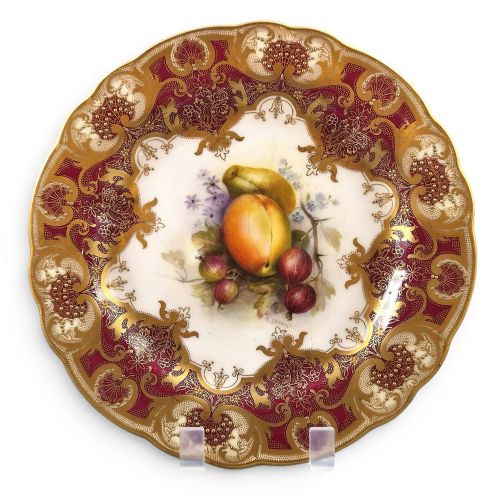



Signed Fruit Ceramics
Signed fruit ceramics are hand painted porcelain and earthenware vessels carrying the personal signature of their decorator, offering a masterclass in botanical realism.
Signed Fruit Ceramics
Signed fruit ceramics comprise plates, bowls, vases, ewers, and jugs that display meticulous hand painted studies of apples, peaches, grapes, and berries. When you search for signed fruit ceramics, you encounter pieces predominantly originating from the Royal Worcester factory, alongside Japanese Satsuma wares and Moorcroft pottery.
The objects span from the late nineteenth century through the Edwardian era into the mid twentieth century. Most examples on this page are Royal Worcester porcelain items bearing the signatures of renowned painters such as Richard Sebright, Harry Ayrton, and William Ricketts.
The forms range from cabinet plates and boat shaped bowls to miniature vases and cream jugs. These pieces serve primarily as decorative focal points rather than utilitarian tableware, reflecting the high status of botanical art in interior display.
How they were made
The manufacturing process relies upon fine porcelain and earthenware blanks that provide a smooth, white canvas for detailed pigment application. Artisans build up the fruit subjects using multiple layers of enamel paints, requiring successive kiln firings to fix the complex colours.
Many items incorporate rich gilding, gold leaf, or gilt borders to frame the central painted panels. These metallic accents are meticulously applied by hand and polished to contrast with the matte or satin finish of the surrounding fruit.
Signed Fruit Ceramics Retail Price Guide 2026
Typical asking prices for signed fruit ceramics among the pieces listed under this phrase on Sellingantiques today, from the lower quarter to the upper quarter. They describe what is for sale here now, not the wider market.
Listings feature porcelain and earthenware forms spanning the nineteenth century, Edwardian period, and mid-twentieth-century decades.
What varies in quality
Quality rests upon the skill of the individual artist and the complexity of the fruit composition. Pieces by celebrated decorators command attention due to the botanical precision, subtlety of shadow, and naturalistic texture achieved on the porcelain surface.
The integration of gilding and the weight of the porcelain blank also dictate the grade of the piece. Superior examples display dense, unblemished background gilding and crisp, clear factory marks alongside legible artist signatures.
Royal Worcester·Richard Sebright·Kozan·H Ayrton·J Southall·William Ricketts·William Moorcroft
The Signed Fruit Ceramics Glossary
- Cabinet plate
- A decorative plate intended for display on a wall or in a cabinet rather than for dining use. These often feature the most elaborate painted scenes.
- Ewers
- Decorative pitchers with wide spouts and ornate handles, originally derived from vessels used for washing hands. In this category, they function purely as sculptural decorative objects.
- Gilding
- The application of gold leaf or powdered gold to ceramic surfaces to create metallic borders and highlights. It elevates the visual luxury of the piece.
- Satsuma
- A type of earthenware originating from Japan, typically characterised by a pale crackle-glaze finish decorated with enamels and gilt. Signed examples reflect traditional Meiji period craftsmanship.
- Pot pourri
- A perforated vessel designed to hold dried scented plant material. These pieces often feature intricate pierced covers and painted fruit motifs.
Signed Fruit Ceramics: Frequently Asked Questions
Are these ceramics safe for daily use?
These items are delicate decorative objects rather than functional kitchenware. The hand painted enamel surfaces and delicate gilding require careful handling to preserve their condition.
Display them securely away from heavy traffic areas and clean them only with a soft, dry cloth when necessary.
How do I identify the artist's signature?
Artists typically inscribed their surname or initials directly onto the painted surface near the edge of the fruit composition. These signatures are fired into the glaze alongside the factory backstamp on the underside.
Comparing the handwriting against known examples helps confirm the decorator and approximate date of production.
Why do some pieces feature heavy gold leaf?
Gilding was applied to enhance the luxurious appearance of cabinet pieces and decorative vessels. Rich gold borders frame the painted fruit panels to create a strong visual contrast.
The presence and thickness of the gold often indicate the intended status and cost of the object when first retailed.
How do I distinguish Edwardian pieces from mid century examples?
Edwardian items frequently display softer pastel tones and elaborate, traditional border designs influenced by late nineteenth-century aesthetics. Factory marks and date ciphers stamped on the base provide precise chronological markers.
Mid-century pieces often feature bolder colour saturation and streamlined shapes while maintaining the traditional hand painted fruit subject matter.