




Signed Artwork Sketch
When you handle a signed artwork sketch, you hold a direct, unmediated encounter with an artist's hand.
Signed Artwork Sketch
A signed artwork sketch brings together graphic immediacy and the verified identity of a creator, offering a direct window into the initial conception of a piece. These works span centuries, appearing as rapid preparatory gestures, detailed character studies, and finished compositions executed on paper.
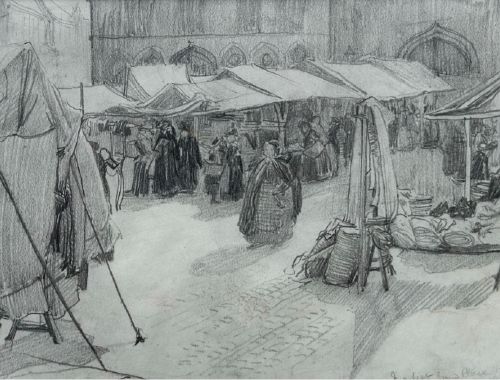
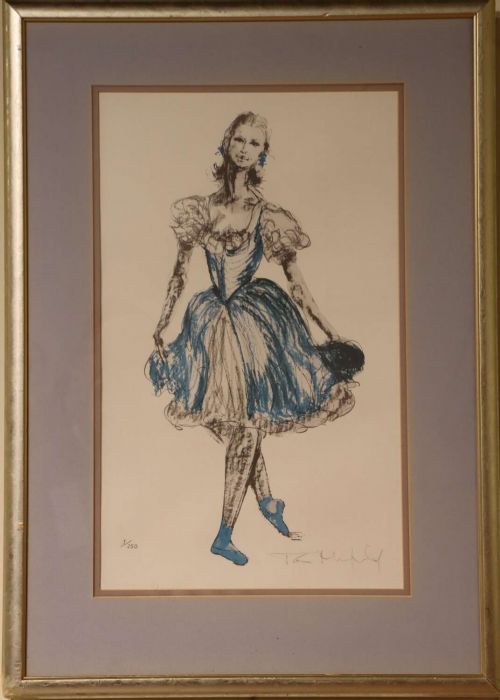
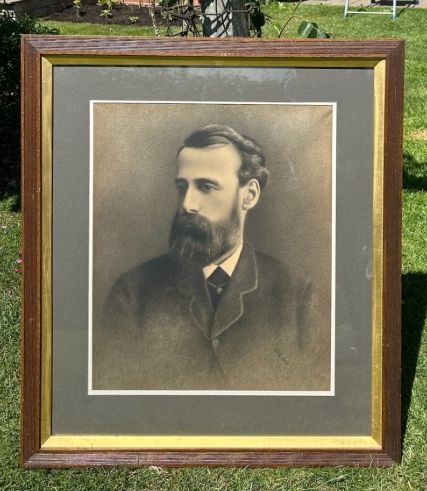
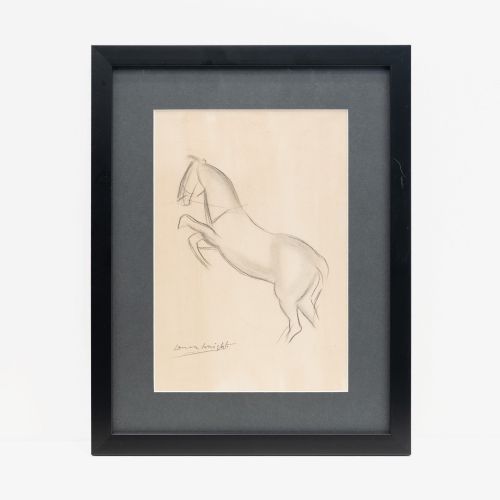
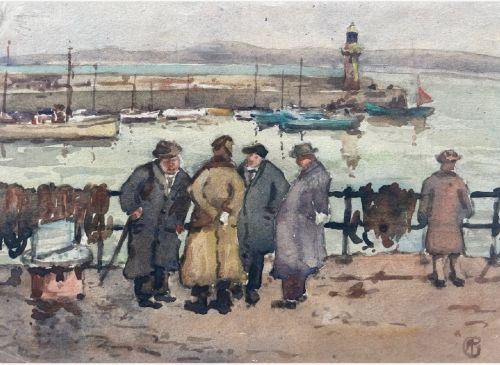
The material forms on this page cluster heavily around works on paper, utilising media such as graphite, ink, charcoal, and watercolour. Buyers encounter academic life studies, portraits, animal studies, and topographical views produced across the nineteenth and twentieth centuries.
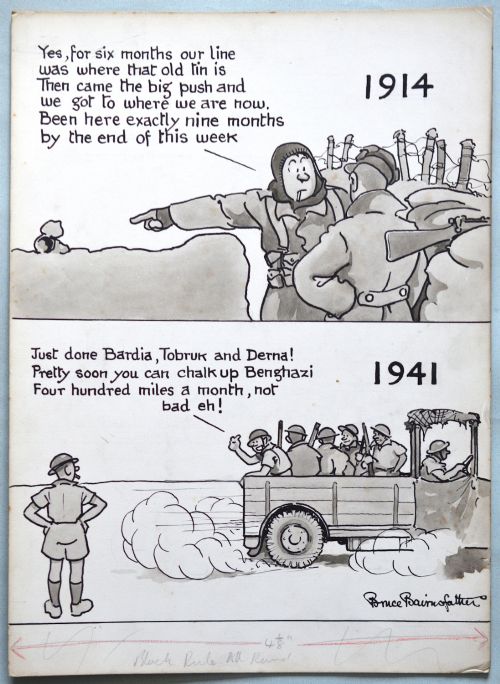
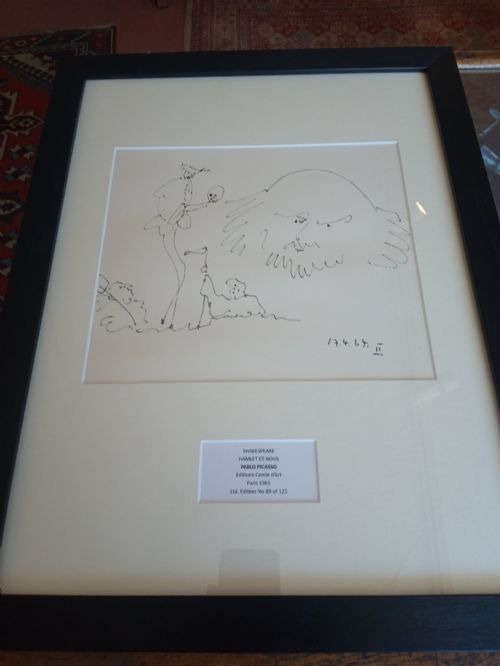
Among the pieces gathered here, the mid-twentieth century is strongly represented through Modern British styles, alongside Victorian portraits and early twentieth-century illustrations. The most frequent encounters involve framed original drawings and watercolours bearing visible signatures, monograms, or artist seals.
Materials and Techniques
Draftsmanship on paper relies upon the interaction between dry media and the underlying support. Graphite, charcoal, and chalk deposit particulate matter onto varied paper textures, allowing for tonal gradation and sharp linear definition.
Fluid media introduce water and pigment to the sheet, utilising ink and watercolour washes applied with brushes or pens. Artists often combined these techniques, laying down a pencil or ink armature before introducing coloured washes or gouache highlights.
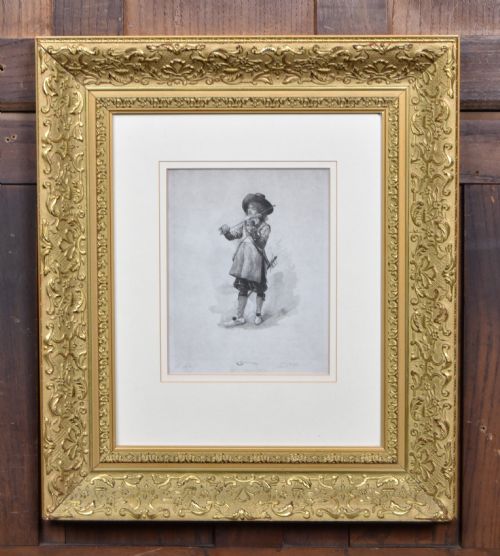
Mounting and framing provide essential physical support for these fragile sheets. Historical works typically utilise wood frames and glass to protect the paper surface from environmental degradation.
Signed Artwork Sketch Retail Price Guide 2026
Typical asking prices for signed artwork sketch among the pieces listed under this phrase on Sellingantiques today, from the lower quarter to the upper quarter. They describe what is for sale here now, not the wider market.
Cats appear unexpectedly across multiple decades, supervising sketching sessions with unwavering feline dignity.
Evaluating Quality
Quality in a drawing rests upon the economy and confidence of the line. The distinction between a hesitant exercise and a masterwork lies in the decisiveness of the marks made on the paper, where every stroke contributes directly to form and volume.
Condition and preservation dictate the stability of the piece over time. Works maintained away from damaging ultraviolet light retain their original paper tone and pigment intensity, whereas degraded paper or acidic mount boards compromise the physical integrity of the work.
Context and documentation elevate certain pieces above standard examples. Evidence of a specific sitting, a named subject, or inclusion in a known artist's oeuvre provides historical weight that simple technical competence alone does not achieve.
Henry Percy Huggill·Bruce Bairnsfather·John Meredith·Pablo Picasso·Dame Laura Knight·John Rattenbury Skeaping·Michael Lyne·Raoul Millais·YA MING·Lucien Freud·Lawrence Stephen Lowry·Fred Lawson·Theobald Chartran·Juliet Pannett
The Signed Artwork Sketch Glossary
- Graphite
- A form of crystalline carbon used in pencils, producing grey or black marks with a metallic sheen. It became widely available for fine art drawing from the sixteenth century onward.
- Gouache
- An opaque water-based paint consisting of pigment, water, and a binding agent such as gum arabic, often containing added white chalk to increase opacity. It permits both fine linear control and flat areas of solid colour.
- Grisaille
- A painting or drawing executed entirely in shades of grey, monochrome neutral greys, or dark brown. Artists frequently employed this technique to simulate sculpture or as an underpainting for later colour application.
- Provenance
- The chronology of the ownership, custody, or location of a historical item. Documented provenance establishes authenticity and traces the path of a work from the artist's studio to the present collection.
- Watercolour
- Artists' paint made from pigments suspended in a water-soluble vehicle. The medium relies upon the reflective quality of white paper showing through transparent washes of colour.
Signed Artwork Sketch: Frequently Asked Questions
What is a signed artwork sketch?
A signed artwork sketch is an original, hand-drawn or hand-painted work on paper bearing the personal signature, monogram, or seal of its creator. These pieces range from rapid preparatory notes for larger paintings to finished independent compositions.
Unlike mass-produced prints, each sketch is a unique physical record of an artist's working process. The signature provides direct attribution, connecting the viewer straight to the hand that made the mark.
How should I frame and display works on paper?
Works on paper require careful framing using acid-free mount boards and conservation-grade materials to prevent chemical degradation of the paper over time. Spacers should keep the paper from touching the glass directly.
Display these pieces away from direct sunlight and strong artificial heat sources to protect delicate pigments and graphite from fading. Controlled indoor lighting preserves the integrity of the paper support.
How do I distinguish between an original drawing and a print?
An original drawing exhibits physical evidence of the artist's tool directly on the paper surface, such as raised graphite ridges, ink pooling, or brush texture. Examining the surface under magnification reveals individual strokes rather than a uniform dot matrix or lithographic screen.
Signatures on original sketches are handwritten in pencil, ink, or paint directly onto the sheet. In contrast, signatures on prints are typically either printed facsimile reproductions or pencil signatures added to a limited edition multiple.
What subjects are common in these drawings?
Portraits and figure studies form a substantial portion of these works, capturing specific sitters, academic life models, or dancers in motion. Artists frequently recorded their immediate surroundings through landscape views and architectural studies.
Animal studies, particularly horses, dogs, and cats, also appear with regularity across various media. These subjects reflect both professional illustration assignments and private observational practice.