


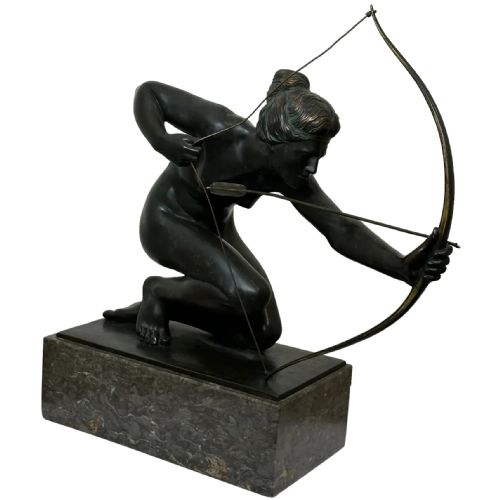


Signed Art Deco Bronzes
Signed art deco bronzes bring the crisp, stylised geometry and vigorous movement of the interwar years straight into your room.
Signed Art Deco Bronzes
When you search for signed art deco bronzes, you are looking at figural sculptures, portrait plaques, and bookends created predominantly during the nineteen twenties and nineteen thirties. These pieces capture the dynamic energy of dancers, athletes, animals, and mythological figures through stylised forms and distinct signatures from period artists.
You are most likely to meet French foundry casts on this page, alongside German animalier works and portrait plaques. The subjects range from ice skaters and dancers to stags, panthers, and classical figures like Diana and Europa, often mounted upon marble bases.
Alongside traditional three-dimensional sculptures, the selection includes wall plaques and hand-painted miniatures on paper, expanding the definition of signed art deco bronzes beyond standard cabinet pieces. These smaller works carry artists' signatures and date firmly within the twenties and thirties, maintaining the characteristic aesthetic of the era.
How they were made
The makers of signed art deco bronzes utilised hot cast bronze techniques, pouring molten metal into moulds to capture fine anatomical details and sharp linear drapery. Patination was applied chemically to the metal surface to create dark, gleaming, or variegated tones that accentuated the muscular contours of figures and the sleek lines of animal subjects.
Many of these bronzes were combined with other materials, most notably veined or polished marble for plinths and bases, providing a heavy, stable foundation for slender figures. Gilded treatments and patinated metal variations also appear, alongside mixed media items where bronze elements pair with glass components.
Miniature works and wall pieces diverge from metal casting by employing watercolour and gouache on paper, framed meticulously to preserve the delicate hand-painted portraiture of the period. These paper works sit alongside heavy metal bookends and cast plaques, demonstrating a broad spectrum of craftsmanship.
Signed Art Deco Bronzes Retail Price Guide 2026
Typical asking prices for signed art deco bronzes among the pieces listed under this phrase on Sellingantiques today, from the lower quarter to the upper quarter. They describe what is for sale here now, not the wider market.
Materials paired with bronze across the inventory include marble, glass, patinated metal, and works on paper.
What varies in quality
The quality of the signature and the reputation of the foundry or sculptor drive distinction across the range. Pieces bearing clear, legible inscriptions by known artists command greater attention than anonymous casts, while the depth and durability of the patination reveal the care taken during production.
Eugene Canneel·C J R Colinet·L GERFAUX·D H Chiparus·Albert Hussmann·R Henn·P MAREC·I Rochard·Herzig·Susie Lassam
The Signed Art Deco Bronzes Glossary
- Animalier
- A style focusing on the realistic or stylised depiction of animals, particularly prominent in twentieth-century bronze sculpture. Artists captured beasts in motion, such as panthers, stags, and birds resting on branches.
- Hot cast bronze
- A traditional foundry method where molten bronze is poured into a mould, producing a durable and detailed sculpture. This technique allows for intricate chiselling and rich patination after casting.
- Patinated metal
- A surface treatment applied to metal to alter its colour and texture, ranging from deep dark tones to metallic sheens. It protects the underlying material while enhancing the visual depth of the sculpture.
- Plaque
- A flat or low-relief ornamental plate, often cast in bronze to commemorate a person or event. Examples from this period feature male portraits and royal figures like Queen Astrid.
- Naiad
- A mythological water nymph frequently chosen as a subject by period sculptors. These figures embody the grace and flowing movement characteristic of nineteen twenties and thirties design.
Signed Art Deco Bronzes: Frequently Asked Questions
How do I identify a genuine period piece?
Examine the weight, the crispness of the casting, and the style of the signature inscribed into the metal or marble base. Period pieces from the twenties and thirties display authentic patination and casting techniques consistent with interwar foundries.
Compare the subject matter and lettering against documented works by known sculptors of the era to confirm its origin.
What subjects are most common?
Dancers, ice skaters, and mythological figures dominate the figural sculptures, reflecting the glamour and athletic focus of the nineteen thirties. Animal subjects such as panthers, stags, and birds also appear frequently.
Portrait plaques and hand-painted miniatures offer an alternative focus, depicting specific individuals and ladies in the distinctive style of the decade.
How should I clean my bronze sculpture?
Dust the surface gently with a soft, dry cloth to prevent the accumulation of grit in the crevices of the patinated metal. Avoid using chemical cleaners, polishes, or abrasive cloths that can strip away the original finish.
Maintain a stable indoor environment away from excessive moisture to preserve both the metal and any accompanying marble bases.
Why are marble bases used?
Marble plinths provide essential stability for slender, dynamic figures like dancers and divers whose weight distribution might otherwise cause tipping. The dense stone anchors the metal securely while offering a contrasting smooth texture.
Different colours and striations of marble also complement the dark patination of the bronze, completing the distinct visual balance of the period.