



Shop Counter Display Unit
A shop counter display unit sits ready to anchor a room with commercial character and practical storage.
Shop Counter Display Unit
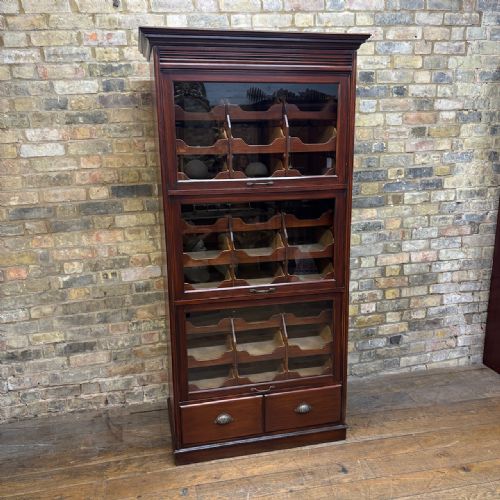
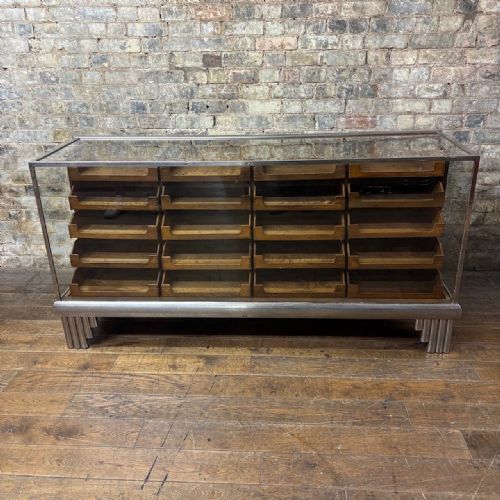
When you search for a shop counter display unit, you encounter robust commercial furnishings built for trade from the Victorian era through the 1930s. These pieces include haberdashery counters, bank of drawers, and countertop needle drawer cabinets made to showcase goods to customers.
You are most likely to meet oak and pine examples from the Victorian, Edwardian, and Interwar Commercial periods on this page. These items range from large display counters to specialised storage designed for chemist shops and drapers.
How they were made
Maker workshops constructed these units in timber such as oak, mahogany, and pine, often integrating glass viewing panels and metal hardware like brass frames or chrome trim. Structural durability governed their production, as counters and banks of drawers needed to withstand daily retail use.
Surfaces received various treatments, from polished hardwood finishes to originally painted white coatings on pine bodies. Glazing and compartmentalised drawers were fitted precisely to protect and organise merchandise.
Shop Counter Display Unit Retail Price Guide 2026
Typical asking prices for shop counter display unit among the pieces listed under this phrase on Sellingantiques today, from the lower quarter to the upper quarter. They describe what is for sale here now, not the wider market.
The listings combine commercial pieces made from oak, mahogany, pine, glass, brass, and chrome.
What varies in quality
The standard of a shop counter display unit rests upon the integration of quality materials and the sophistication of its original commercial design. Pieces featuring brass or chrome framing and refined hardwood construction stand apart from utilitarian pine storage.
Proportion and scale also dictate distinction, particularly in large multi-drawer banks and specialised haberdashery counters. Original finishes and maker attribution elevate the execution of these commercial fixtures.
Dudley & Co·Saml. Elliott & Sons
The Shop Counter Display Unit Glossary
- Haberdashery cabinet
- A multi-drawer storage unit originally used in shops selling small articles of dress and sewing items. These pieces typically feature numerous shallow drawers for organised stock.
- Shop fitting
- A fixture or furniture piece permanently or semi-permanently installed in a retail environment. These items served specific commercial functions like display and storage.
- Bank of drawers
- An assembly of multiple drawers arranged in rows and columns within a single housing. This format provided dense storage for retail inventory.
- Countertop cabinet
- A smaller display unit designed to sit atop a main sales counter for close customer inspection. They often include glass panels to protect delicate wares.
Shop Counter Display Unit: Frequently Asked Questions
How were these units used?
Shop counter display units served merchants by holding stock while presenting goods clearly to customers across the counter. They organised small items like needles and haberdashery while protecting fragile wares beneath glass.
Retailers utilised banks of drawers and display counters to maximise floor space and speed up service during busy trading hours.
How do I live with one?
Integrate a shop counter display unit into a modern interior as a kitchen island, sideboard, or hallway storage piece. The numerous drawers and glass compartments offer practical organisation for everyday items.
Position the unit where natural light can highlight timber grain and any original painted surfaces without exposing delicate antique glass to heavy traffic.
How do I tell periods apart?
Victorian and Edwardian examples lean heavily on solid oak, mahogany, and painted pine with traditional joinery and brass hardware. These pieces often present heavier proportions and classic moulding.
Items from the 1920s and 1930s incorporate Art Deco influences, Interwar Commercial styles, and modern metal elements like chrome framing alongside streamlined cabinetry.
What materials are common?
Timber forms the primary structure of these units, with oak, mahogany, and pine appearing frequently across the listings. Glass provides viewing panels for display cabinets and top counters.
Metal components such as brass frames and chrome trim add structural support and decorative contrast to the timber bodies.