
Shield Back Dining Seats
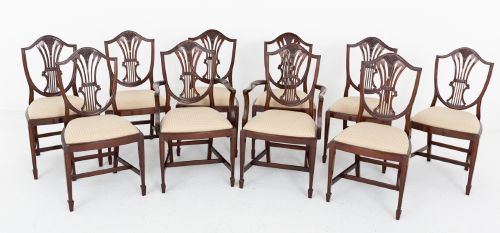
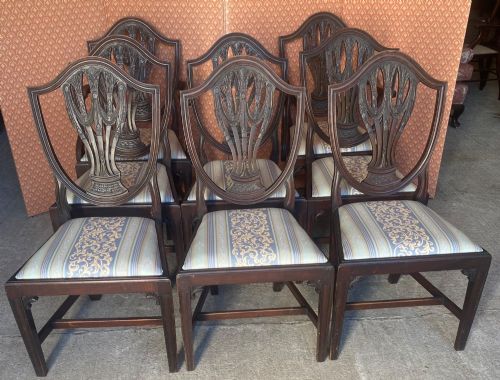
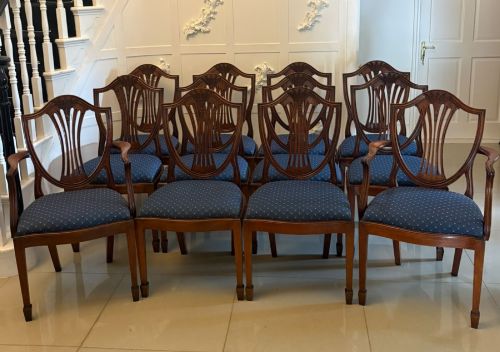
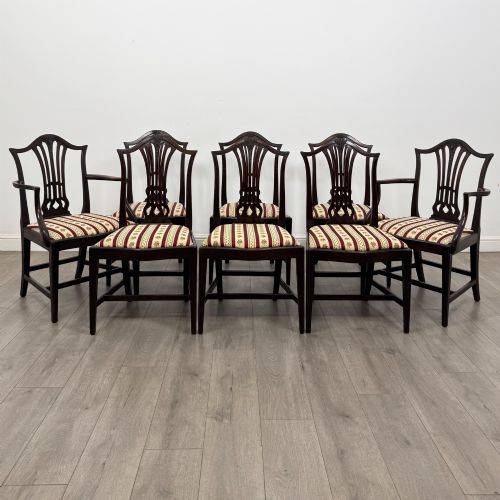
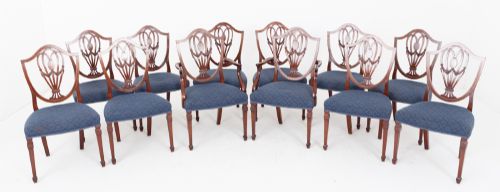
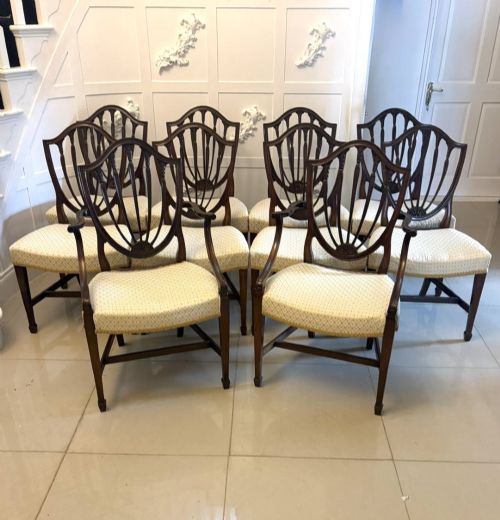
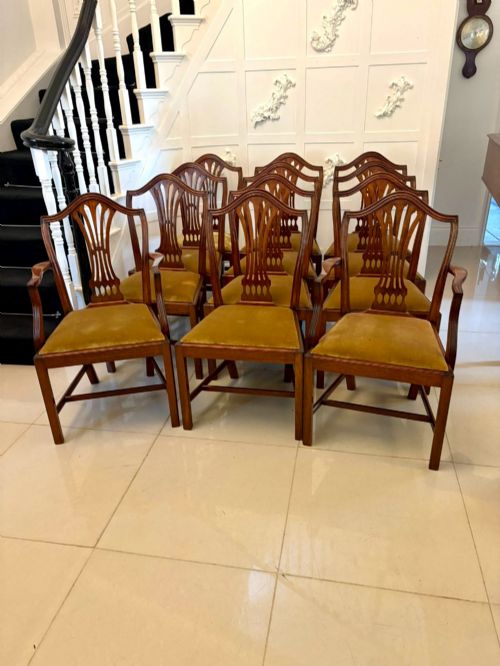
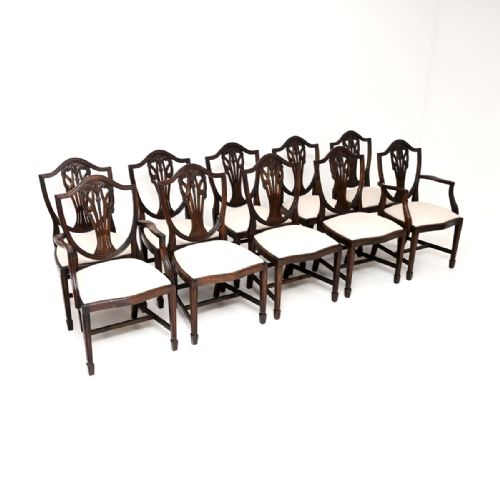
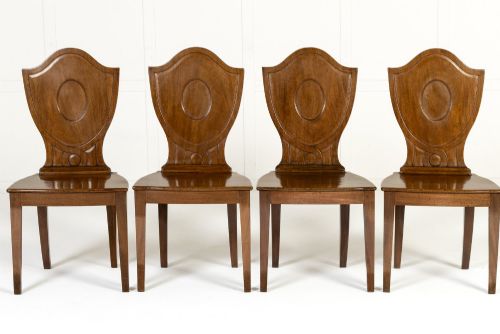
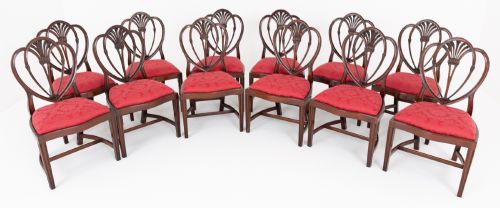
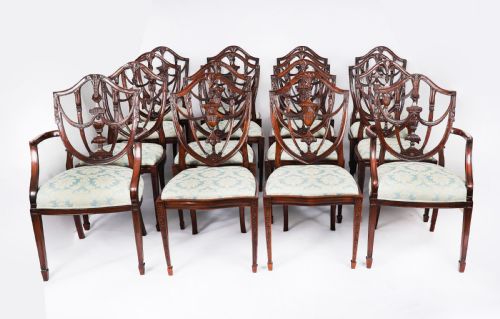
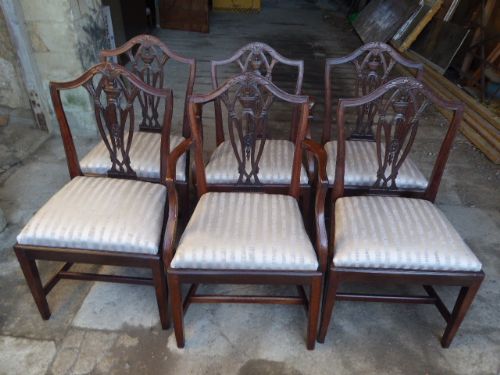
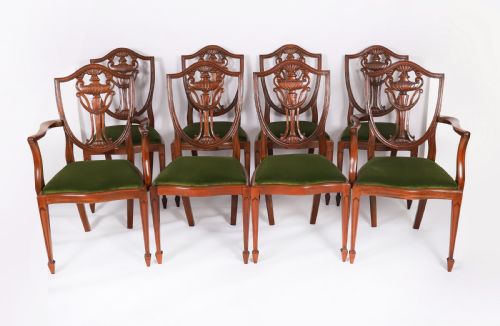
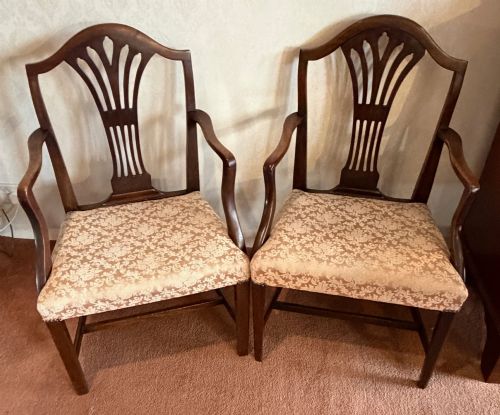
Shield back dining seats are classic timber chairs defined by their curved, protective upper rails, offering formal elegance around a dining table.
Shield Back Dining Seats
When searching for shield back dining seats, buyers encounter formal timber chairs designed for dining rooms, meeting them primarily in sets ranging from pairs up to large groupings of twelve or sixteen. These pieces span several centuries, originating in the eighteenth century under Georgian makers and returning through later revivals in the Victorian, Edwardian, and twentieth-century periods.
How they were made
Makers constructed these seats primarily using mahogany, alongside occasional examples in fruitwood, oak, and maple. Timber components were shaped to form the characteristic curved shield back, often supported by delicate splats.
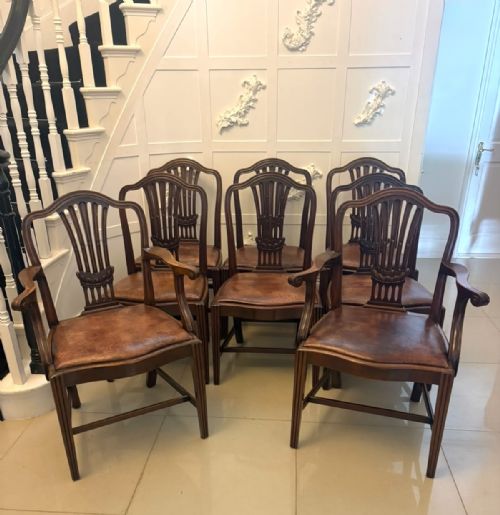
Seats incorporated traditional upholstery methods, utilising materials such as leather, fabric, velvet, and specialised upholstery fabric fixed over padding. Brass details occasionally appeared as structural or decorative fixings on specific chairs.
Some shield backs conceal secret joinery marks left by cabinetmakers who tucked their signatures beneath the wooden seat frames.
What varies in quality
Quality in these chairs rests on the precision of the timber joinery and the grace of the carved shield profile. Superior examples display crisp detailing in the splat and well-balanced proportions between the back, legs, and seat frame.
The integrity of the original wood and the retention of period leather or fabric upholstery elevate certain sets above standard production. Consistency across larger sets of ten or twelve also distinguishes high-grade dining suites from assembled groups.
Maple and Co
The Shield Back Dining Seats Glossary
- Shield back
- A chair back shaped in the outline of a defensive shield, often featuring pierced central splats with carved motifs such as the Prince of Wales feathers. This form became a hallmark of late eighteenth-century seating design.
- Carver
- An armchair designed with elbow supports, traditionally placed at the head and foot of a dining table. These accompanied matching side chairs in larger dining sets.
- Hepplewhite style
- A neoclassical design vocabulary originating in the eighteenth century and associated with lighter proportions, tapered legs, and subtle curves. Revival versions of this style appeared frequently in Edwardian workshops.
- Splats
- The vertical wooden slat positioned in the centre of a chair back between the top rail and the seat. In shield back designs, these were often intricately pierced and carved.
- Side chair
- An upright dining or salon chair manufactured without arms. These pieces were built to slide neatly beneath a dining table when not in use.
Shield Back Dining Seats: Frequently Asked Questions
How many shield back chairs usually came in a set?
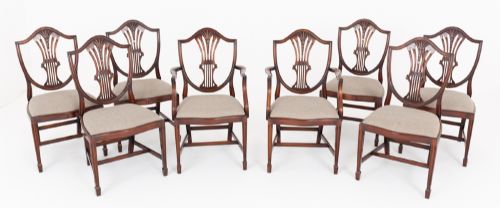
Sets varied widely, ranging from pairs of side chairs up to large matched groupings of twelve or sixteen pieces. Many larger dining sets included a combination of standard dining chairs and two carvers with arms.
Buyers often find sets of eight configured with six standard chairs and two carvers. These larger configurations suited formal dining rooms of the eighteenth, nineteenth, and early twentieth centuries.
What is the difference between Georgian and revival shield back chairs?
Original Georgian pieces date from the eighteenth century and display the hand-worked construction methods of that era. Timber patination and subtle tool marks help identify these early examples.
Revival pieces were produced during the Victorian and Edwardian periods, referencing the earlier Hepplewhite aesthetic. These later chairs utilise machinery-assisted joinery while retaining the classic shield silhouette.
Are carvers and side chairs sold together?
Many listings offer matched suites containing both carvers and side chairs. These combined sets were intended to furnish both the heads and sides of a dining table uniformly.
Splitting or mixing chair types within a single dining set became common over time, though matching sets remain intact in several listings.
What wood was most commonly used for shield back chairs?
Mahogany served as the primary timber for the vast majority of these chairs across both the Georgian period and later revivals. Its strength allowed makers to carve intricate shield backs without compromising structural integrity.
Alternative woods such as fruitwood, oak, and maple appear occasionally in specific regional or period pieces. These alternative timbers provided different grain patterns and natural tones.