





Sheraton Revival Lamp Tables
Sheraton revival lamp tables bring neoclassical elegance to a room, offering slender proportions and refined decorative detail.
Sheraton Revival Lamp Tables
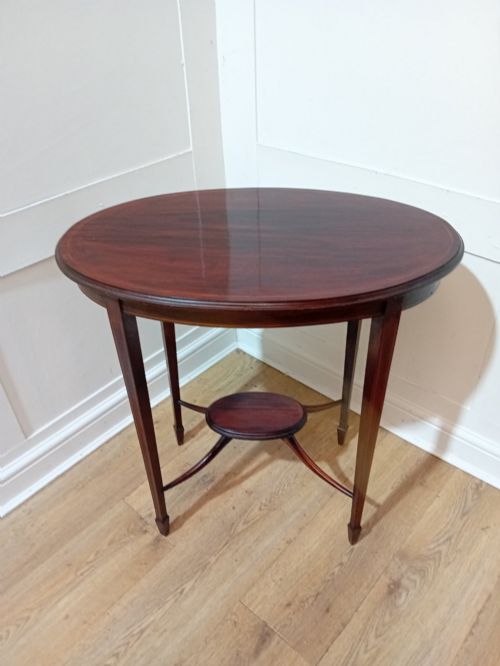
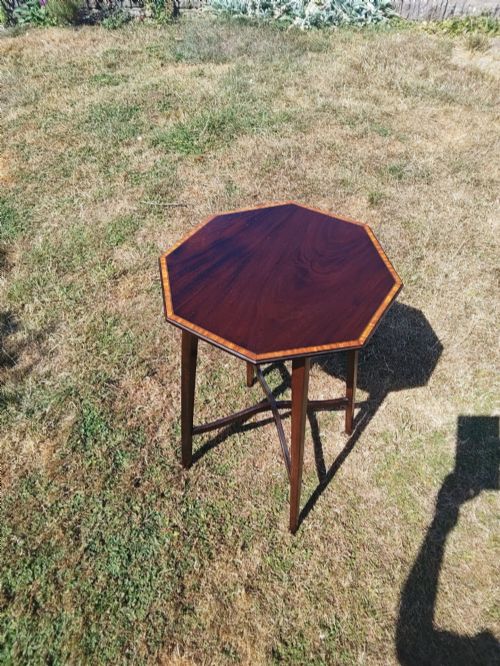
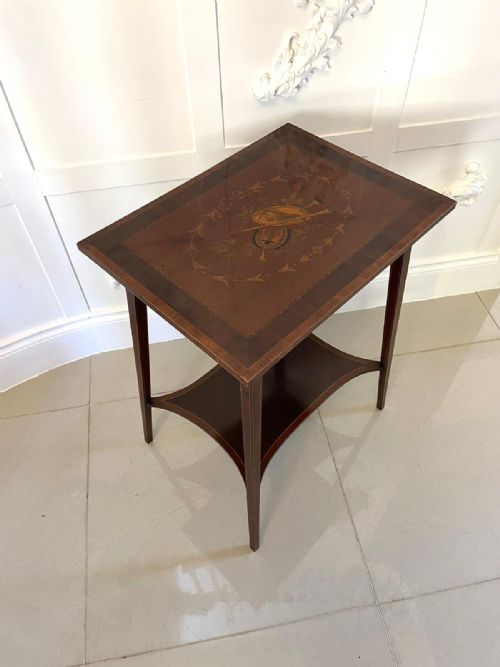
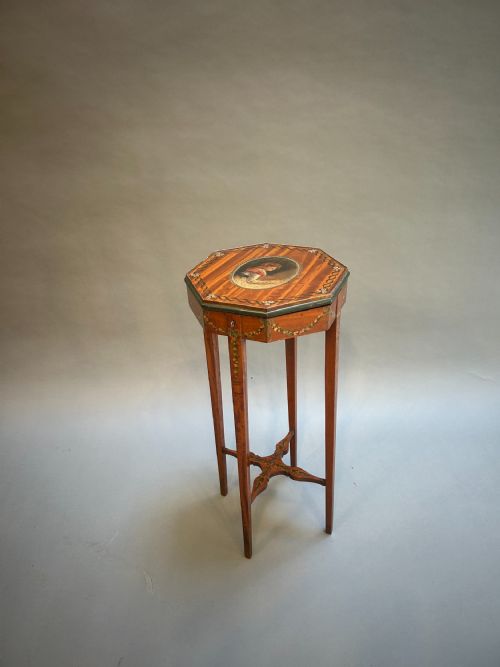
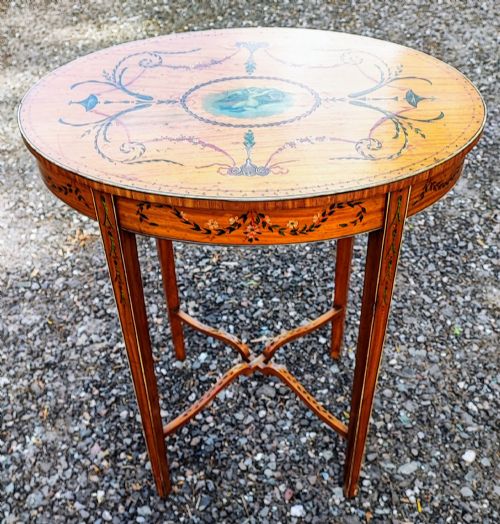
These sheraton revival lamp tables appear primarily in Edwardian interpretations alongside late Victorian examples, echoing eighteenth-century neoclassical design. They function as occasional, side, or centre tables, often taking octagonal, oval, or circular forms.
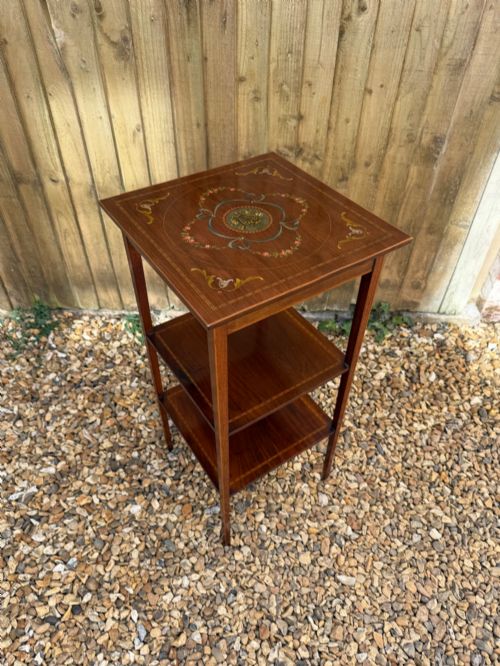
The construction ranges from simple two-tier tables to nesting sets and specialised folding game tables. Makers during the Edwardian period and late nineteenth century adapted these lightweight occasional pieces for drawing rooms and lamp placement.
Materials and Construction
Cabinetmakers utilised mahogany and satinwood as primary timbers, frequently accented with contrasting boxwood inlay and marquetry. Brass fittings appear on specific forms, while painted decoration and decorated surfaces add colourful neoclassical motifs to tabletops.
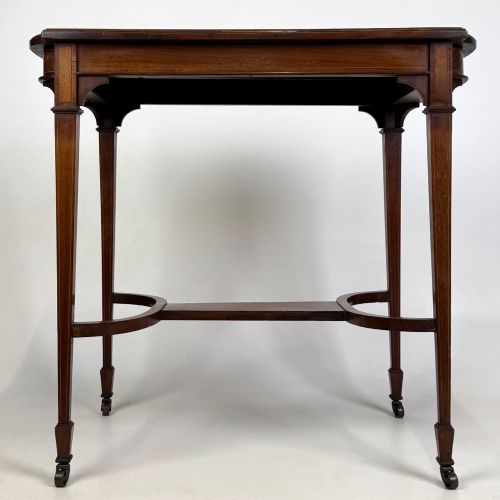
Makers employed delicate flamed veneers and precise stringing to define the geometric outlines of oval and octagonal tops. Joinery supports the slender legs characteristic of the style, balancing decorative surface work with functional stability.
Listings span from the 1880s through the Edwardian period up to 1910, uniting Victorian and twentieth-century interpretations.
Assessing Quality and Execution
The distinction between standard production and superior pieces lies in the crispness of the inlay and the choice of timber figures, such as flamed mahogany or fine satinwood. Hand-painted decorative details on the top show varying degrees of artistry and hand execution.
Structural refinement separates simpler side tables from elaborate examples featuring drop leaves, multiple tiers, or marquetry work. The precision of the boxwood stringing and the integration of secondary woods indicate the workshop's standard of craftsmanship.
The Sheraton Revival Lamp Tables Glossary
- Marquetry
- Inlaid patterns formed from different coloured woods fitted together to create pictorial or geometric designs on tabletops. This technique requires skilled cutting and placement.
- Satinwood
- A lustrous, hard timber with a golden sheen, frequently utilised for fine Edwardian and Sheraton revival surfaces. It provides a bright ground for painted decoration and inlay.
- Stringing
- Thin lines of contrasting timber, often boxwood, embedded into the surface to outline panels and legs. It creates a neat linear border around table edges.
- Etagere
- A movable set of open shelves or a tiered occasional table designed for display. These pieces provide multiple levels within a compact footprint.
Sheraton Revival Lamp Tables: Frequently Asked Questions
What is a sheraton revival lamp table?
These pieces are lightweight occasional tables produced mainly during the Edwardian era and late nineteenth century, styled after eighteenth-century neoclassical designs.
They serve as decorative surfaces for lamps, drinks, or display, typically constructed from mahogany or satinwood with inlaid details.
How do I date a sheraton revival table?
Dating relies on stylistic markers and timber choices, with most examples originating from the Edwardian period or the late nineteenth century.
Construction methods, secondary timbers, and the specific combination of boxwood inlay or painted decoration help narrow the decade of production.
Where should I place a lamp table?
Their slender proportions and decorative surfaces suit drawing rooms, sitting rooms, or hallways where space is measured.
They function well beside seating or as freestanding centre and window tables that display decorative objects or lighting.
What timber was used for these tables?
Makers relied on mahogany and satinwood as the principal woods, often accented with rosewood and boxwood stringing.
Painted surfaces and detailed marquetry frequently decorate the tops of these occasional and side tables.