

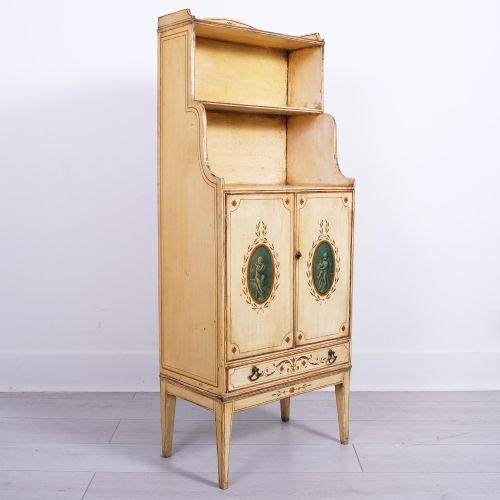


Sheraton Open Bookcase
A Sheraton open bookcase brings refined neoclassical timberwork into a room, offering accessible shelving dressed in delicate inlay.
Sheraton Open Bookcase
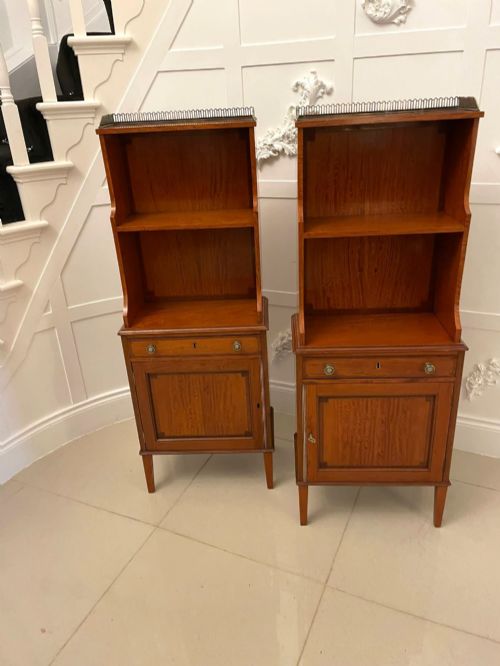
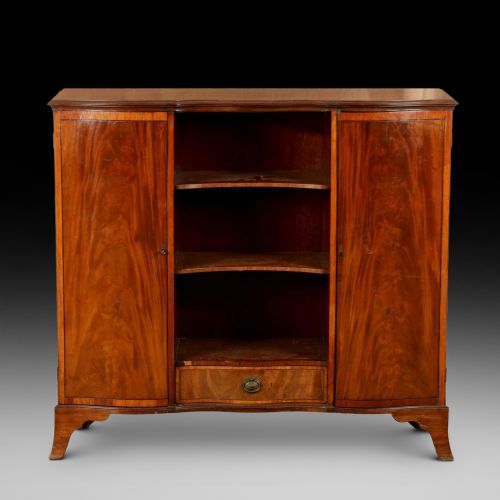
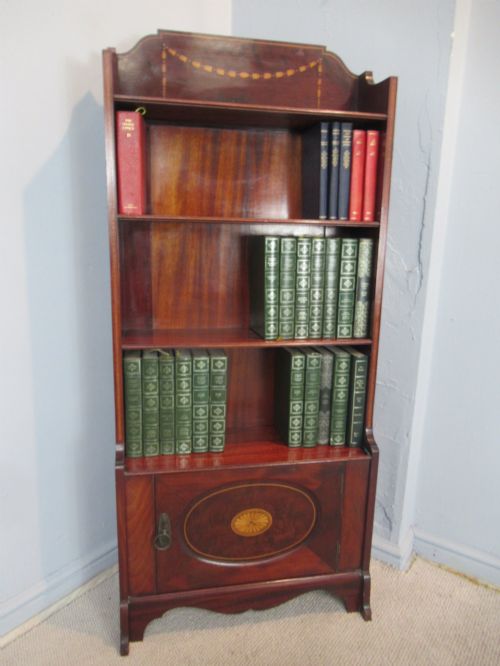
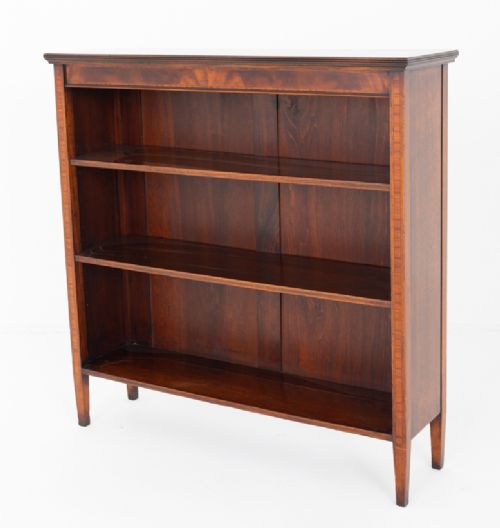
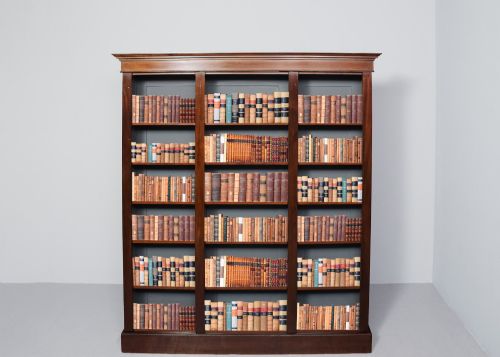
A sheraton open bookcase combines architectural proportion with restrained classical detail, appearing across formats from slender waterfall shelves to broad three-section breakfront pieces. The listings show a strong representation of late nineteenth-century revival interpretations alongside genuine Georgian examples.
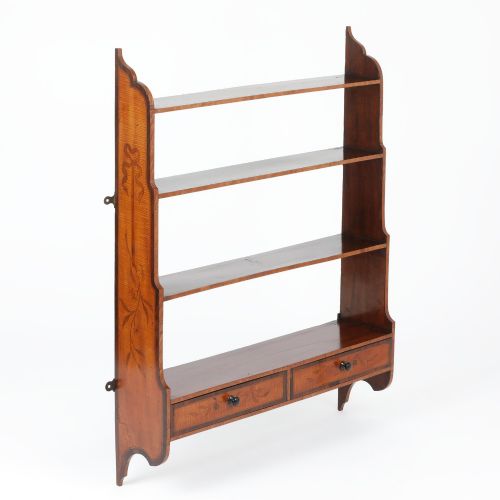
Forms vary from compact corner units and wall-hanging shelves to large triple-door breakfront cabinets featuring central open shelving bays. Makers utilised varied spatial arrangements, incorporating adjustable shelves and painted friezes within the traditional rectilinear framework.
Origins span the late eighteenth century through the Edwardian era, capturing periods of high neoclassical design and later revival movements. Buyers encounter these versatile bookcases in distinct stylistic branches including George III, Regency, and Sheraton Revival.
What varies in quality
Quality rests in the crispness of the cabinet work, from the precision of the boxwood inlay to the selection of figured timber veneers. Pieces attributed to recorded workshops demonstrate superior timber matching and refined proportions in the classical details.
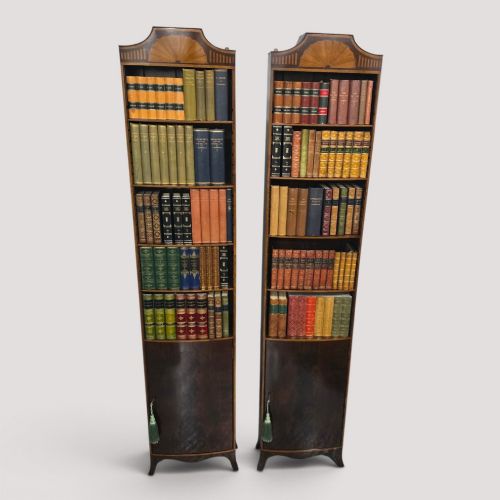
The sophistication of the painted decoration and the integration of functional elements like adjustable shelving separate standard production from exceptional examples. Surviving pairs and larger breakfront formats represent the more ambitious commissions executed in satinwood and mahogany.
Sheraton Open Bookcase Retail Price Guide 2026
Typical asking prices for sheraton open bookcase among the pieces listed under this phrase on Sellingantiques today, from the lower quarter to the upper quarter. They describe what is for sale here now, not the wider market.
Listings span the eighteenth, nineteenth, and early twentieth centuries, featuring both mahogany and satinwood constructions across open shelf and cabinet formats.
Gillows·Edwards and Roberts
The Sheraton Open Bookcase Glossary
- Satinwood
- A light-coloured timber with a natural sheen, frequently used for veneering and inlay work on neoclassical furniture. It provides a bright contrast against darker woods like mahogany.
- Inlay
- A decorative technique where pieces of contrasting wood, shell, or other material are inserted into recesses in the primary surface to form patterns. Boxwood and darker timbers create delicate linear borders.
- Breakfront
- A piece of furniture whose central section projects forward from the flanking bays. This architectural arrangement creates depth and visual rhythm across larger bookcases.
- Waterfall bookcase
- A set of open shelves where each successive tier steps back from the one below, following a tiered profile. This form appeared in both wall-hanging and freestanding formats.
- Crossbanding
- A border veneer applied around the edges of a panel or shelf, where the grain runs perpendicular to the main surface. It frames the central timber and demonstrates careful construction.
- Frieze
- The broad horizontal band situated beneath the top cornice of a bookcase, often decorated with inlay or painted motifs. In these pieces, the frieze serves as a primary decorative focus.
Sheraton Open Bookcase: Frequently Asked Questions
Where should I place a sheraton open bookcase?
These bookcases suit reception rooms, studies, or hallways where open shelving allows for the display of books and decorative objects without overwhelming the floor space.
Because many examples feature finished backs or refined sides, certain pieces function effectively away from walls as partitioning elements within a large room.
How do I adjust the shelves?
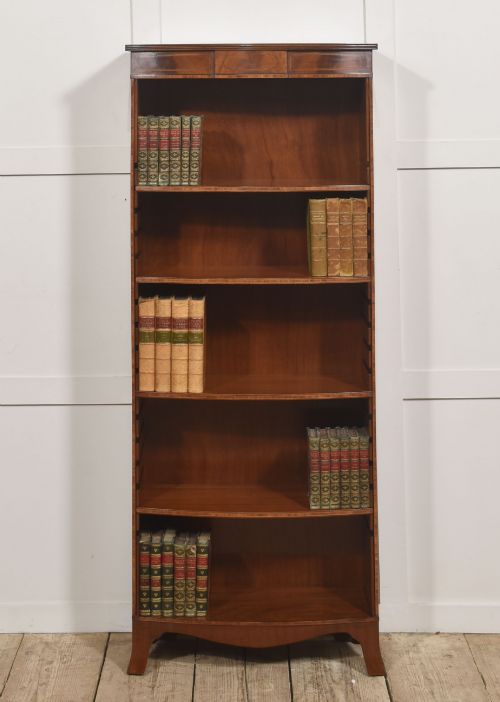
Many period open bookcases incorporate traditional wooden rackwork or brass numbered studs set into the interior sides to support the movable shelves.
Carefully lift each shelf to clear the supporting brackets before shifting them to alternative heights to accommodate volumes of varying sizes.
Are these bookcases suitable for heavy books?
The solid mahogany and satinwood carcasses provide robust structural support, though the thickness of individual shelves dictates their capacity for heavy folios.
Using the upper tiers for lighter volumes and reserving the deeper base shelves for substantial books helps preserve the alignment of the timber.
How do I tell an original Georgian piece from a revival piece?
Eighteenth-century examples typically display construction methods, timber patination, and hand-cut joinery characteristic of the period's workshop practices.
Revival pieces from the late nineteenth and early twentieth centuries often utilise machine-finished secondary woods while closely copying the earlier neoclassical design vocabulary.