

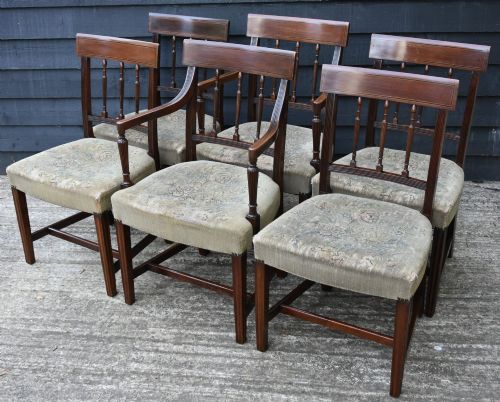
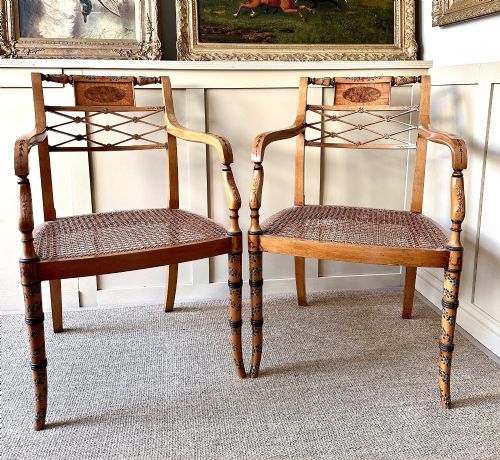
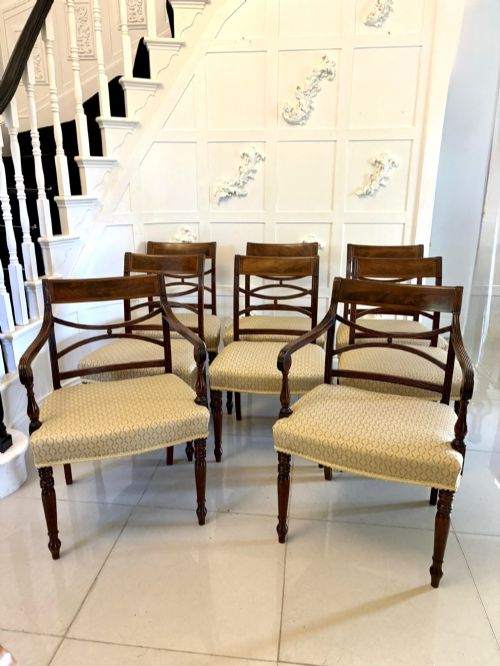
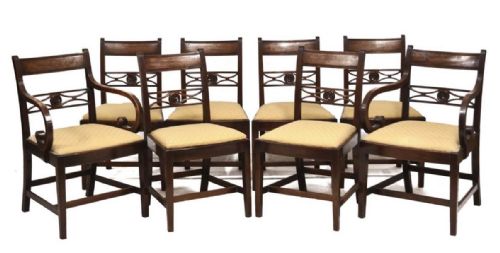
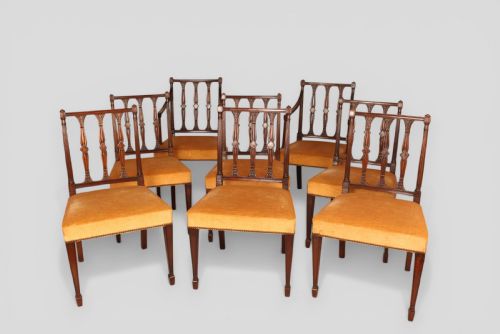

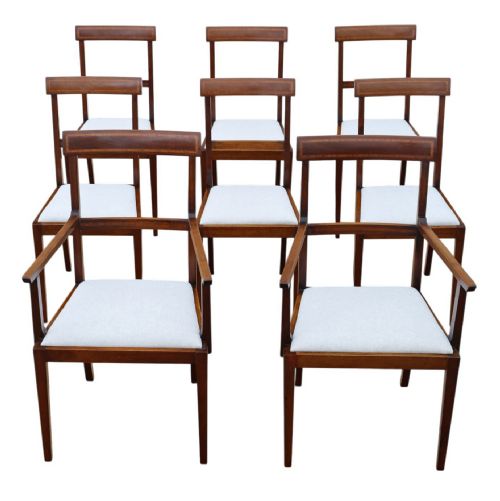


Sheraton Carver Armchair
These sheraton carver armchair selections offer refined neoclassical geometry, bringing eighteenth-century elegance and painted satinwood or polished mahogany into modern seating.
Sheraton Carver Armchair
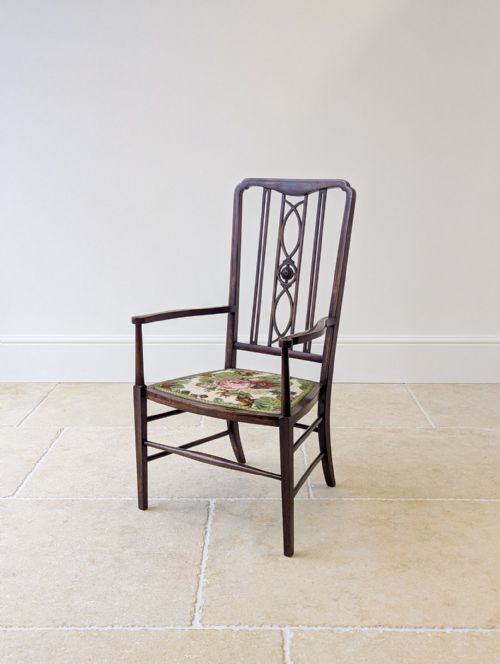
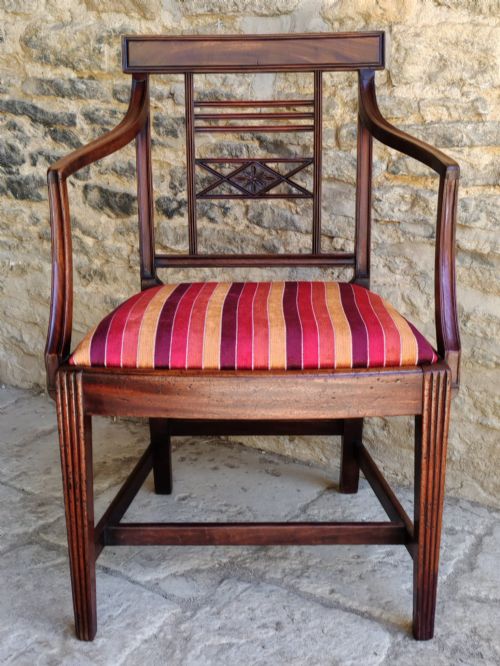
A sheraton carver armchair is a formal seating piece defined by straight tapered legs, shield or rectangular backs, and open elbows designed for the head of a dining table or a desk. Buyers exploring this category will encounter authentic eighteenth-century examples alongside later nineteenth-century and early twentieth-century revivals.
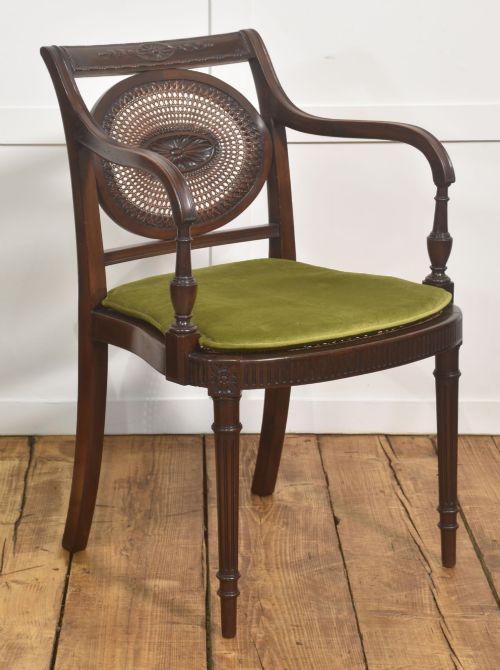
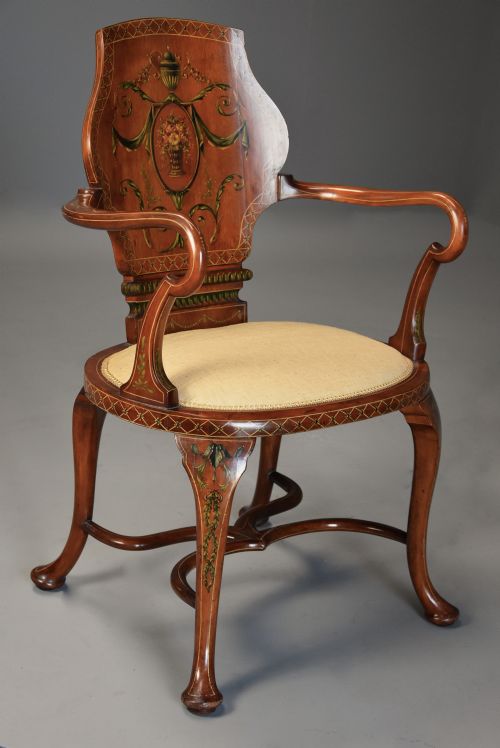
The materials and construction reflect the neoclassical tastes of the Georgian period, reinterpreted through Edwardian revival workshops using mahogany and satinwood. These chairs range from simple inlaid mahogany frames to highly decorative painted salon and library armchairs.
How they were made
Cabinetmakers utilised solid mahogany and satinwood as the primary framing timbers, often enhancing the surfaces with delicate marquetry inlay and hand-painted floral or musical decorations. Structural stability relied on precise joinery within the tapered legs and curved elbow supports.
Upholstery and cane work provided seat comfort, employing traditional fabrics, velvet, and woven cane inserts supported by brass accents where appropriate.
Sheraton Carver Armchair Retail Price Guide 2026
Typical asking prices for sheraton carver armchair among the pieces listed under this phrase on Sellingantiques today, from the lower quarter to the upper quarter. They describe what is for sale here now, not the wider market.
Some chairs incorporate painted musical motifs on the backrest, perhaps reminding seated guests not to hum too loudly during dinner.
What varies in quality
The distinction between ordinary and exceptional pieces lies in the crispness of the carved details, the precision of the wood inlay, and the finesse of any painted decoration. Finer examples display superior timber selection with rich grain patterns and robust frame construction that withstands centuries of use.
Revival pieces differ according to the fidelity of their neoclassical proportions and the hand-applied quality of their surface ornamentation, separating standard commercial output from master cabinetmaker work.
The Sheraton Carver Armchair Glossary
- Carver
- An armchair designed with open elbows, traditionally placed at the head of a dining table or utilised as a desk chair.
- Shield back
- A chair back shaped in the outline of a heraldic shield, frequently featured in neoclassical and Sheraton designs.
- Satinwood
- A durable, lustrous timber native to India and Ceylon, prized for its golden yellow colour and smooth finish.
- Inlay
- A decorative technique where contrasting woods or materials are inserted into recessed cavities on the surface of the furniture.
- Elbow chair
- An alternative term for an armchair, describing a seat fitted with side rests for the arms.
Sheraton Carver Armchair: Frequently Asked Questions
How do I identify a true period piece?
Examine the timber shrinkage, joinery methods, and wear patterns beneath the seat and along the lower legs to assess age.
Eighth-century construction techniques differ significantly from Edwardian revival manufacturing methods, visible in the hand-cut joints and patination of the wood.
Where should I place a carver armchair?
These chairs function effectively as desk seating, library reading chairs, or paired at the ends of a dining table.
Their open arms allow them to fit neatly beneath standard table heights while adding a formal decorative presence to a room.
How do I care for painted satinwood?
Keep painted and satinwood surfaces away from direct sunlight and excessive heat fluctuations to prevent the timber from splitting.
Dust gently with a dry, soft cloth and avoid chemical polishes that can damage hand-painted floral or musical decorations.
What is the difference between George III and Sheraton Revival?
George III pieces date directly from the late eighteenth century during the reign of King George III and represent original neoclassical production.
Sheraton Revival furniture dates primarily from the late Victorian and Edwardian eras, replicating those earlier eighteenth-century designs with period machinery and updated workshops.