
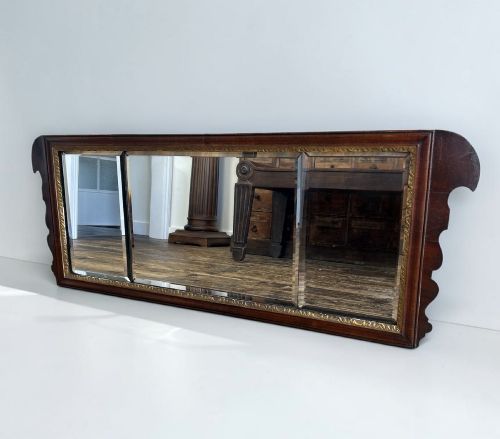


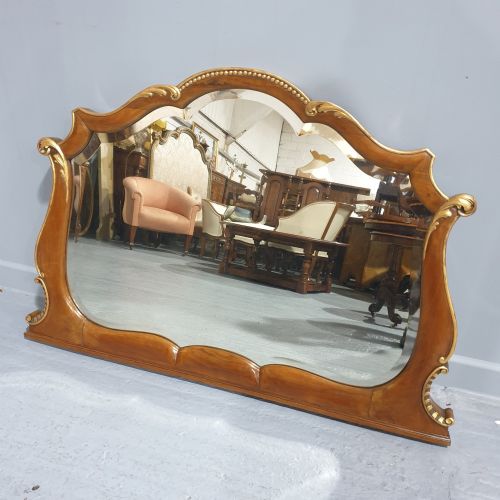


Shaped Walnut Mirror
A shaped walnut mirror brings warmth and distinct outline to a room, ranging from grand Georgian overmantels to sleek Art Deco forms.
Shaped Walnut Mirror
A shaped walnut mirror appears in various distinct forms across multiple periods, including wall mirrors, overmantel mirrors, pier mirrors, and dressing tables. Buyers seeking a shaped walnut mirror encounter items ranging from early eighteenth-century Queen Anne and Georgian pieces to later Art Deco designs.
The selection frequently includes wall-hanging pieces and dressing-table items, with regional examples originating from England, France, and Italy. Pieces span the nineteenth and twentieth centuries, incorporating revival styles alongside period originals.
Differentiating quality across pieces
Quality variation rests in the selection of the timber veneer, with highly figured burr walnut commanding attention for its intricate grain patterns. The finesse of the hand-carved elements, such as parcel gilt accents and shell motifs, marks the distinction between standard and superior workshops.
The integrity of the mirror glass and the precision of the frame's specific outline further divide the range. Original period pieces demonstrate superior joinery and finishing compared to later revival items.
One nineteenth-century mirror takes the distinct form of a heraldic shield.
Harry and Lou Epstein
The Shaped Walnut Mirror Glossary
- Burr walnut
- A prized timber harvested from the tree's growth growths, showing complex, swirling grain patterns. It adds distinct visual texture to furniture frames.
- Parcel gilt
- A decorative technique where specific carved portions of a wooden object receive a thin layer of gold leaf. This highlights particular architectural details against the dark wood.
- Pier mirror
- A tall mirror designed specifically to hang on the wall space between two windows. These pieces often match console tables positioned directly below them.
- Overmantel mirror
- A large mirror intended for placement directly above a fireplace mantelpiece. They frequently span substantial widths to reflect light across the room.
- Cushion mirror
- A mirror frame featuring a convex, padded profile that swells outward toward the glass. This style was particularly popular during the seventeenth and early eighteenth centuries.
Shaped Walnut Mirror: Frequently Asked Questions
How do I identify a Georgian shaped walnut mirror?
Georgian pieces often feature traditional silhouettes like Queen Anne designs, cushion frames, or parcel gilt highlights. They rely on period joinery and rich walnut timbers without modern synthetic adhesives.
Examining the reverse and the bevel of the glass provides further clues to their eighteenth-century origins.
What defines an Art Deco walnut mirror?
Art Deco examples, largely dating around nineteen thirty, utilise streamlined geometric shapes such as cloud outlines or rectangular forms. They showcase the smooth grain of the wood with minimal carving.
These pieces often form part of dressing tables or serve as portrait-hanging wall mirrors.
Where should I place a pier mirror?
Pier mirrors are traditionally hung on the narrow wall space between two windows to maximise light reflection. They work well in reception rooms and hallways to enhance spatial depth.
Their tall proportions suit vertical wall spaces where standard horizontal mirrors would appear out of scale.
What is burr walnut?
Burr walnut is derived from a growth on the walnut tree, yielding an irregular, highly figured grain pattern. Cabinetmakers valued this timber for decorative veneer work on high-end furniture and mirror frames.
It creates a rich, mottled appearance that catches the light differently than straight-grained walnut.