




Shaped Walnut Frame
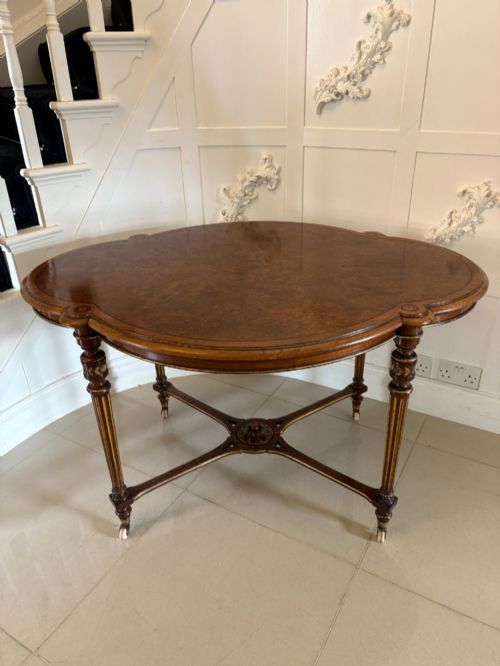
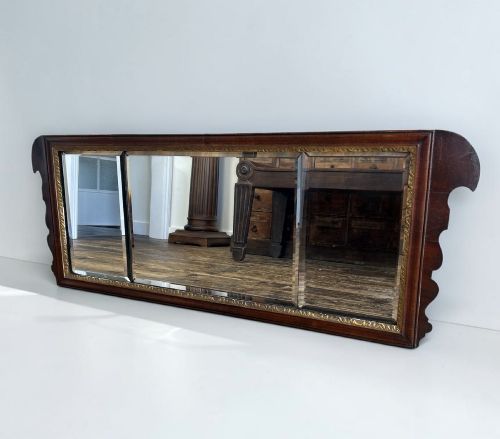
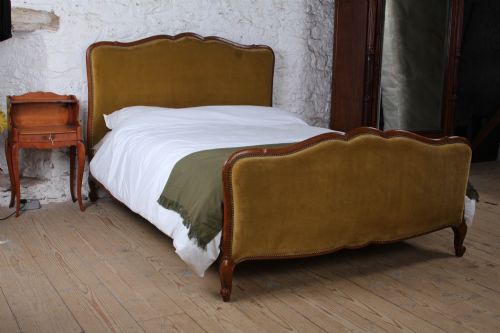
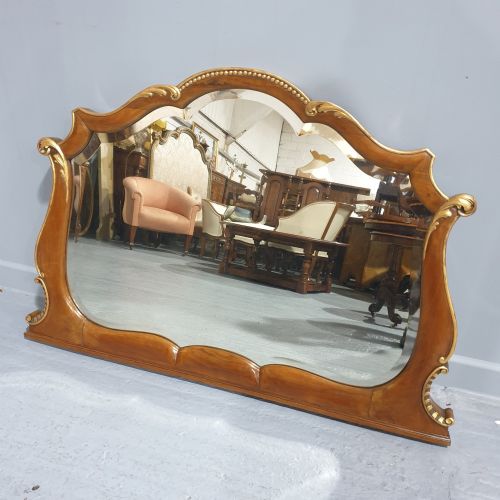
These pieces with a shaped walnut frame bring warmth and decorative presence to a room, spanning wall mirrors, beds, and tables.
Shaped Walnut Frame
A shaped walnut frame appears on mirrors, beds, tables, chairs, and a diner gong across multiple periods.
Mirrors form the most common group on this page, ranging from George I and Queen Anne styles to Art Deco and Italian Renaissance designs.
Furniture pieces include French upholstered double beds, Art Deco double beds, occasional tables, and wing chairs supported on cabriole legs.
How they were made
Cabinet makers utilised solid walnut and burr walnut veneer over supportive timber carcasses to build these curved outlines.
Giltwood, parcel gilt accents, and brass details complement the warm brown tones of the timber.
Mirrors incorporate glass and mirror glass plates, occasionally accompanied by velvet panels or carved shell decoration.
Among the seating and mirrors, one walnut framed diner gong waits to summon households to dinner.
What varies in quality
The refinement of the curved silhouette dictates the visual success of the piece, from simple wood frames to elaborate parcel gilt carving.
The choice between plain walnut and highly figured burr walnut alters the richness of the finished surface.
The Shaped Walnut Frame Glossary
- Walnut
- A dense, hard timber prized for its rich brown colour and varied grain patterns. It forms the primary structural and decorative material for these frames.
- Parcel Gilt
- Partially gilded with gold leaf to highlight specific carved details or mouldings. This technique adds contrast against the dark walnut ground.
- Burr Walnut
- A specialised wood veneer taken from the growth excrescences of the tree. It yields highly decorative, swirling grain patterns across larger surfaces.
- Cabriole Leg
- A furniture leg that curves outward and then tapers inward, finishing in a pad or foot. This form appears frequently on chairs from the early twentieth century.
Shaped Walnut Frame: Frequently Asked Questions
What periods do these pieces date from?
The selection includes items from the nineteenth century alongside pieces from the 1900s, 1910s, 1920s, and 1930s.
Earlier examples reflect Georgian, Queen Anne, and Renaissance revival styles, while later items embrace Art Deco design.
Are most of these items mirrors?
Mirrors represent a significant portion of the selection, including overmantel mirrors, triple plate mirrors, and wall mirrors.
However, the category also encompasses double beds, occasional tables, wing chairs, and a diner gong.
What materials accompany the walnut?
Makers combined walnut with mirror glass, standard glass, brass hardware, and textile elements such as velvet upholstery.
Giltwood and parcel gilt highlights frequently appear on the carved frames of mirrors.
How do Art Deco pieces differ from earlier styles?
Art Deco pieces from the 1930s favour geometric symmetry and streamlined curves, such as fan-shaped bed designs.
In contrast, pieces inspired by the eighteenth century utilise traditional carving, parcel gilt detailing, and cabriole legs.