

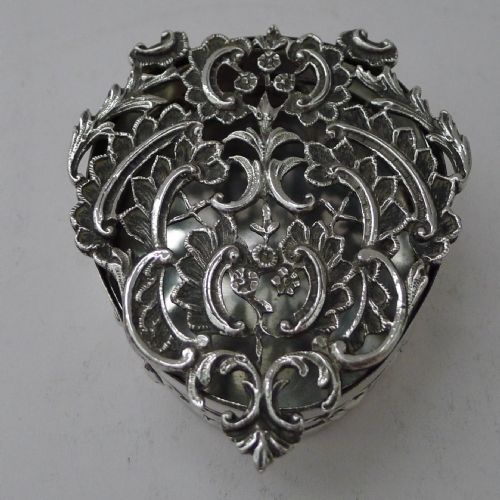

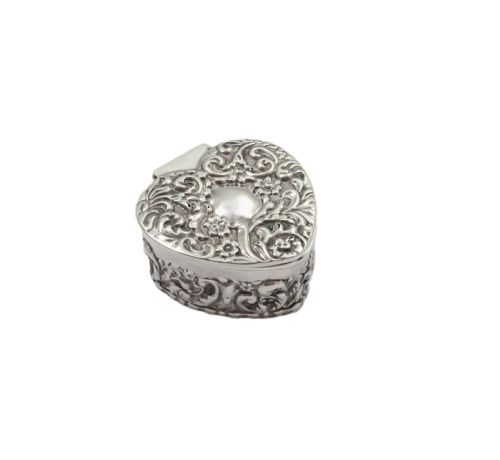


Shaped Silver Trinket Box
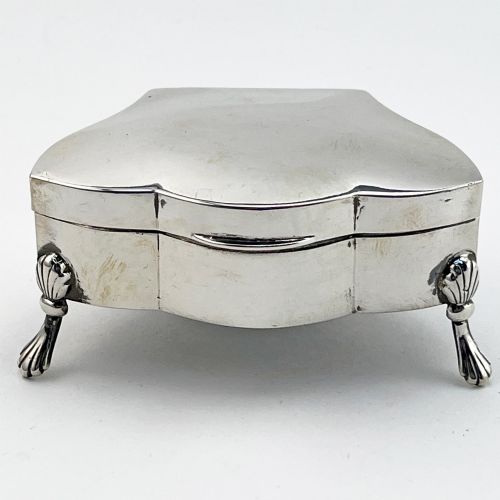
A shaped silver trinket box holds small keepsakes securely while displaying the intricate forms favoured by Victorian and Edwardian silversmiths.
Shaped Silver Trinket Box
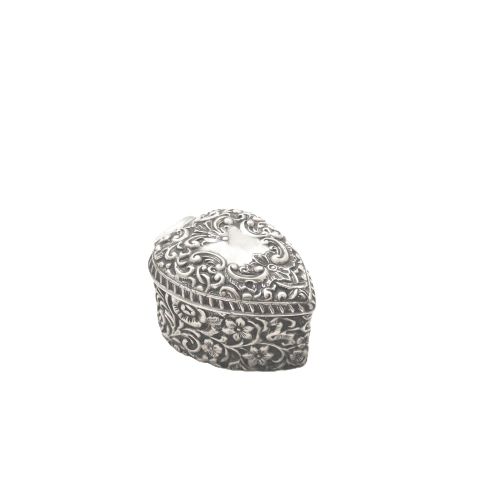
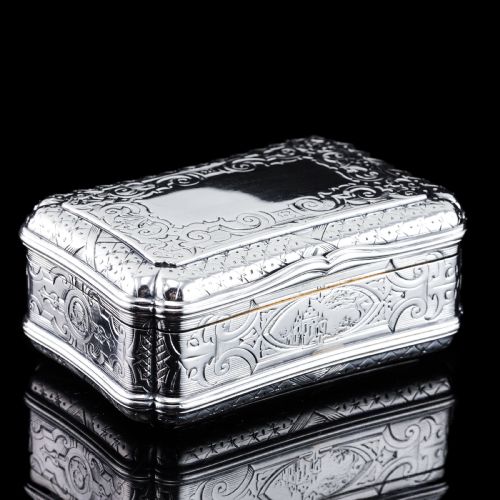
A shaped silver trinket box encompasses small containers designed for dressing tables, desks, and pocket use. These pieces emerge most frequently in heart, chest, and oval forms, dating predominantly from the Victorian and Edwardian eras. Buyers encounter hinged lids, engraved cartouches, and occasionally fitted interiors intended for rings or patches.
The selection ranges from diminutive pill boxes to larger cut glass and crystal vessels capped with embossed silver lids. Makers utilised varied outlines including shell, fan, and pebble profiles alongside traditional geometric shapes. This variety reflects the changing ornamental demands of domestic interiors across the nineteenth and early twentieth centuries.
Materials and Construction
Silversmiths constructed these boxes using sterling silver sheets shaped by hand or pressed with dies, frequently incorporating hinged lids and internal velvet or silk linings. Many examples utilise cut glass or crystal bodies paired with hallmarked silver mounts, combining heavy refractive glass with worked metal. Certain pieces feature vermeil, applying a gold wash over the interior silver surface.
Decoration relied on embossing, chasing, and hand engraving to produce floral motifs, scrollwork, and blank shields for monograms. Workshops like those of William Comyns specialised in pierced silver work and elaborate repoussé designs. Hallmarks stamped directly into the metal record the assay office, city, and year of production.
Listings demonstrate a strong prevalence of heart-shaped sterling silver boxes produced across Victorian and Edwardian Birmingham and London workshops.
Distinctions in Execution
Quality rests upon the crispness of the chased or pierced decoration and the structural integrity of the hinge. Superior items retain deep relief in their motifs without thinning of the metal plate from excessive polishing. The weight of the silver and the precise alignment of the lid distinguish workshop standards.
In composite pieces, the thickness of the cut glass and the tightness of its fit within the silver collar determine the standard. Maker attribution also influences significance, with documented pieces by established silversmiths commanding greater attention from collectors.
Edward Smith·William Comyns·Deakin & Francis·Mappin & Webb
The Shaped Silver Trinket Box Glossary
- Vermeil
- Sterling silver plated with a thin layer of gold. This finish protected the interior from tarnishing when storing powder or cosmetics.
- Cartouche
- An ornamental frame or panel, often oval or shield-shaped, left blank or engraved with initials. These appear frequently on the lids of snuff and trinket boxes.
- Repoussé
- A metalworking technique where the silversmith hammers the design from the reverse side to form a raised pattern. This method created the intricate floral relief seen on many Edwardian boxes.
- Hallmark
- A series of official marks stamped on precious metals indicating the standard of purity, assay office, and year. These stamps provide verifiable dates for English silver.
- Patch Box
- A small container originally used for holding cosmetic beauty patches worn in the eighteenth century. Later Victorian examples repurposed these diminutive forms for pins and pills.
Shaped Silver Trinket Box: Frequently Asked Questions
What were shaped silver trinket boxes used for?
These vessels served as ornamental containers for dressing tables and desks, holding small personal valuables such as rings, pins, and visiting cards. Smaller variants functioned as pocket receptacles for snuff, pills, or decorative face patches.
Their presence in domestic spaces combined practical storage with the display of refined metalwork during the Victorian and Edwardian periods.
How can I date my silver box?
Dating relies primarily on the hallmarks stamped into the silver, which include a date letter corresponding to a specific assay office and year. Style, form, and decorative motifs also offer broad chronological markers.
Pieces from the Victorian era often display heavier cast scrollwork, whilst Edwardian examples frequently utilise lighter pierced designs or glass bodies.
What is the difference between a trinket box and a pill box?
Pill boxes are substantially smaller in scale, designed specifically to fit into a waistcoat pocket or small handbag for carrying medicinal doses. Trinket boxes possess larger dimensions suited for display on a dressing table or desk surface.
Both forms utilise similar hinged constructions and decorative techniques, but their intended domestic contexts differ entirely.
Are cut glass and silver boxes authentic antiques?
Many dressing table items combined heavy cut crystal or glass bodies with hallmarked silver collars and lids during the late nineteenth and early twentieth centuries. These composite pieces were standard commercial products of Edwardian silversmiths.
Examining the hallmarks on the silver mount confirms the exact period of production for the metal elements.