

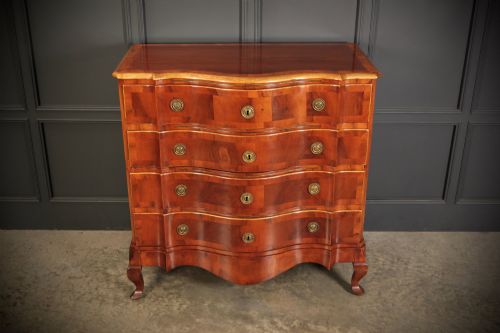
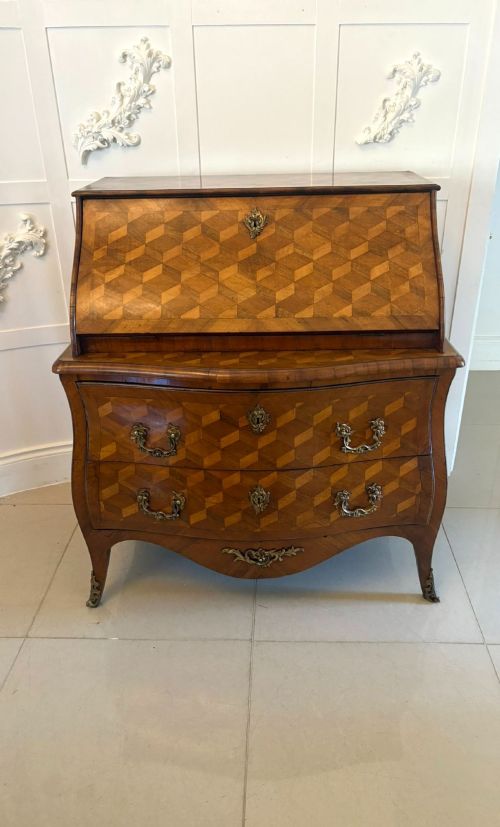
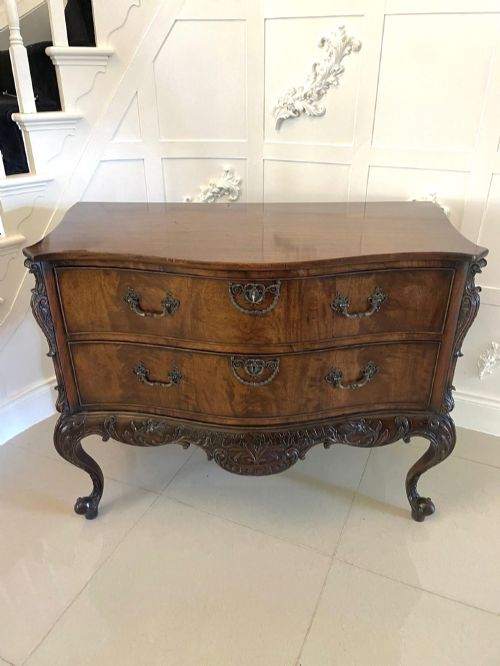
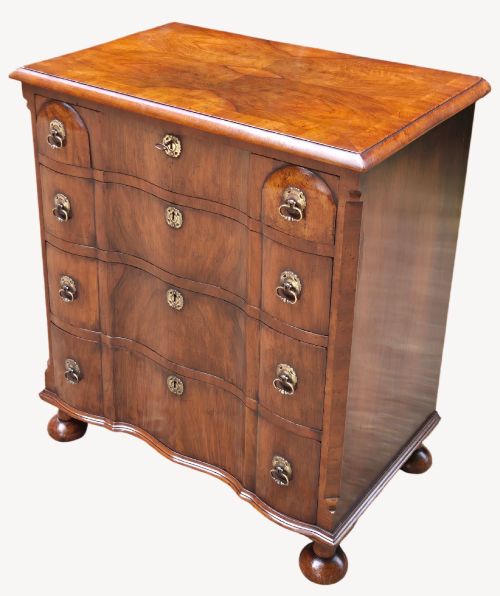




Shaped Front Commode
A shaped front commode offers a sweeping silhouette and generous storage, bringing movement and craftsmanship to any interior.
Shaped Front Commode
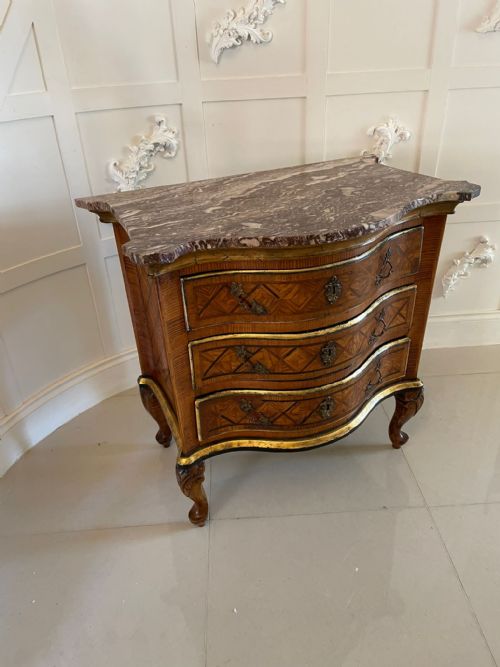
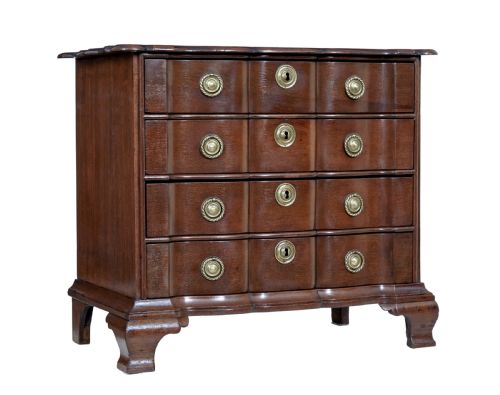
A shaped front commode encompasses serpentine, bombe, and block-front chests of drawers alongside sideboards originating from the eighteenth to the early twentieth century. Buyers seeking this phrase encounter varied regional interpretations, from Dutch baroque and rococo designs to Victorian and Georgian variations.
The materials span walnut, burr walnut, mahogany, figured mahogany, burr elm, oak, and kingwood, frequently paired with marble tops or brass hardware. Pieces span stylistic influences including Queen Anne, George II, Hepplewhite, and Italian rococo.
Materials and Construction
Cabinetmakers utilised rich timber veneers such as burr walnut, figured mahogany, and kingwood over robust secondary woods like oak and walnut. Intricate parquetry inlay and curved serpentine or bombes profiles demanded advanced woodworking skill to shape solid timber and veneer curved surfaces.
Marble tops added weight and a finished surface to select eighteenth-century examples, while brass handles and escutcheons provided functional ornamentation. Joinery relied on traditional hand-cut dovetails and pegged frames to sustain the complex, curved carcasses.
Shaped Front Commode Retail Price Guide 2026
Typical asking prices for shaped front commode among the pieces listed under this phrase on Sellingantiques today, from the lower quarter to the upper quarter. They describe what is for sale here now, not the wider market.
Early cabinetmakers coaxed unruly burr elm and walnut into voluptuous curves, proving wood can indeed learn to dance.
Distinctions in Quality
The standard of a shaped front commode rests upon the selection of timber figures, such as highly figured walnut or burr elm, and the precision of its parquetry inlay. Fluidity in the serpentine or bombe sweep indicates superior cabinetmaking, ensuring the carcass maintains structural harmony alongside visual movement.
Original brass hardware and intact marble tops elevate a piece, whereas later replacements or poorly fitted surfaces alter the integrity of the design. The crispness of carved details and the seamless alignment of drawer-front grains separate standard production from exceptional examples.
The Shaped Front Commode Glossary
- Serpentine
- A furniture front curving outward at the centre and inward at the sides, creating a gentle wave effect. This contour requires precise cutting and fitting of timber veneers.
- Bombe
- A swollen or bulging outward profile characteristic of continental furniture, particularly Dutch and Italian pieces from the eighteenth and nineteenth centuries. It gives the carcass a rounded, volumetric presence.
- Parquetry
- Geometric patterns formed by fitting small pieces of contrasting veneer together on a surface. It appears on high-status eighteenth-century commodes to decorative effect.
Shaped Front Commode: Frequently Asked Questions
What is a shaped front commode?
A shaped front commode is a decorative chest of drawers or sideboard featuring curved, serpentine, or bombes outlines. These forms emerged across European cabinetmaking to break the monotony of flat furniture.
They combine functional storage with sophisticated joinery and decorative wood veneers.
How do I date a shaped front commode?
Dating relies on examining the secondary woods, construction methods, and hardware styles. Eighteenth-century pieces often display hand-cut dovetails and specific regional timber choices.
Later Victorian and Edwardian revivals adopt historical styles while utilising nineteenth- or twentieth-century manufacturing techniques.
Where should I place a commode?
These pieces serve as focal points in hallways, living rooms, or bedrooms due to their sculptural silhouettes. Their curved profiles allow them to soften corners and add movement to an interior scheme.
Sufficient clearance ensures the sweeping drawers and doors operate without obstruction.
What is the difference between a commode and a chest of drawers?
While both provide storage, the term commode often denotes continental European or French-influenced decorative cabinets with ornate shaping and marble tops. Chests of drawers typically describe British or vernacular forms with similar serpentine or block-front profiles.
Both categories overlap significantly in eighteenth and nineteenth-century terminology.