





Shadow Box Wall Art
These shadow box wall art pieces are deep framed displays framing everything from maritime dioramas to textile arrangements, bringing tangible depth to your interior walls.
Shadow Box Wall Art
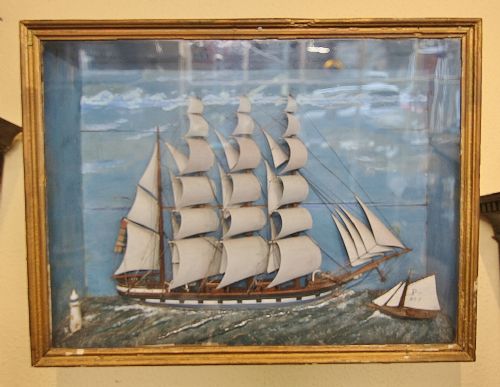
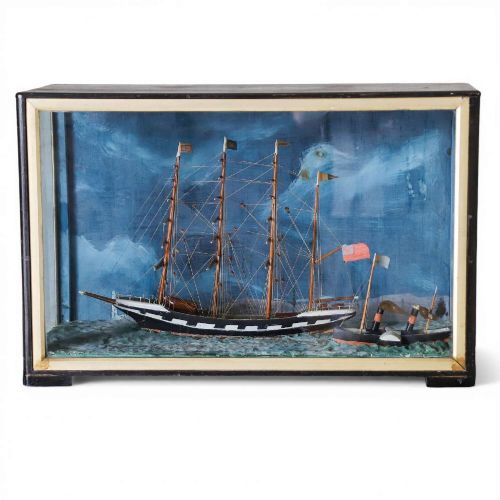
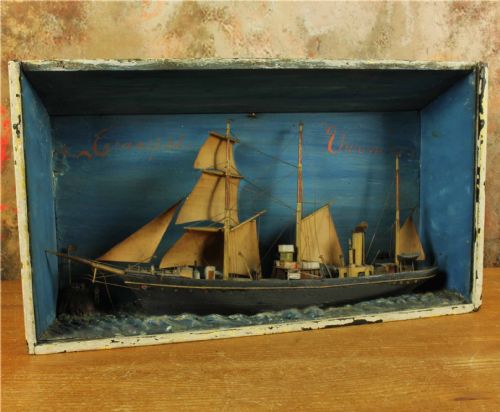
When you search for shadow box wall art, you encounter a diverse collection of deep-framed objects that combine three-dimensional displays with wall hanging. The pieces on this page span the nineteenth century and the early twentieth century, taking forms such as maritime dioramas, framed textiles, and automata. Victorian examples dominate the selection, often presenting intricate folk art or commemorative scenes within glazed wooden enclosures.
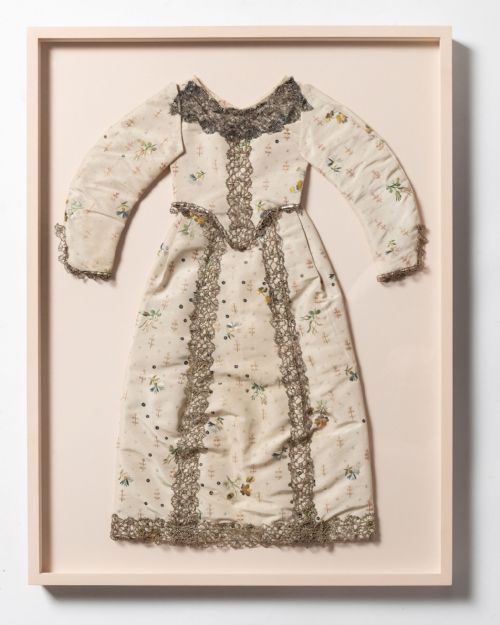
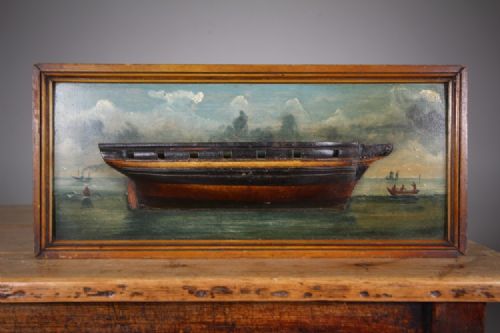
Maritime subjects recur frequently among these pieces, featuring handmade boat models, sailing ships racing at sea, and turneresque seascapes housed behind glass. Alongside these nautical scenes, you find delicate textile displays including lace fans and dresses mounted against velvet or canvas. Other variations include gilt relief tableaux, clockwork dioramas, and detailed zodiac seal displays set in oak frames.
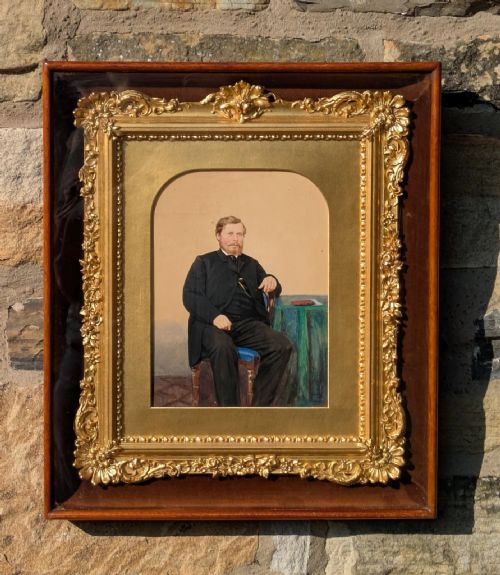
The materials used in these constructions reflect both domestic craft and maritime tradition, utilising wood, glass, paint, plaster, and various fabrics. Makers ranged from anonymous folk artists to skilled French model makers working in locations like Vienne. Whether depicting a four-masted sailing ship or a framed portrait within a deep gilt frame, each item offers a tangible window into past craftsmanship.
Materials and Construction Techniques
The construction of these pieces relies heavily on deep wooden framing designed to protect and isolate the interior scene behind glass. Within these glazed boxes, makers built complex layers using painted canvas, plaster, and carved wood to create perspective and depth. Maritime dioramas incorporate scratch-built ship models fashioned from wood and thread, set against painted seascapes that often utilise Turneresque atmospheric effects.
Textile displays utilise rigid mounts such as velvet, silk, and canvas to support delicate items like mother-of-pearl and lace fans or antique dresses. Gilt relief work employs plaster and metallic finishes to build up sculptural tableaux of figures or decorative motifs. Mechanical elements, including clockwork mechanisms and automata, are integrated discreetly within the box casing to drive movement within the display.
Shadow Box Wall Art Retail Price Guide 2026
Typical asking prices for shadow box wall art among the pieces listed under this phrase on Sellingantiques today, from the lower quarter to the upper quarter. They describe what is for sale here now, not the wider market.
Several boxes contain tiny fighting men and sailing ships racing eternally across painted seas, locked in miniature maritime battles behind glass.
Assessing Quality and Execution
Quality in these pieces depends on the intricacy of the interior composition and the preservation of the delicate elements inside the glazed box. Superior examples demonstrate meticulous detail in scratch-built ship models, automata, or relief sculpture, whereas lesser pieces rely on simpler, mass-produced components. The dexterity required to assemble complex rigging or miniature figures distinguishes fine folk art from basic assembly.
The condition of the internal textiles and painted surfaces also determines the standing of an item, as exposure to light and moisture degrades materials like silk, lace, and canvas. Original framing, particularly deep gilded mouldings or specialised oak surrounds, enhances the integrity of the piece. When the glazing, mountings, and internal artefacts remain undisturbed from their period of origin, the overall quality rises significantly.
The Shadow Box Wall Art Glossary
- Shadow Box
- A deep, glass-fronted framed container designed to hold and display three-dimensional objects or dioramas on a wall. It protects delicate artefacts while creating a sense of depth and perspective.
- Diorama
- A three-dimensional scene representing historical events, maritime vessels, or landscapes using small-scale models and painted backgrounds. These are enclosed within a box frame to preserve the composition.
- Automata
- Self-operating mechanical devices constructed to imitate human or animal actions within a display. They utilise internal clockwork mechanisms to create movement.
- Folk Art
- Artistic work produced from an indigenous culture or peasant society, reflecting traditional craftsmanship rather than academic training. Scratch-built ship models and naive tableaux fall into this category.
- Turneresque
- A descriptive style of painting characterised by dramatic light, atmospheric effects, and turbulent seas reminiscent of the works of J. M. W. Turner.
Shadow Box Wall Art: Frequently Asked Questions
What is shadow box wall art?
Shadow box wall art consists of deep, glazed frames enclosing three-dimensional displays, such as maritime ship models, mechanical automata, and textile arrangements. These pieces project outward from the wall, offering a protected environment for intricate objects.
Originating largely in the nineteenth and early twentieth centuries, these items combine framing with sculptural or assembled contents. They serve as decorative focal points that showcase historical craftsmanship.
How were maritime dioramas made?
Maritime dioramas were constructed using scratch-built wooden boat models placed inside deep wooden boxes behind glass. Makers painted backgrounds on canvas or plaster to simulate seascapes and atmospheric conditions.
Meticulous handiwork went into rigging the miniature vessels and shaping waves. These maritime pieces often depicted specific sailing ships or racing scenes from the Victorian era.
How do I hang a deep shadow box?
Hanging a shadow box requires sturdy fixings due to the weight of the deep wooden frame, glass, and internal components. Wall anchors and heavy-duty picture wire or brackets ensure the piece is supported securely.
Position the box at eye level where the three-dimensional depth and internal details can be viewed clearly. Avoid areas with direct sunlight to protect delicate interior materials like silk, lace, and painted surfaces.
Are these pieces handmade?
Many of these items are handmade folk art or scratch-built models created by skilled artisans and enthusiasts. Nineteenth-century examples frequently feature hand-carved ship models and custom-built frames.
Makers utilised a combination of carpentry, painting, and textile mounting to construct each unique display. This individual craftsmanship ensures that no two shadow boxes are identical.