


Sevres Style Blue Vases
Sevres style blue vases combine rich porcelain bodies with gleaming ormolu mounts to capture the ornate grandeur of French decorative arts.
Sevres Style Blue Vases
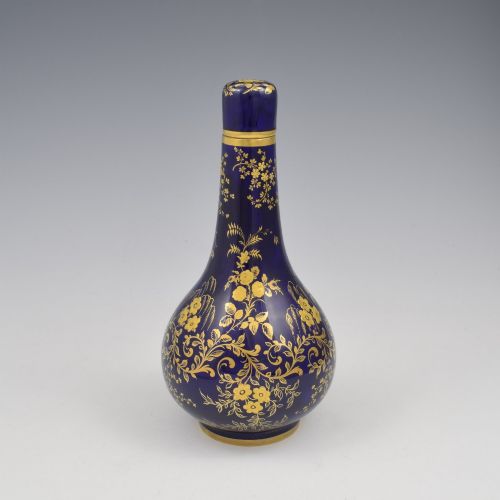
These pieces are decorative vessels produced across the nineteenth and early twentieth centuries, drawing inspiration from the renowned French factory. When searching for sevres style blue vases, buyers encounter a wide variety of forms including lidded urns, bottle vases, and table lamps.
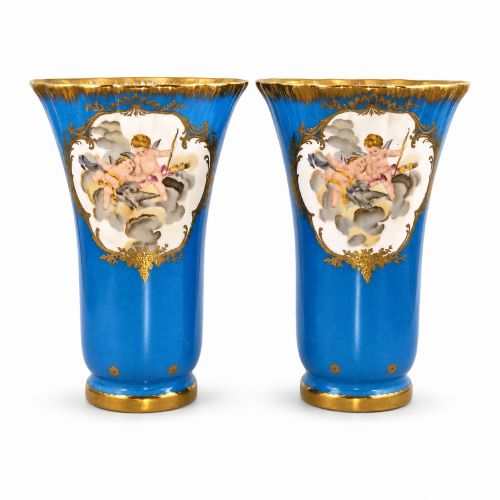
The objects frequently appear in pairs or garniture sets designed to sit symmetrically upon mantelpieces or side tables. Most examples date from the nineteenth century, spanning periods from the eighteen sixties through the nineteen twenties.
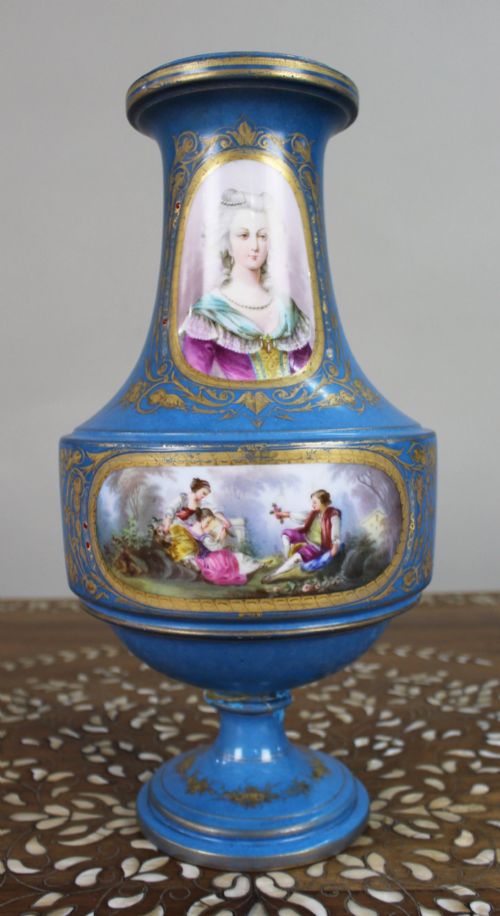
Makers often utilised distinctive bleu céleste or cobalt blue ground colours as a backdrop for hand-painted details. Forms range from simple wide-rim vases to monumental lidded urns fitted with elaborate metal mounts.
Materials and construction
Makers shaped these items from ceramic bodies glazed in vibrant blue shades, frequently applying gold leaf and enamel to highlight surface details. The porcelain receives hand-painted decoration, often featuring classical scenes or floral motifs framed by gilt borders.
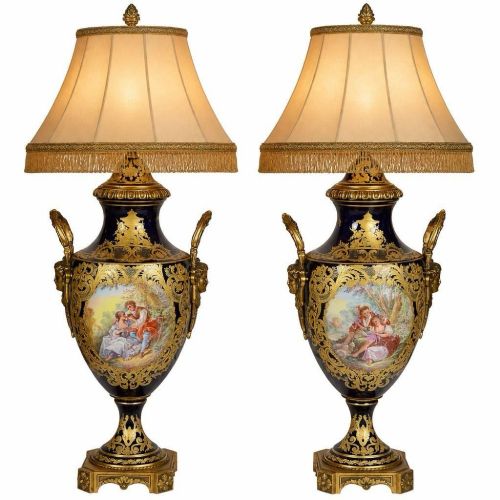
Artisans combined the ceramic components with ormolu, gilt bronze, or brass mounts that frame the rims, bases, and handles. These metal fittings were cast and chased to secure the porcelain bodies and add architectural structure to the vessels.
Listings feature periods from the nineteenth century through the nineteen twenties, spanning French Rococo Revival and Louis XVI styles.
Assessing quality
The standard of execution in the porcelain painting and the crispness of the metal mounts distinguish finer examples from standard production. Superior pieces display intricate hand-painted artwork with precise gilding rather than simplified transfer printing.
The weight and detail of the ormolu or gilt bronze mounts also determine the caliber of a piece. Substantial, finely chased metalwork indicates careful workshop production, whereas lighter brass or gilt metal mounts suggest simpler manufacture.
Derby Porcelain·Samson Paris
The Sevres Style Blue Vases Glossary
- Bleu céleste
- A bright sky blue ceramic ground colour popularised by French porcelain factories. It forms the distinctive backdrop for many nineteenth-century decorative pieces.
- Ormolu
- Gilded bronze used for decorative mounts on furniture and ceramics. The technique involves applying a gold amalgam to a cast bronze base.
- Garniture set
- A matching group of three or more vases or urns designed to be displayed together on a mantelpiece. These sets provide symmetrical balance in formal room schemes.
- Lidded vase
- A ceramic vessel complete with a matching removable cover. These often stand as centrepieces within a collection.
Sevres Style Blue Vases: Frequently Asked Questions
What periods do these vases come from?
The majority of these decorative items date from the nineteenth century, specifically between the eighteen sixties and the early twentieth century. Makers recreated the aesthetic of earlier French royal workshops during successive revivals.
Pieces from this era reflect broader nineteenth-century historicism, incorporating Rococo and Louis XVI design elements into standard Victorian interiors.
How were these vases originally used?
These vessels served primarily as decorative ornaments within formal drawing rooms and parlours. Placed on mantelpieces or console tables, they demonstrated the owner's taste for continental refinement.
Later examples were frequently converted into table lamps, adapting nineteenth-century urns for electrical lighting while retaining their traditional porcelain and ormolu appearance.
Are these pieces made by the original factory?
Most items found on the market are nineteenth-century interpretations produced by other European potteries in the taste of the royal French establishment. Makers such as Samson Paris and Derby created similar porcelain goods to satisfy Victorian demand.
These pieces use the term style to indicate their inspiration rather than direct origin from the historic French kilns.
What materials make up these objects?
The core of each piece is ceramic porcelain, typically glazed in intense cobalt or sky blue shades. Artisans then applied gold leaf, enamel, and hand-painted motifs directly onto the fired surface.
Cast ormolu, gilt bronze, or brass mounts secure the base, rim, and handles, providing structural contrast to the blue ceramic bodies.
How do I style them in a modern room?
Place a pair of lidded urns upon a sideboard or mantelpiece to create symmetrical focal points in a traditional or eclectic interior. Their bright blue glaze and metallic mounts introduce colour and reflective texture to a space. Draped silk shades on converted lamp versions complement the gilt bronze hardware and soften the light output for everyday living areas.