

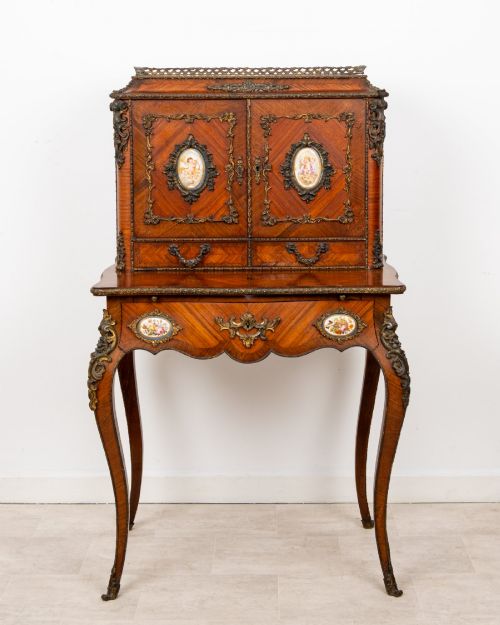


Sevres Porcelain Plaques
Sevres porcelain plaques bring painted French elegance into domestic rooms, mounted onto walnut, kingwood, and ormolu furniture.
Sevres Porcelain Plaques
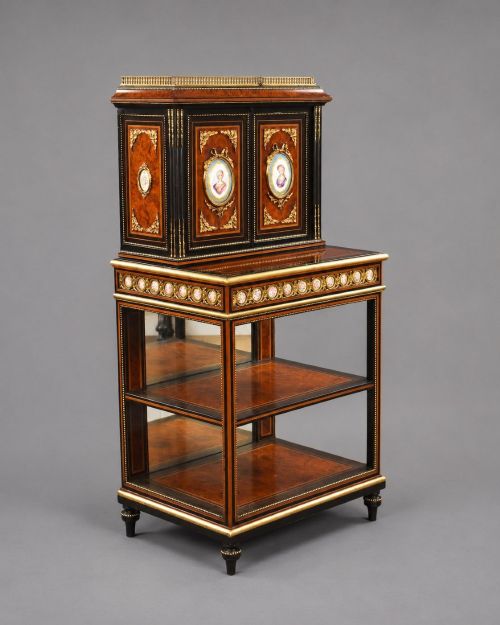
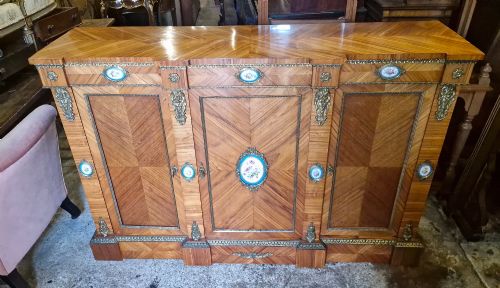
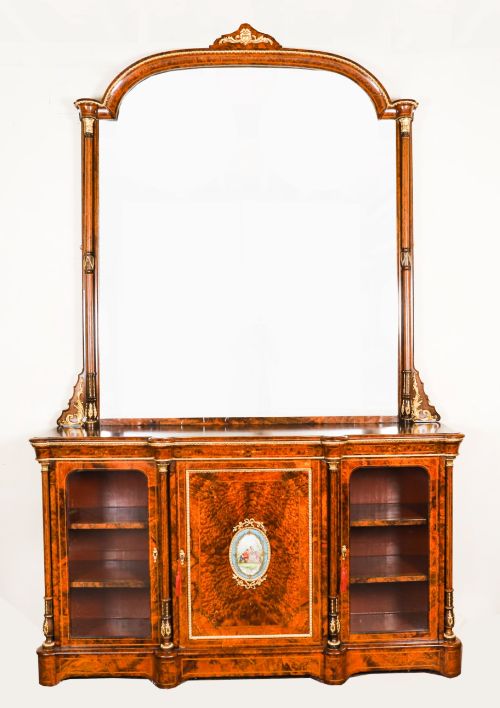
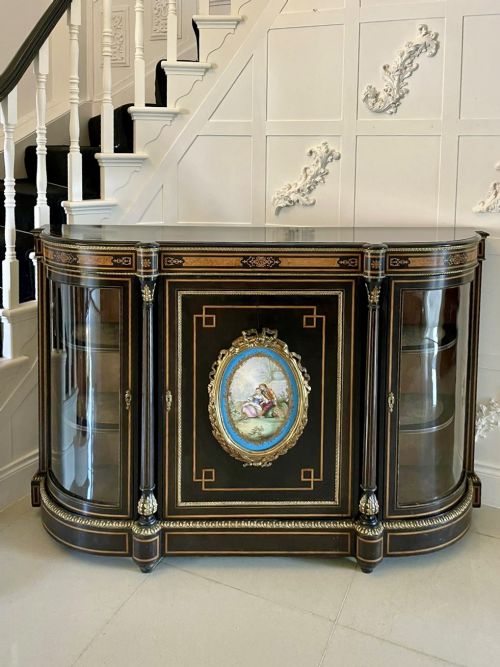
When you search for sevres porcelain plaques, you encounter items where glazed ceramic inserts are set directly into nineteenth-century furniture such as credenzas, side cabinets, and writing desks. These pieces span the Victorian era, the 1850s, 1860s, 1880s, and 1900, reflecting French revival designs including Louis XV, Louis XVI, and Napoleon III styles.
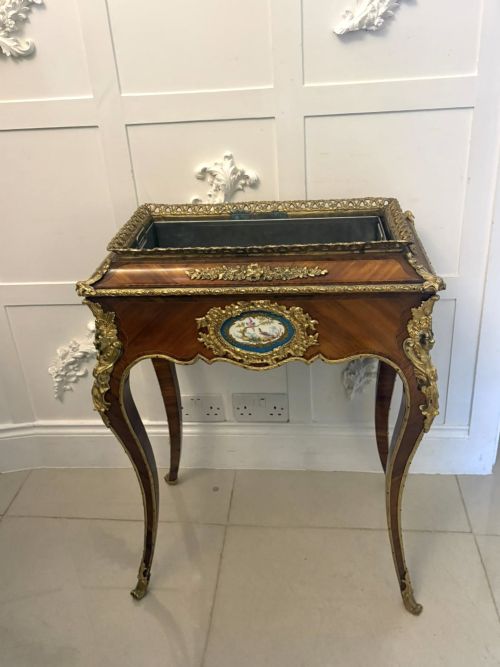
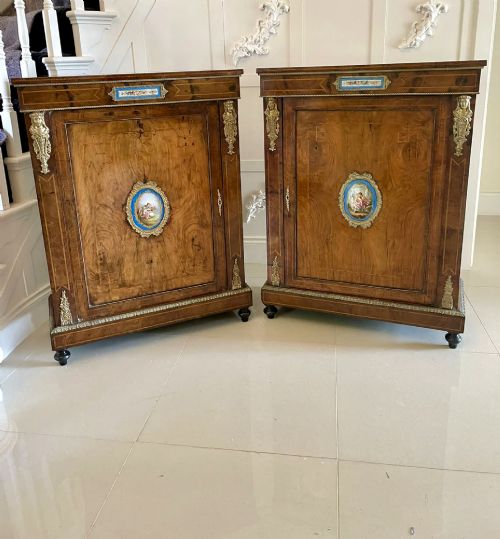
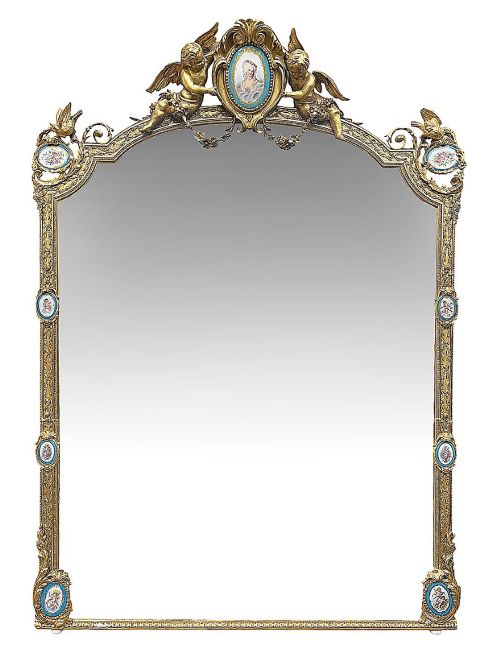
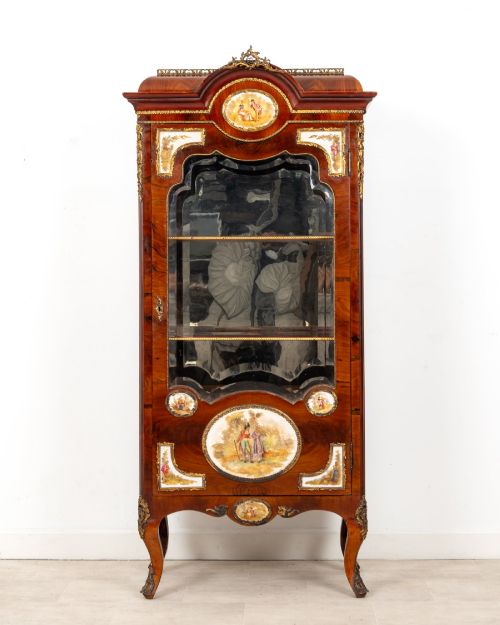
The most common forms on this page are credenzas, pier cabinets, and bonheur du jour desks framed in burr walnut, kingwood, ebonised wood, or amboyna. Individual painted plates, chargers, dishes, and wall sconces also appear, carrying hand-painted scenes and glazed decoration mounted with bronze ormolu.
Originating from French workshops and British Victorian interpretations, these furnishings combine rich timbers with high-fired ceramic panels. They served as drawing-room centerpieces for wealthy households and retain that decorative ambition today.
Materials and construction methods
Cabinetmakers built foundational carcases from dense timbers like walnut, kingwood, satinwood, and amboyna, often applying intricate veneers or ebonised finishes. Selected panels received marquetry inlay before specialist mounts were cast and applied.
Gilded bronze ormolu frames secure the porcelain plaques into the wooden structures, providing a bright metallic border to the painted ceramic. The porcelain itself was shaped, glazed, and hand-painted with pastoral scenes or portraits before kiln-firing.
Marble tops frequently cap credenzas and side cabinets, resting above the primary timber frame and ormolu mounts to create durable, weighted surfaces.
Sevres Porcelain Plaques Retail Price Guide 2026
Typical asking prices for sevres porcelain plaques among the pieces listed under this phrase on Sellingantiques today, from the lower quarter to the upper quarter. They describe what is for sale here now, not the wider market.
Some nineteenth-century writing desks hid private compartments behind locked doors while displaying bright porcelain flowers to unsuspecting guests.
Markers of construction and artistic standard
The precision of the timber veneer work and the weight of the cast ormolu mounts dictate the baseline standard of the furniture. Superior examples feature crisp, heavily chased bronze mounts that fit snugly against the curved edges of the wood and porcelain.
The artistry on the ceramic surface creates the primary distinction between standard production and exceptional execution. Finer painted plaques display delicate brushwork in the central figural scenes and rich, even coloration across the glazed backgrounds.
Integration between the plaque and the furniture carcase matters significantly. Higher quality pieces house the ceramic securely within custom ormolu bezels rather than relying on simple adhesive or poor joinery.
H. Desprez
The Sevres Porcelain Plaques Glossary
- Ormolu
- Gilded bronze mounts used to decorate furniture frames and house porcelain plaques. This technique involves applying a gold amalgam to bronze before heating.
- Credenza
- A large, low sideboard or cabinet featuring doors and central shelving, frequently mounted with porcelain plaques and ormolu. It served as a formal display piece in Victorian drawing rooms.
- Bonheur du jour
- A small, light writing desk featuring a raised cabinet with drawers, shelves, or a cupboard on the top surface. These desks often incorporate small painted ceramic plaques within the wood veneer.
- Pier cabinet
- A tall, narrow display cabinet designed to fit against the wall space between windows. These cabinets typically enclose shelves behind a glass door and display ceramic inserts.
- Jardiniere
- A decorative stand or container designed to hold plants and flowers. These stands utilise porcelain plaques and ormolu mounts to ornament the wooden or metal body.
Sevres Porcelain Plaques: Frequently Asked Questions
What are sevres porcelain plaques?
Sevres porcelain plaques are hand-painted ceramic panels produced in France or in the French taste during the nineteenth century. Makers incorporated these glazed inserts into the doors and friezes of fine cabinets, desks, and decorative objects.
They function primarily as ornamental highlights, combining fine ceramic art with functional timber furniture.
How were these cabinets used?
Victorian households placed these cabinets in formal reception rooms and parlours to display wealth and artistic taste. The flat tops held decorative items, while the enclosed shelves protected precious books or collections.
Writing desks like the bonheur du jour provided a refined surface for correspondence, combining small drawers with decorative ceramic panels.
How do I style a credenza at home?
A credenza works best against a clear wall in a dining room or living space where its timber grain and ormolu mounts remain visible. Keep the surface uncluttered to let the porcelain plaques draw the eye.
Pair the piece with neutral surroundings so the rich tones of walnut or kingwood and the painted ceramic details stand out clearly.
How can I tell the period?
Dating relies on timber choices, construction techniques, and stylistic revivals such as Louis XV or Louis XVI designs. Mid-nineteenth-century pieces often use burr walnut and heavy ormolu, while later examples from around 1900 may feature satinwood.
Examining the backboards, fixings, and screw types helps confirm whether an item dates to the Victorian era or later.