



Sevres Cobalt Urn
These sevres cobalt urn pieces combine deep blue porcelain with rich ormolu mounts, bringing grand nineteenth-century French decoration into a room.
Sevres Cobalt Urn
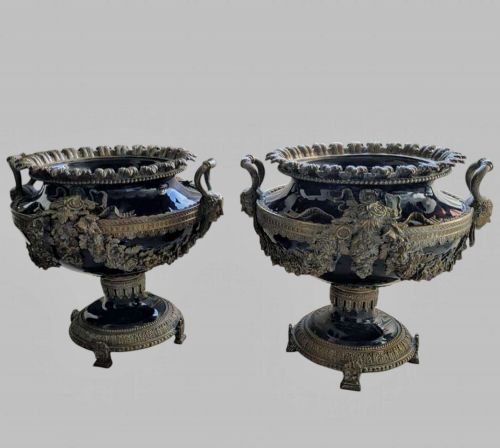
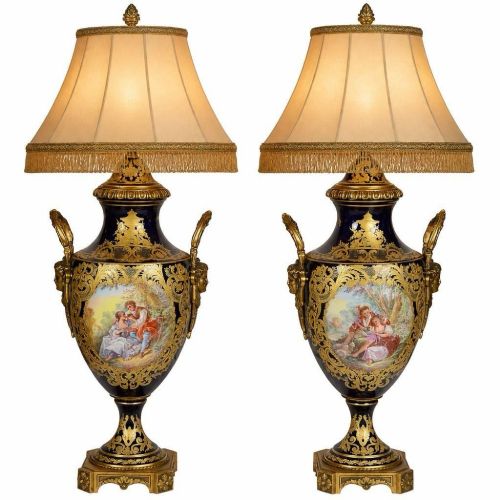
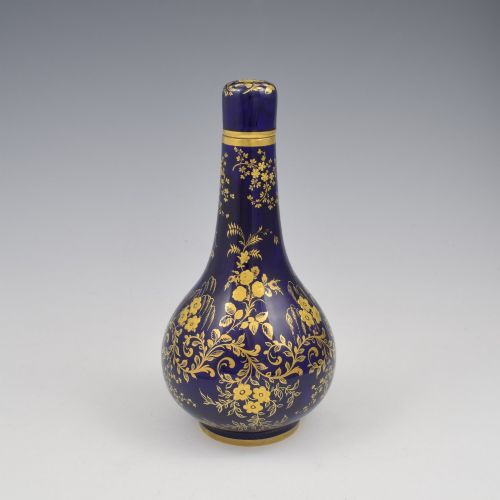
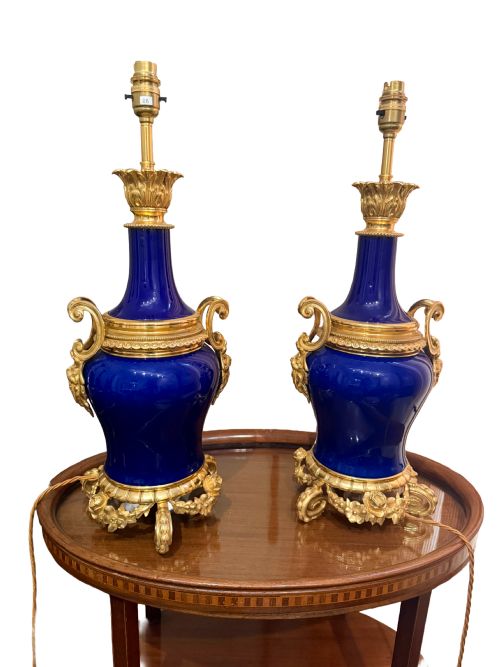
When you examine a sevres cobalt urn, you are looking at nineteenth-century porcelain vessels often styled in the French taste with rich blue glazes. The items meeting you here span table lamps, lidded vases, garniture sets, and jardinieres originating from the eighteen sixties up to nineteen twenty.
Most examples found on this page follow the French Sevres style or French Rococo Revival, alongside Victorian and William IV interpretations. They range from single decorative vases to monumental pairs mounted with ormolu or gilt bronze.
Buyers seek these objects to anchor a mantelpiece or sideboard with traditional nineteenth-century ornamentation. The dominant forms include lidded vases and converted table lamps that display hand-painted decoration against a striking blue ground.
Materials and construction
The foundation of every piece is hard-paste porcelain fired with a deep blue glaze, sometimes referred to as bleu royale. Artisans then applied hand-painted details and gold leaf highlights directly onto the ceramic surface.
Metal mounts in ormolu, gilt bronze, and brass provide structural framing and decorative handles. These cast bronze elements were typically fire-gilded to achieve a bright golden contrast against the dark porcelain body.
Sevres Cobalt Urn Retail Price Guide 2026
Typical asking prices for sevres cobalt urn among the pieces listed under this phrase on Sellingantiques today, from the lower quarter to the upper quarter. They describe what is for sale here now, not the wider market.
Listings span periods from eighteen sixty to nineteen twenty, utilising materials such as porcelain, ormolu, gilt bronze, enamel, gold leaf, brass, fabric, and glass.
Judging quality and execution
The distinction between standard decorative items and top-tier pieces rests on the crispness of the ormolu casting and the fineness of the hand painting. Superior examples feature deeply chased bronze mounts and intricate porcelain panels depicting classical scenes or floral motifs.
Proportion and scale also dictate value, particularly in monumental matched pairs or multi-piece garniture sets. The harmony between the blue porcelain body and the applied metal mounts determines the overall visual success of the piece.
Derby Porcelain
The Sevres Cobalt Urn Glossary
- Ormolu
- Gilt bronze mounts used to decorate and support porcelain bodies. This technique involves applying a mercury and gold amalgam to cast bronze before firing.
- Garniture set
- A matched group of three or more ornamental vases designed to sit together on a mantelpiece. These typically include a central lidded urn flanked by smaller matching vessels.
- Jardiniere
- An ornamental ceramic pot or stand designed to hold plants or flowers. In this selection, they appear in blue ceramic forms with nineteenth-century French styling.
- Bleu Royale
- A rich cobalt blue glaze developed at the French porcelain factories. It provides the dark saturated background seen on many nineteenth-century decorative pieces.
- Hard-paste porcelain
- A dense, vitrified ceramic material fired at high temperatures. It forms the durable white body underneath the coloured glazes and hand-painted scenes.
Sevres Cobalt Urn: Frequently Asked Questions
What is a garniture set?
A garniture set consists of three or more matched decorative pieces designed to display together on a mantelpiece or sideboard. They usually feature a central lidded urn accompanied by two matching side vases.
These sets create a balanced focal point in traditional nineteenth-century interiors. The matching forms share identical cobalt glazes and ormolu mounts.
How were these urns used?
Historically, large porcelain urns served purely as decorative centrepieces in grand nineteenth-century reception rooms. They demonstrated the owner's taste for French Neoclassical and Rococo Revival aesthetics.
Over time, many of these vessels found new utility through professional conversion into table lamps. This adaptation allowed period porcelain to function with modern electrical lighting while retaining its original decorative character.
How do I date a piece?
Dating relies on examining the combination of porcelain bodies, bronze mount styles, and manufacturing techniques. Most pieces on this page originate from the nineteenth century, spanning from eighteen sixty to nineteen twenty.
Stylistic shifts between French Empire, Rococo Revival, and late Victorian aesthetics provide further clues. Ormolu casting quality and the style of hand painting also help narrow the production era.
How do I clean ormolu mounts?
Ormolu mounts require gentle dusting with a soft, dry brush to prevent the accumulation of dirt in the chased recesses. Moisture and harsh chemical cleaners should be avoided because they can damage the historic fire-gilded surface.
Preserving the original gold leaf and bronze patina is essential for maintaining the object's character. Professional conservation advice is recommended for pieces showing heavy tarnish.