





Seventeenth Century Writing Desk
A seventeenth century writing desk connects you directly to the early domestic workspace, offering robust storage for manuscripts and precious documents.
Seventeenth Century Writing Desk
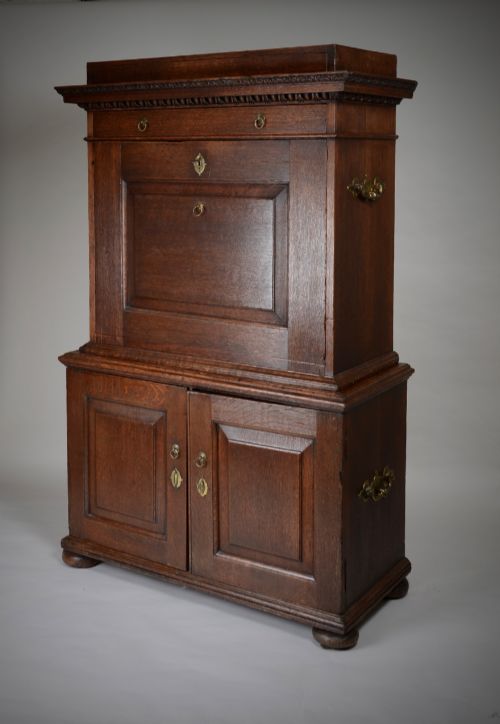
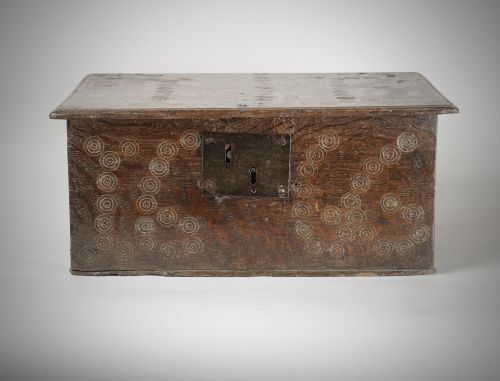
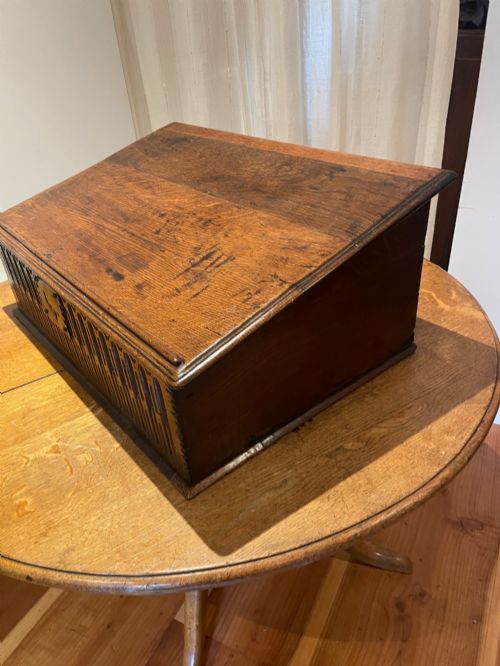
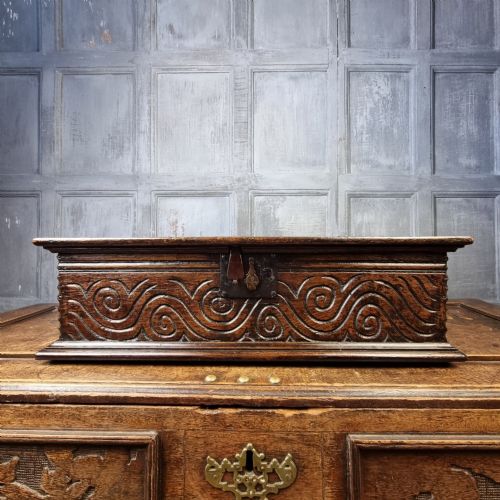
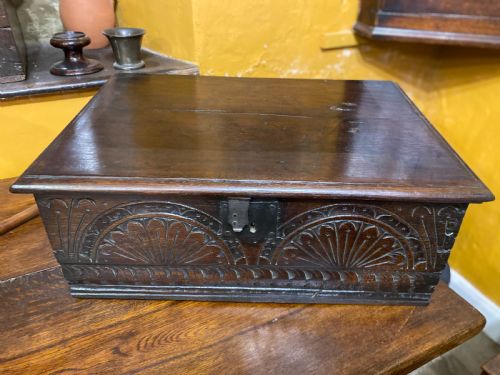
When you search for a seventeenth century writing desk, you encounter a range of early forms designed for literacy and record-keeping before dedicated writing rooms became common. These encompass desk boxes, Bible boxes, strong boxes, and miniature bureaus that sat upon tables or stands.
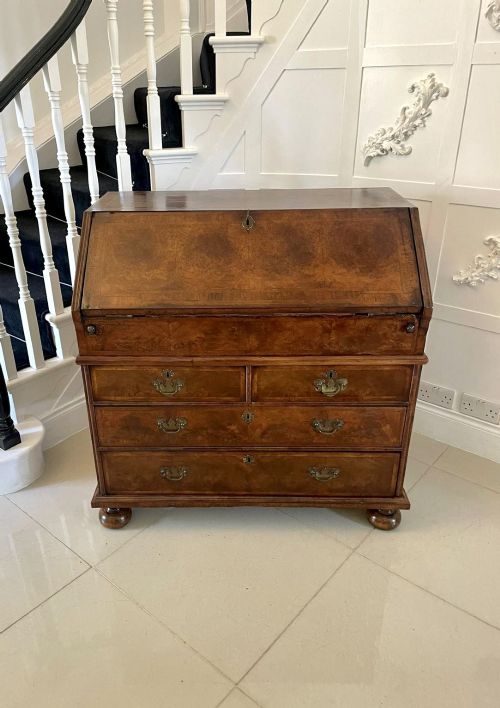
The versions you are most likely to meet on this page span from portable desk boxes of the sixteen-forties to larger bureaus and side tables from the William and Mary period. Later revival pieces from the twentieth century also appear, echoing the Jacobean aesthetic.
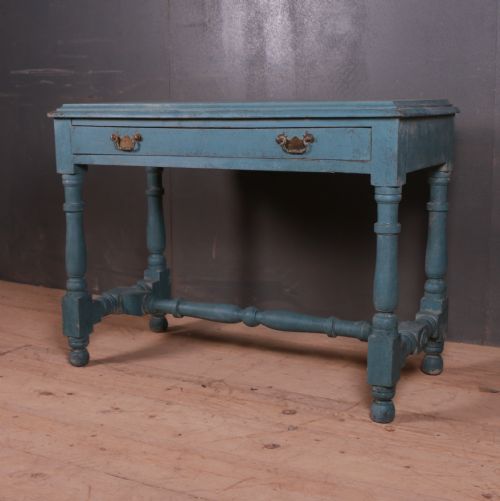
Materials such as oak, walnut, and burr walnut dominate the selection, often accompanied by wrought iron and brass hardware. Object types range from simple side tables and cabinets to complex two-part bureaus.
What varies in quality
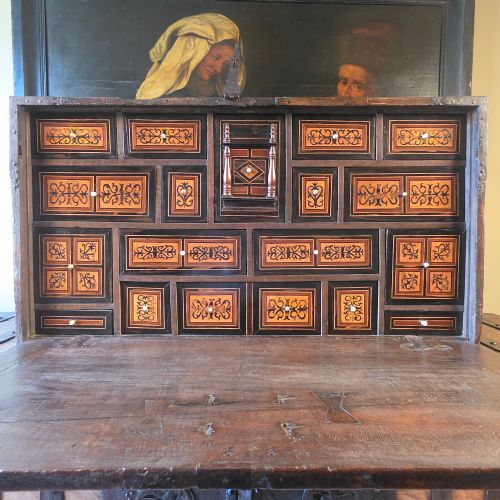
The standard of timber selection and complexity of internal organisation set examples apart. Simpler oak Bible boxes contrast with elaborate burr walnut bureaus featuring herringbone inlay and internal drawers.
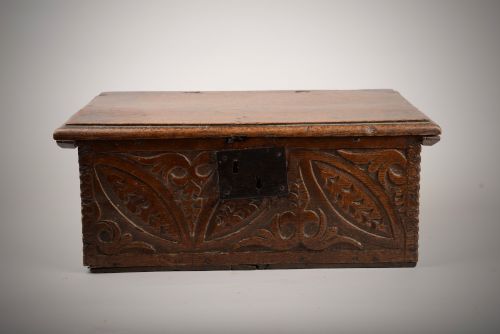
Construction integrity on original stands versus later adaptations defines the standing of a piece. The crispness of carved panels and the survival of original brass or iron hardware determine the overall character.
Seventeenth Century Writing Desk Retail Price Guide 2026
Typical asking prices for seventeenth century writing desk among the pieces listed under this phrase on Sellingantiques today, from the lower quarter to the upper quarter. They describe what is for sale here now, not the wider market.
The Seventeenth Century Writing Desk Glossary
- Bible box
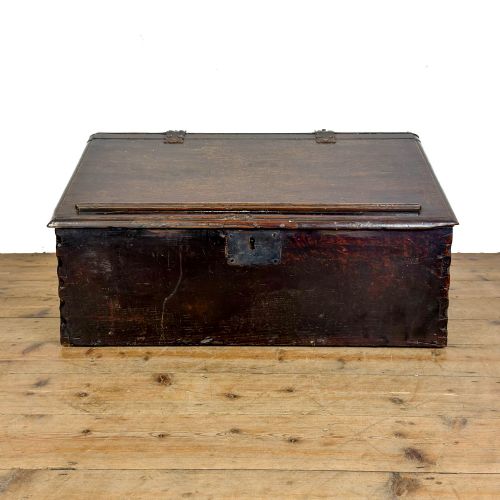
- A small wooden chest with a sloping lid, originally designed to hold family scriptures and writing materials. These boxes often sat on tables or were placed on the lap.
- Vargueno
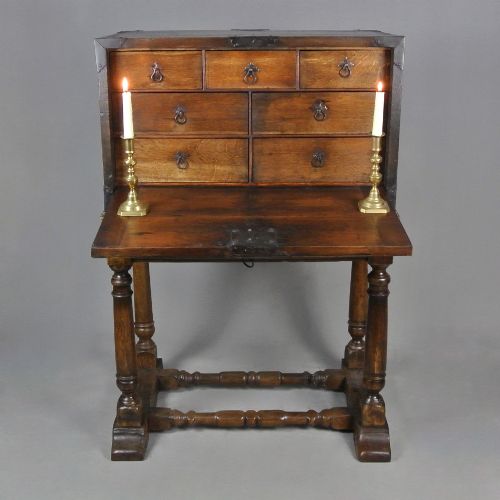
- A type of cabinet on a stand originating from Spain, featuring a drop-front panel that conceals numerous small drawers and compartments. They combine structural cabinetry with portable writing surfaces.
- Herringbone inlay
- A decorative banding technique where small pieces of contrasting veneer are laid in a V-shaped pattern. This detail frequently enhances the top surfaces of William and Mary bureaus.
- Strong box
- A heavily fortified chest constructed with robust timber and reinforced with wrought iron straps. These served to secure valuable documents and currency in seventeenth-century households.
- Bureau
- A desk fitted with a sloping fall-front that opens to reveal a writing surface and internal pigeonholes. Early forms often sit on a dedicated stand or chest of drawers.
Seventeenth Century Writing Desk: Frequently Asked Questions
What is a seventeenth century writing desk?
A seventeenth century writing desk encompasses early portable desk boxes, Bible boxes, and standing bureaus used for correspondence and document storage.
These pieces reflect the domestic writing habits of the period, often combining utilitarian storage with decorative woodwork.
How were desk boxes used?
Desk boxes served as portable repositories for paper, ink, and important family documents. Their sloping lids provided a convenient angled surface for handwriting.
Owners typically placed them on dining tables or side tables when in use, moving them as needed within the home.
Are revival pieces common?
Revival pieces from later periods, such as the early twentieth century, frequently replicate earlier Jacobean styles. These items adapt seventeenth-century forms for modern domestic interiors.
They offer the aesthetic of earlier centuries while utilising the manufacturing standards of their actual date of creation.
What woods were utilised?
Oak and walnut are the primary timbers found across these listings, alongside burr walnut veneers. Fruitwood and bone occasionally appear in decorative elements.
Metal components of brass and wrought iron provide structural reinforcement and functional hardware.