


Seventeenth Century Inlay Chest
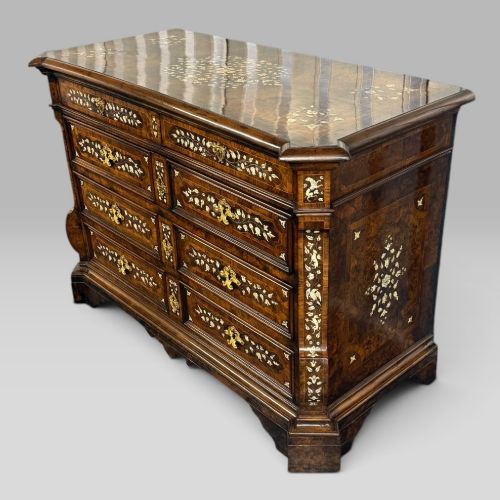
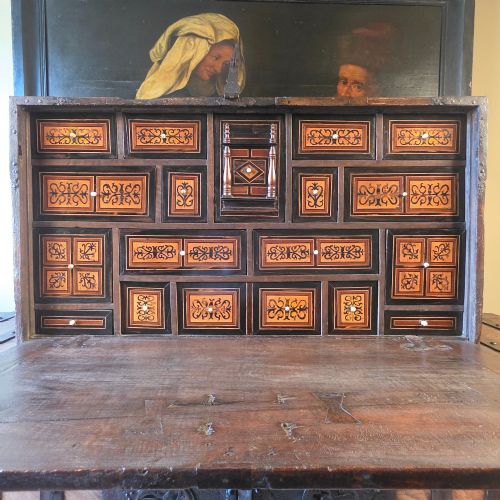
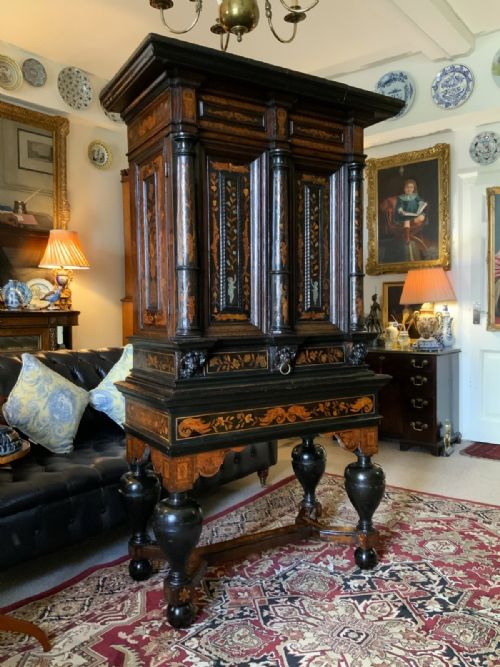
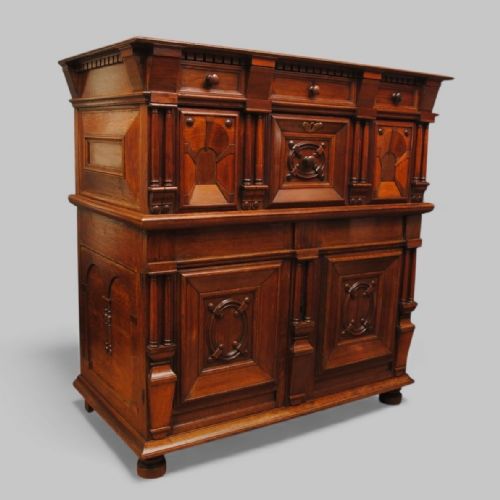
These seventeenth century inlay chest examples combine sturdy oak, walnut and fruitwood with elaborate marquetry and oyster veneering.
Seventeenth Century Inlay Chest
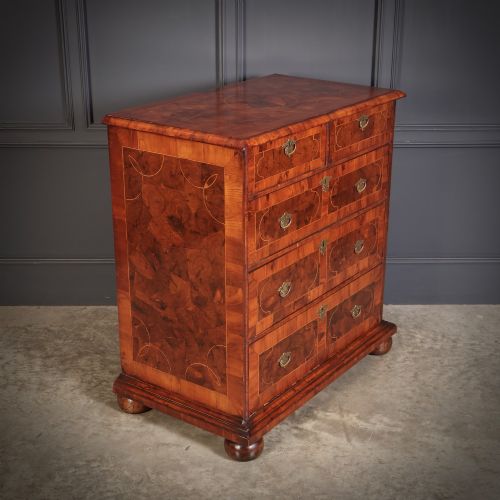
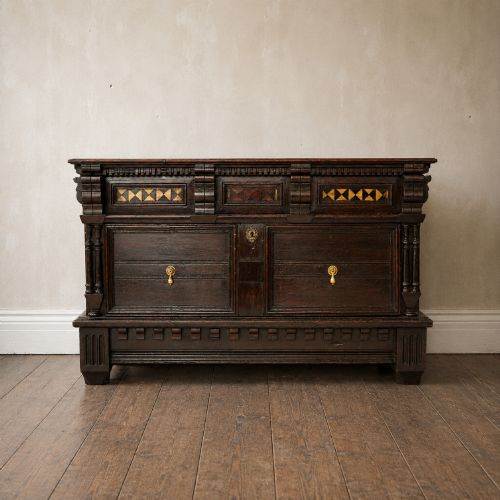
When you search for a seventeenth century inlay chest, you encounter robust storage furniture spanning coffers, chests of drawers and cabinets on stands. The versions most frequently met on this page combine foundational woods like oak or walnut with decorative wood inlay, floral marquetry or oyster veneering.
These pieces originate from domestic and continental workshops representing Jacobean, Baroque, William and Mary and Italian Baroque styles. Surviving examples range from simple arcaded oak coffers to elaborate Dutch and Italian cabinets decorated with pewter, snakewood and fruitwood.
Buyers look for these items to anchor a room with period texture and genuine historic craft. The category includes both multi-drawer chests and lidded coffers featuring geometric patterns or floral designs.
Materials and construction
Cabinet makers built these pieces using solid local timbers such as oak, walnut and fruitwood for the main carcase and structural framework. Surfaces were then enhanced with complex decorative elements including boxwood, snakewood, olive wood and brass details.
Veneering techniques played a central role, utilising circular cross-sections of branches known as oyster veneer to create repeating patterns across drawer fronts and cabinet doors. Marquetry cutters also assembled intricate floral and geometric motifs from contrasting woods and pewter.
Materials recorded across the inventory include oak, walnut, fruitwood, boxwood, olive wood, snakewood, brass, iron and pewter.
Judging the quality
Quality rests upon the precision of the marquetry work and the choice of timbers utilised by the maker. Finer examples display meticulous control in cutting and fitting delicate veneers of walnut, olive wood and boxwood.
The sophistication of the overall design dictates value, distinguishing simpler regional coffers from ambitious Baroque cabinets on stands. Original surface patination and the survival of secondary decorative materials like pewter and brass further separate standard items from exceptional ones.
The Seventeenth Century Inlay Chest Glossary
- Oyster veneer
- Slices cut transversely from small branches to produce circular or oval patterns resembling oyster shells. This technique creates distinctive repeating surface textures on seventeenth century furniture.
- Marquetry
- The art of applying pieces of veneer to a structure to form decorative patterns and pictures. Craftsmen used various coloured woods, bone and metal.
- Coffer
- A large wooden chest traditionally used for storing valuables, linens or documents. Early versions often feature hinged lids and carved front panels.
- Arcaded
- Decorated with a series of arches supported by columns, commonly carved onto the panels or rails of oak furniture. This architectural detail is typical of the period.
- Cabinet on stand
- A freestanding storage cabinet elevated upon a separate supporting frame or base. These pieces often showcase advanced veneering and intricate joinery.
Seventeenth Century Inlay Chest: Frequently Asked Questions
How do I date a seventeenth century chest?
Dating relies on examining the construction methods, timber species and specific decorative motifs present on the piece. Joinery techniques such as hand-cut dovetails and pegged frame construction offer clear chronological indicators.
Stylistic elements like arcaded carving, floral marquetry or oyster veneering also help narrow down the period of manufacture between the early and late seventeenth century.
What is oyster veneering?
Oyster veneering involves slicing small branches across the grain to produce small circular or oval discs. These sections are arranged closely together to cover large surfaces in patterned wood.
Walnut, olive wood and fruitwood were frequently utilised for this technique because of their attractive grain structures and contrasting natural colours.
Where were these chests made?
These pieces originated across both British workshops and continental European centres. English makers often worked in solid oak with regional decorative carvings, while Dutch, Italian and Flemish makers produced elaborate cabinets using walnut and marquetry.
Trade routes and imported exotic timbers influenced the styles adopted by urban workshops during the Baroque period.
How do I care for antique wood inlay?
Maintain a stable room environment away from direct sunlight and sudden temperature fluctuations to prevent the wood and veneers from drying out. Consistent humidity levels protect delicate boxwood, fruitwood and pewter inlay from lifting.
Apply traditional microcrystalline wax sparingly to nourish the timber surface and preserve the natural patination without sealing the pores.