





Serving Cart on Wheels
These serving cart on wheels designs bring mobile hospitality into a room, offering practical tiers and trays for drinks and tea.
Serving Cart on Wheels
A serving cart on wheels functions as a mobile surface for drinks, tea, and dining service, moving easily between rooms on castors. When buyers search for a serving cart on wheels, they encounter practical trolleys designed for hospitality and entertaining across several decades.
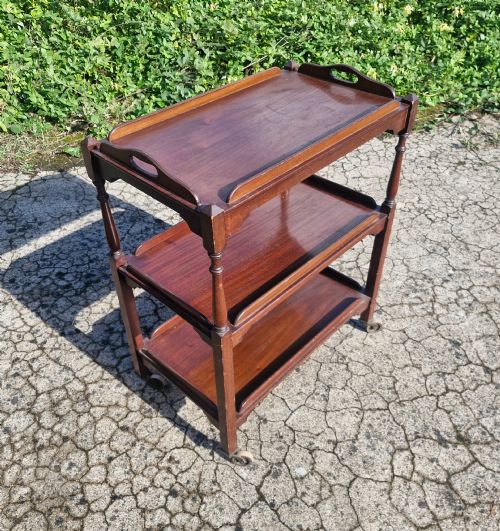
The versions most commonly met on this page span the Edwardian period through to the 1930s, taking forms such as tea trolleys, bar carts, and two or three-tier etageres. These pieces often feature clever adaptations including removable carrying trays and folding tops.
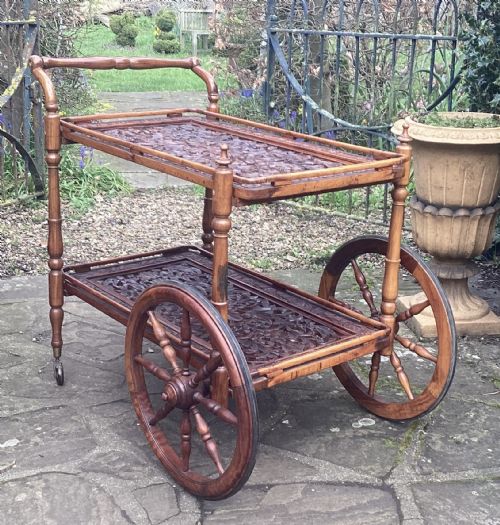
Styles range from traditional oak and mahogany revival designs to distinct Art Deco pieces, French Mid-Century items, and Anglo-Indian carved hardwoods. Each variant offers a specific character suited to period interiors or contrasting modern spaces.
Materials and construction
Construction relies heavily on traditional timbers like oak, mahogany, walnut, and exotic hardwoods, frequently shaped into tiered frames with turned or carved supports. Selected pieces incorporate specialist finishes such as goatskin applied to the body.
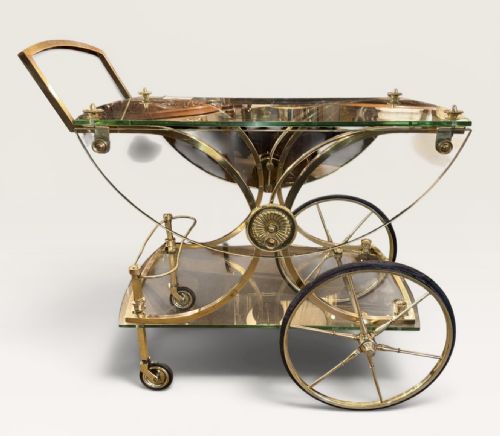
Metal and glass feature prominently in brass and glass etageres, combining lightweight transparency with structural metal frames. Removable trays and folding mechanisms demand precise joinery and hardware to ensure stability while mobile.
Serving Cart on Wheels Retail Price Guide 2026
Typical asking prices for serving cart on wheels among the pieces listed under this phrase on Sellingantiques today, from the lower quarter to the upper quarter. They describe what is for sale here now, not the wider market.
Listings feature items spanning the 1910s through to the 1930s, capturing the transition from Edwardian oak to Art Deco metalwork.
What separates the best pieces
Quality rests in the choice of materials and the sophistication of the design, distinguishing standard utility items from decorative showpieces. Finer examples display superior timber grain, intricate carving, or luxury finishes like goatskin combined with brass.
Ingenuity in mechanics elevates certain pieces, such as metamorphic designs that alter their shape or lift-off trays that integrate seamlessly into the frame. The harmony between the mobility of the castors and the rigidity of the tiered structure defines the standard of manufacture.
Maison Bagues·Aldo Tura
The Serving Cart on Wheels Glossary
- Tea Trolley
- A small mobile table with two or three tiers designed specifically for serving afternoon tea. These units often include removable trays or wheels sized for easy indoor movement.
- Metamorphic
- A descriptive term for furniture that transforms or changes shape for dual purposes. An Art Deco metamorphic serving trolley alters its configuration to suit hosting needs.
- Etagere
- A set of open shelves for displaying small objects or serving drinks. These multi-tiered structures combine brass frames with glass shelves.
- Edwardian
- A stylistic period spanning the reign of King Edward VII until the First World War. Pieces from this era frequently utilise solid oak with traditional joinery.
- Castor
- A small wheel mounted on a swivel attached to the bottom of the legs. This hardware allows the serving cart to glide smoothly across floors.
Serving Cart on Wheels: Frequently Asked Questions
What is a serving cart on wheels used for?
These trolleys were originally designed to transport tea services, afternoon refreshments, and dinner items from the kitchen to the parlour without multiple journeys. Today, they serve a similar function for home entertaining, acting as mobile cocktail bars or dessert stations.
Their tiered structure allows hosts to display glassware, bottles, and accessories on multiple levels while keeping floor space organised.
How do I identify an Edwardian tea trolley?
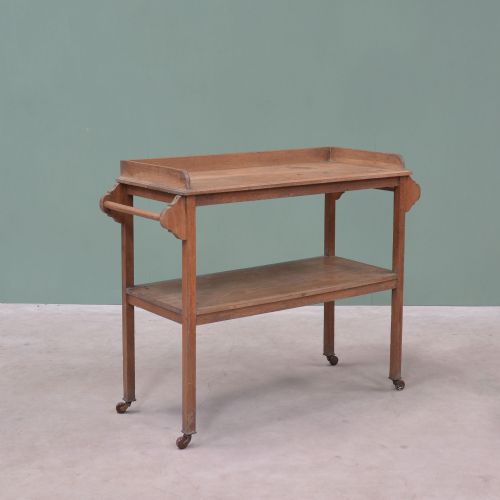
Edwardian examples typically feature solid oak construction with rich grain patterns, often built with two levels and sometimes incorporating a folding top. They reflect the domestic habits of the early twentieth century through honest woodwork and practical proportions.
Unlike later Art Deco or mid-century designs, these pieces lean towards traditional revival styles with turned uprights and sturdy wooden wheels.
Are these carts suitable for modern homes?
These pieces integrate easily into contemporary interiors by providing functional surface area and portable storage for modern living rooms and dining spaces. Their mobility makes them adaptable room dividers or temporary bedside tables when not in use for hospitality.
Mixing period materials like brass, glass, and dark hardwoods adds texture and historical contrast to minimalist modern decor.
How do I distinguish between a tea trolley and a bar cart?
Tea trolleys generally emphasise wooden construction with enclosed edges or removable wooden trays designed to keep crockery secure during transit. Bar carts and etageres lean towards reflective surfaces, utilising brass frameworks and glass shelves suited for displaying bottles and glassware.
While both share wheels and tiers, the material palette often signals the intended beverage and era of manufacture.