


Serpentine Topped Table
A serpentine topped table brings a distinct undulating edge and fluid line into a room, drawing the eye with rich mahogany, walnut, or marble.
Serpentine Topped Table
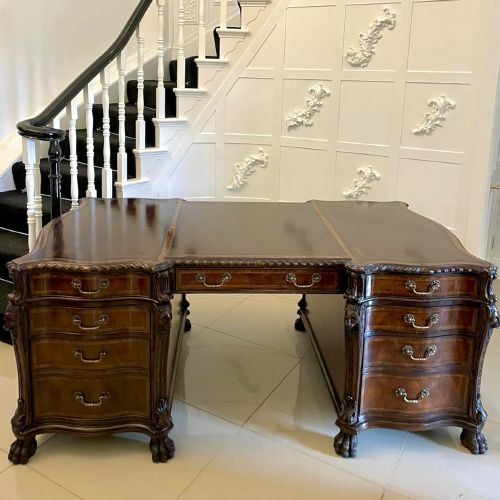
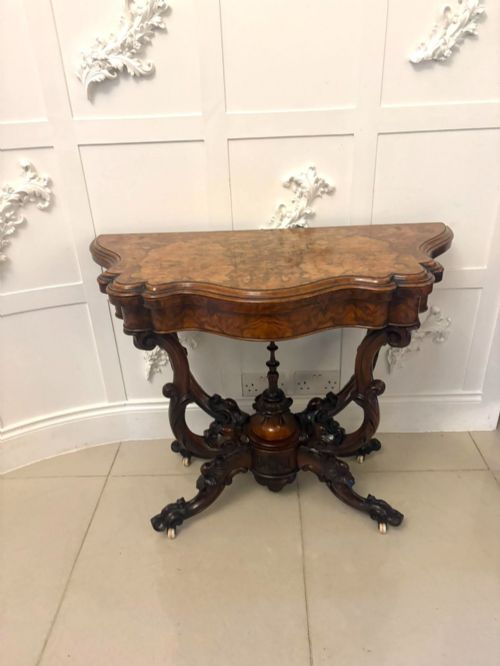
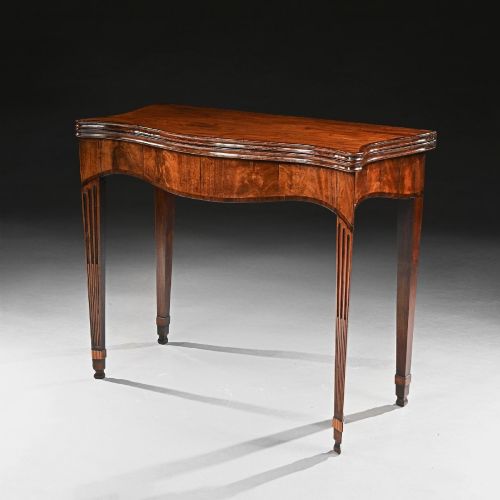
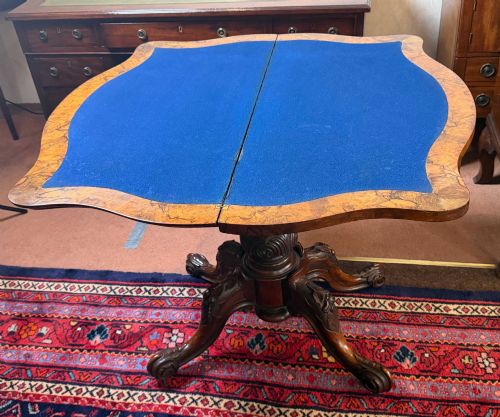
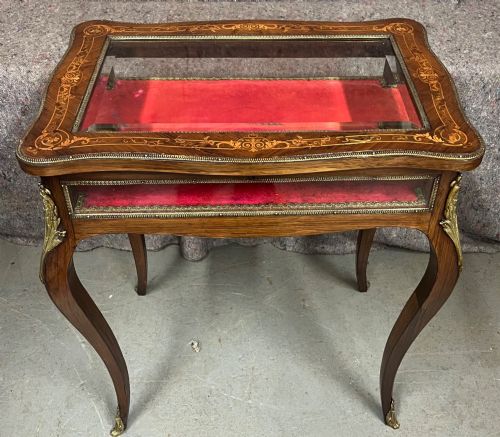
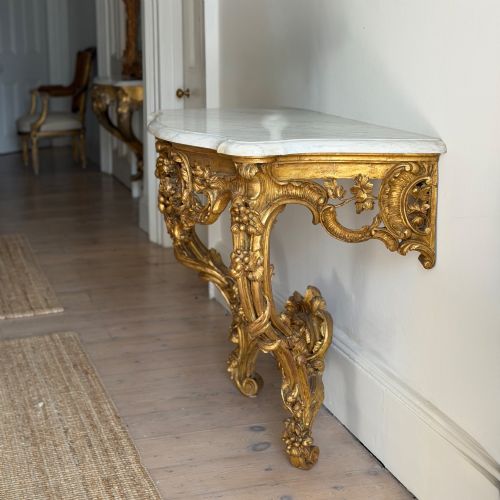
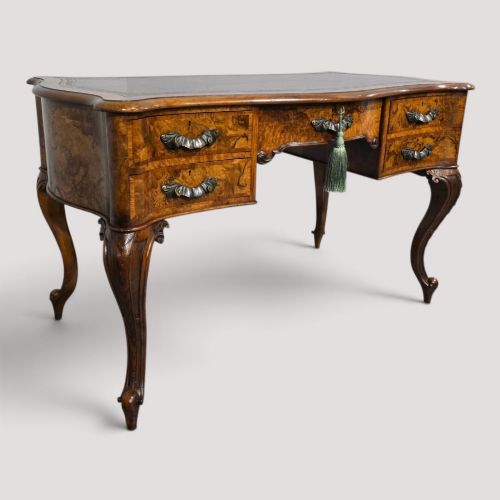
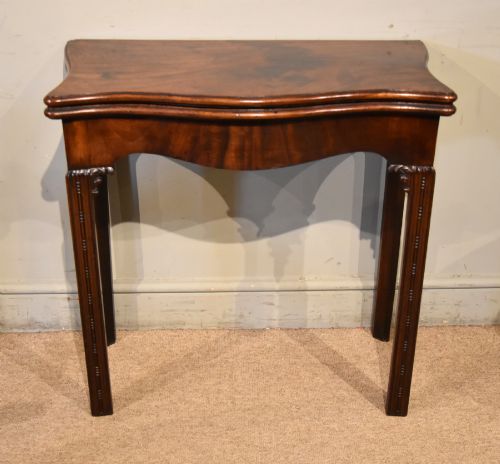
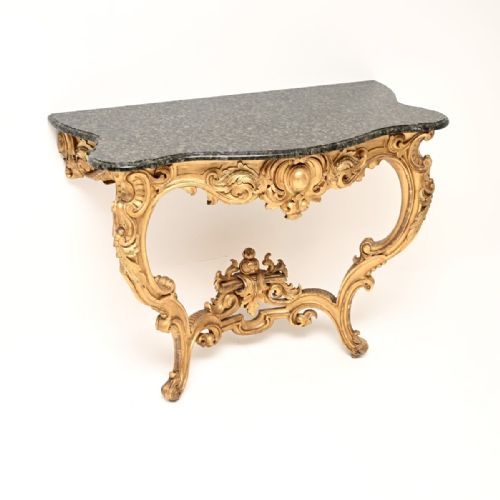
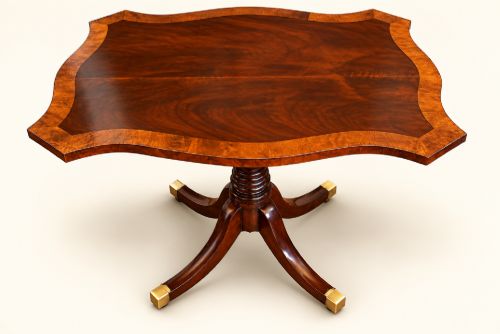
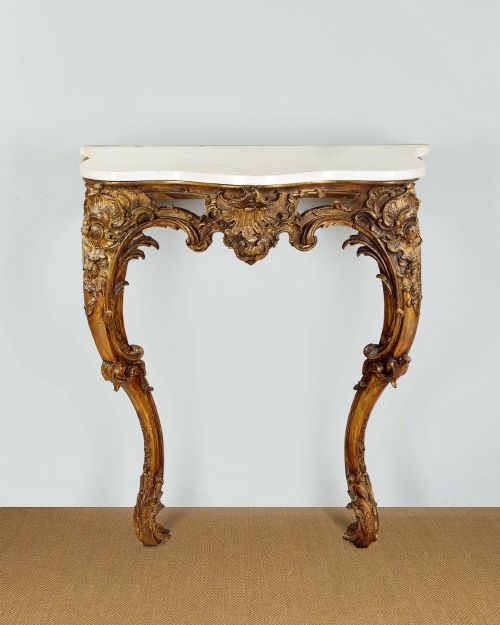
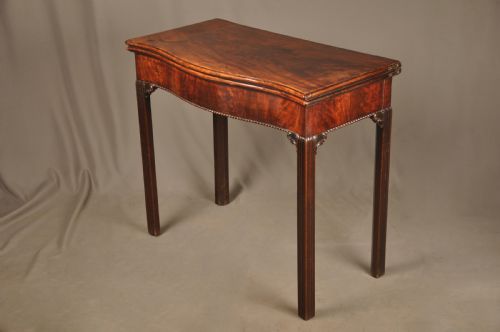
A serpentine topped table follows a curved outline of alternating convex and concave sweeps, appearing most often across Georgian and Victorian periods. These pieces serve multiple functions, spanning card tables, console tables, centre tables, and desks.
The form emerges across the eighteenth and nineteenth centuries, taking shape in mahogany, burr walnut, and rosewood with influences from French Louis XV and Rococo styles. Console and card tables dominate the selection, bringing substantial decorative presence to hallways and reception rooms.
Materials and construction
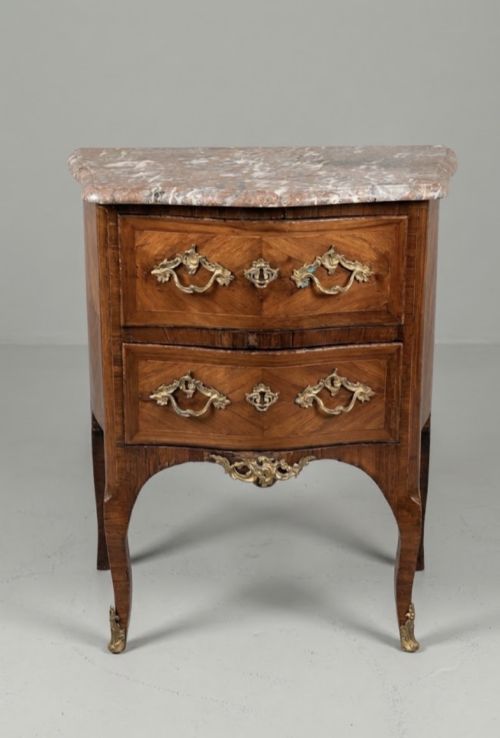
Cabinetmakers shape solid timbers such as mahogany and walnut, frequently applying figured veneers like burr walnut, kingwood, and satinwood to curved surfaces. Marquetry inlay and parquetry geometric patterns add decorative complexity to the tops and aprons.
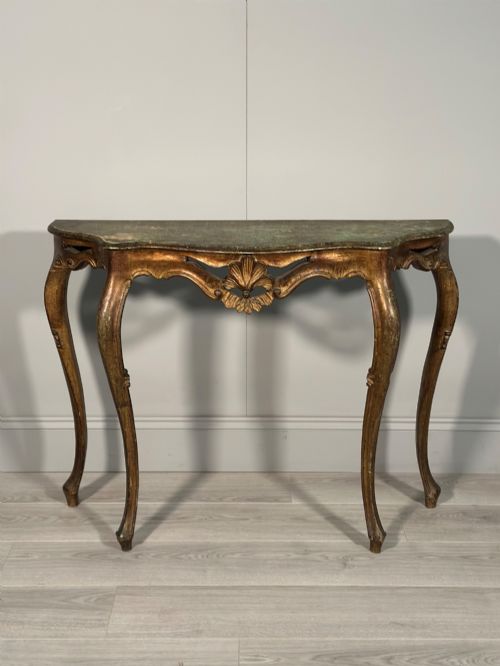
Many examples incorporate heavy stone elements, mounting white or variegated marble slabs directly onto wooden frames or wrought iron structures. Ormolu mounts, brass details, and hand-carved giltwood elements finish the framework of finer nineteenth-century pieces.
Serpentine Topped Table Retail Price Guide 2026
Typical asking prices for serpentine topped table among the pieces listed under this phrase on Sellingantiques today, from the lower quarter to the upper quarter. They describe what is for sale here now, not the wider market.
Some nineteenth-century card tables hid secret compartments inside their frames, perfect for concealing stray counters after a late-night game.
Judging execution
Quality rests upon the precision of the curving line and the selection of timber veneers, where highly figured burr walnut or Cuban mahogany signal finer workshops. The crispness of hand-carving on cabriole legs and the weight of ormolu mounts elevate the piece.
Interior secondary woods and the tightness of joinery at the serpentine corners reveal the standard of original craftsmanship. Superior examples maintain symmetry in their marquetry inlay and structural integrity across folding mechanisms on card tables.
E. Kahn
The Serpentine Topped Table Glossary
- Serpentine
- A shaped outline featuring a convex centre flanked by two concave curves, creating a wave-like front edge. This contour requires skilled woodworking to shape both solid timber and veneered aprons.
- Ormolu
- Gilded bronze mounts applied to furniture for decorative accent, common on French-influenced nineteenth-century pieces. These metal elements are cast and chased before gilding.
- Marquetry
- Decorative patterns formed by fitting contrasting veneers into a wooden ground, often depicting floral or geometric motifs. Craftsmen utilise woods like kingwood, tulipwood, and satinwood.
- Console table
- A table designed to stand against a wall, frequently secured to it or supported by heavy front legs and brackets. These often feature marble tops and elaborate carving.
- Loo table
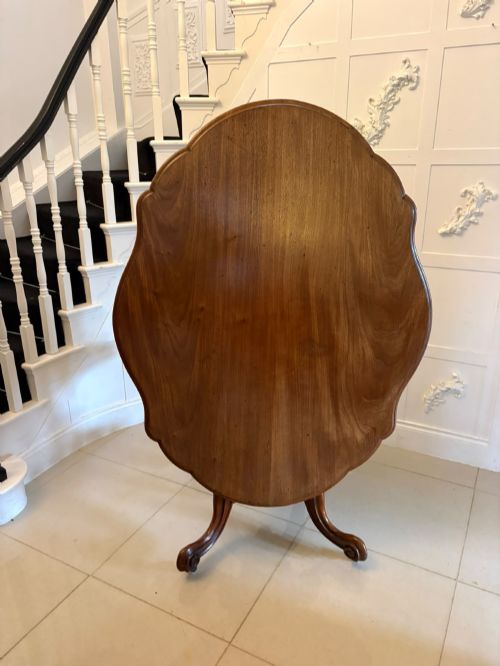
- A large round or oval table originating in the Georgian period for the card game loo, frequently featuring a tilt-top mechanism. Victorian examples often utilise figured burr walnut.
Serpentine Topped Table: Frequently Asked Questions
How do I care for a marble top?
Wipe surfaces regularly with a soft, damp cloth and neutral soap, avoiding acidic cleaners that etch stone. Use coasters under glasses to prevent liquid rings on polished marble.
Apply a specialised stone sealer periodically to protect the porous surface from stains and everyday wear.
Where should I place a console table?
Console tables fit naturally against entrance hallway walls, beneath mirrors, or in living rooms as decorative display surfaces. Their shallow depth suits narrow spaces where standard tables obstruct movement.
Pair them with art or lighting above to anchor the piece visually within the room.
How do I identify a Victorian piece?
Look for dense timbers like figured mahogany and burr walnut, often paired with heavy Victorian proportions and elaborate carving. Ormolu mounts and French-inspired Rococo revival styles frequently appear alongside mechanical folding table tops.
Examine the secondary woods underneath and inside drawers for signs of nineteenth-century machine assistance or hand-cut joinery.
Can card tables still fold open safely?
Most antique card tables retain their original folding or swivel mechanisms, though they require careful handling due to age. Test the hinges gently and avoid placing heavy loads on the unsupported leaf when open.
Ensure the pivoting leg or rear gate supports the fold-out top securely before displaying items on the surface.