



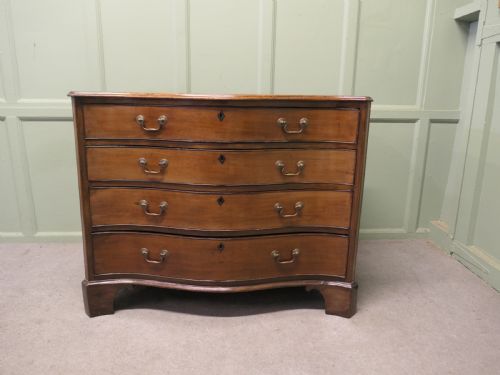
Serpentine Tallboy Dresser
A serpentine tallboy dresser brings together fluid front contours and generous vertical storage, prized for both sculptural grace and practical floor space economy.
Serpentine Tallboy Dresser
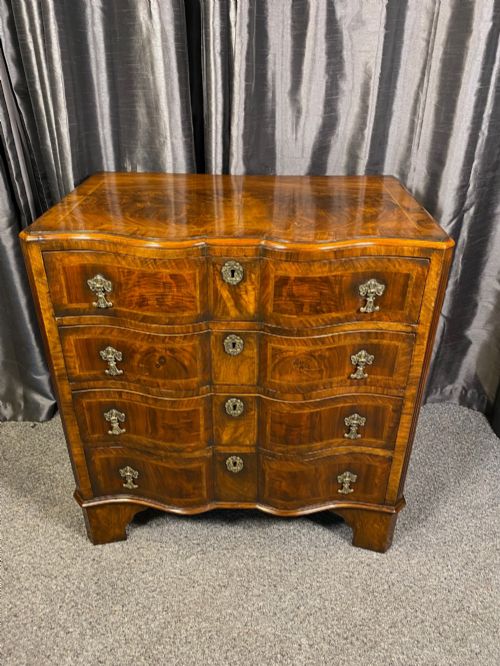
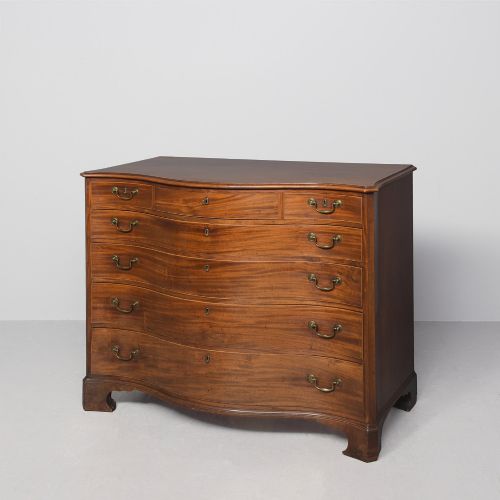
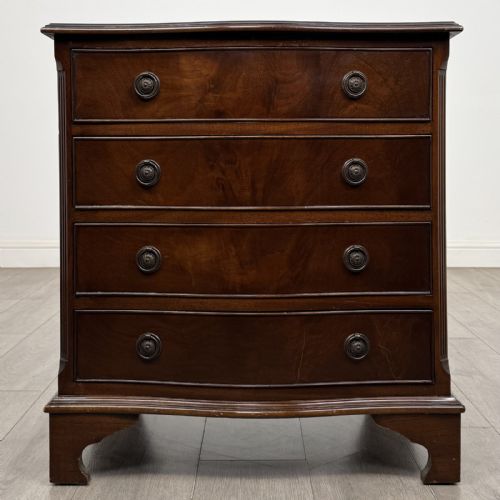
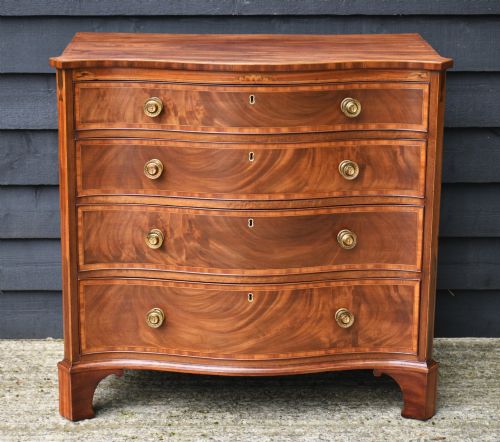
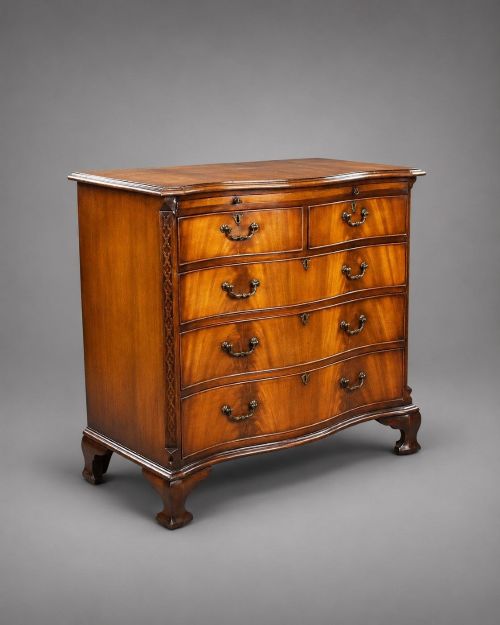
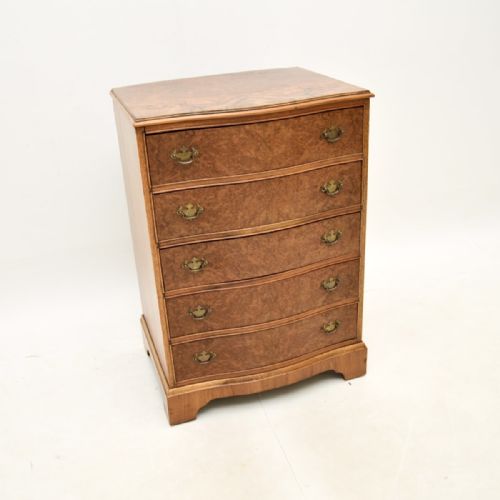
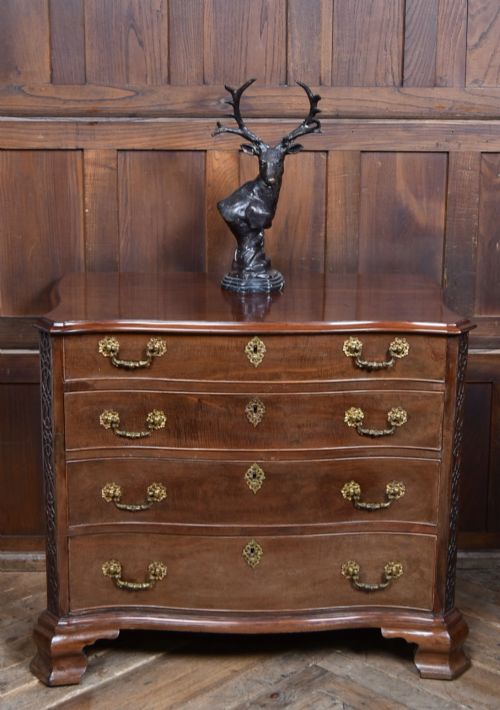
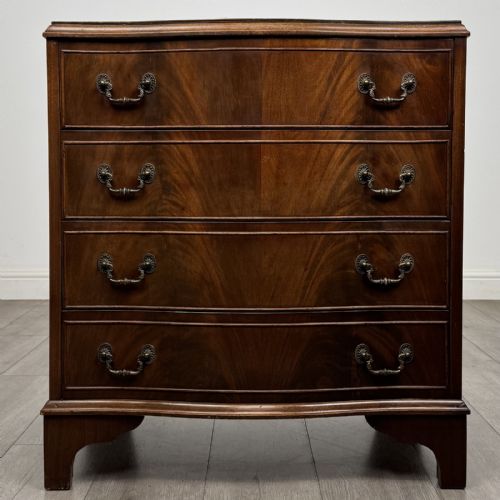
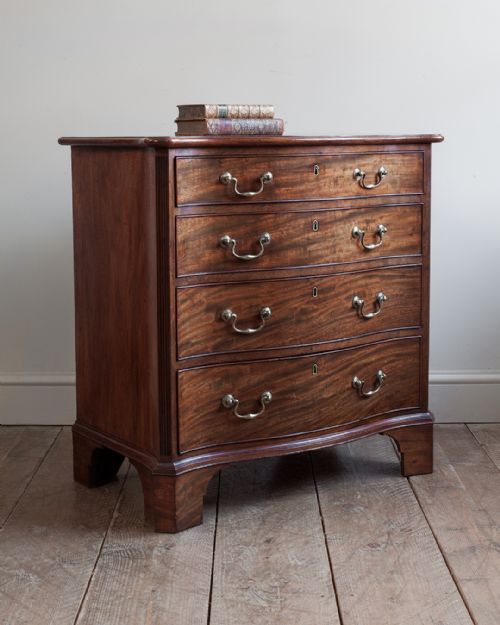
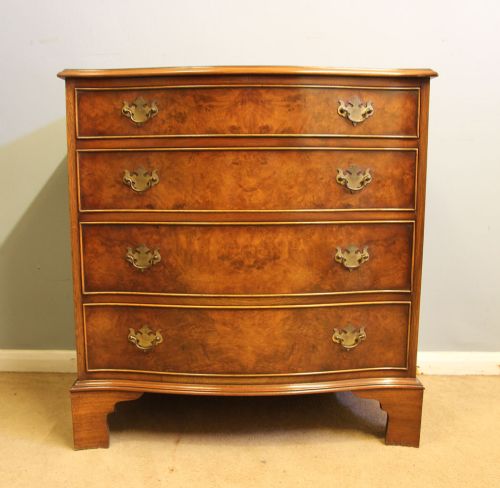
A serpentine tallboy dresser combines a distinctively curved, undulating front with a tall chest of drawers configuration. When searching for this form, you will frequently encounter Georgian originals alongside later Edwardian and 1930s revivals.
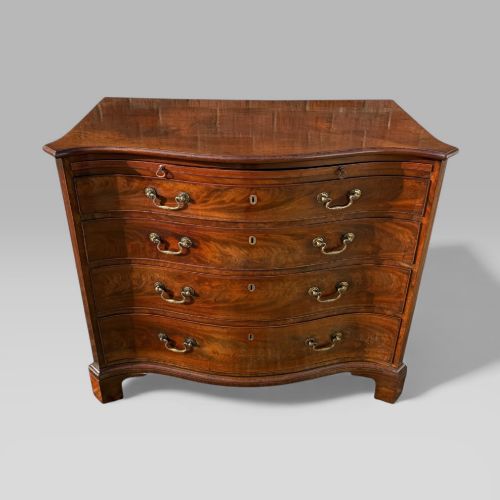
The inventory demonstrates that these pieces function primarily as tall chests of drawers, often incorporating brushing slides or writing surfaces. Examples span from eighteenth-century Georgian periods through to twentieth-century revivals.
Origins represented on the page stretch from eighteenth-century workshops to early twentieth-century cabinet makers. Walnut and mahogany dominate the selection, appearing in both solid timber and figured veneer treatments.
Materials and construction methods
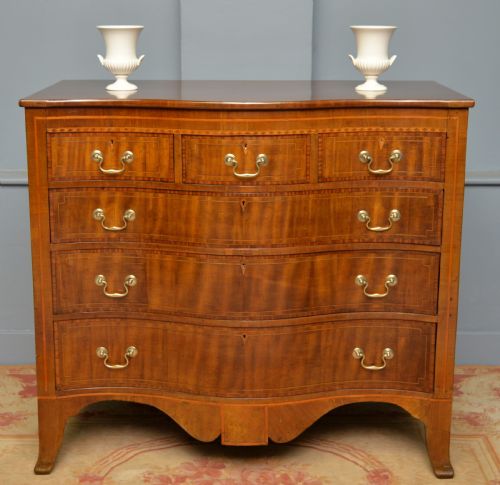
Cabinet makers constructed these dressers using dense hardwoods such as mahogany and walnut, frequently selecting figured veneers like burr walnut and fiddleback mahogany to enhance the curved drawer fronts. Boxwood inlay often provides linear contrast along drawer edges and top surfaces.
Hardware forms an integral part of the construction, with cast brass handles and escutcheons securing the drawer operation. Internal elements incorporate sliding boards for writing or brushing, requiring precise carpentry to function within the undulating frame.
Serpentine Tallboy Dresser Retail Price Guide 2026
Typical asking prices for serpentine tallboy dresser among the pieces listed under this phrase on Sellingantiques today, from the lower quarter to the upper quarter. They describe what is for sale here now, not the wider market.
A secret sliding board lets you pretend you are drafting royal decrees while hiding your laundry list.
Separating grades of execution
The standard of timber selection divides the range sharply, where highly figured veneers and choice cuts of mahogany command greater visual depth than plain stock. Grain matching across undulating drawer fronts demonstrates superior cabinet-making skill.
The integrity of the serpentine curve itself dictates the refinement of the piece. Crisp lines along the sweeping front and well-executed boxwood stringing separate meticulous workshop output from simpler utilitarian chests.
Maple and Co
The Serpentine Tallboy Dresser Glossary
- Serpentine
- A front contour characterised by a convex centre flanked by concave curves, creating an undulating wave effect. This shape demands high levels of joinery skill to execute across multiple drawer tiers.
- Brushing slide
- A pull-out shelf located beneath the top surface or upper drawers, historically used for dusting clothes or as a writing surface. It operates on wooden runners integrated into the internal framing.
- Figured mahogany
- Timber harvested from sections of the tree trunk that produce decorative grain patterns such as fiddleback or flame. Cabinet makers reserved these choice cuts for primary display surfaces.
- Boxwood inlay
- Narrow strips of pale boxwood embedded into contrasting darker timber to create geometric borders and decorative lines. This technique adds definition to drawer edges and top surfaces.
- Tallboy
- A tall chest of drawers, often constructed in two stacked sections to provide substantial vertical storage while maintaining a modest floor footprint.
Serpentine Tallboy Dresser: Frequently Asked Questions
How do I use a tallboy dresser?
A tallboy dresser serves primarily as a high-capacity storage unit for clothing, linen, and personal items. The vertical orientation maximises drawer space while occupying minimal floor area in a bedroom or dressing room.
Many examples include an integrated sliding shelf that functions as a temporary writing surface or staging area. This pull-out board operates independently from the main storage drawers below.
How do I date an 18th century piece?
Dating an eighteenth-century example involves examining the construction methods of the drawer linings, the type of secondary timber used internally, and the style of the brass hardware. Eighteenth-century pieces frequently employ hand-cut dovetails and native timbers.
Stylistic shifts also provide chronological clues, such as the transition from walnut to figured mahogany during the Georgian era. Inlaid boxwood details and specific foot configurations help narrow the period of origin.
What is the difference between Georgian and revival pieces?
Georgian period pieces were constructed during the reigns of the first four Georges, utilising contemporary cabinet-making techniques and period timber stocks. These items carry the direct stylistic hallmarks of eighteenth-century design.
Revival pieces, produced during Edwardian times or the 1930s, reinterpret these earlier styles using the tools and timber availability of their own era. While they replicate the proportions and serpentine forms, their internal construction reflects twentieth-century workshop standards.