



Serpentine Inlaid Desk
A serpentine inlaid desk brings together fluid, undulating curves and meticulous marquetry from the eighteenth and nineteenth centuries.
Serpentine Inlaid Desk
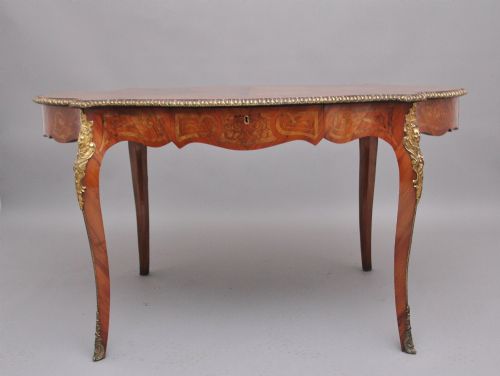
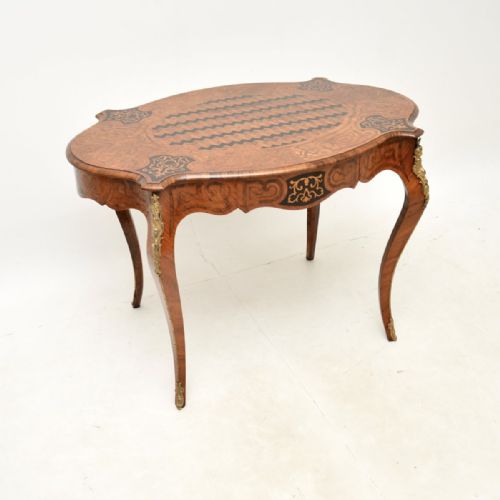
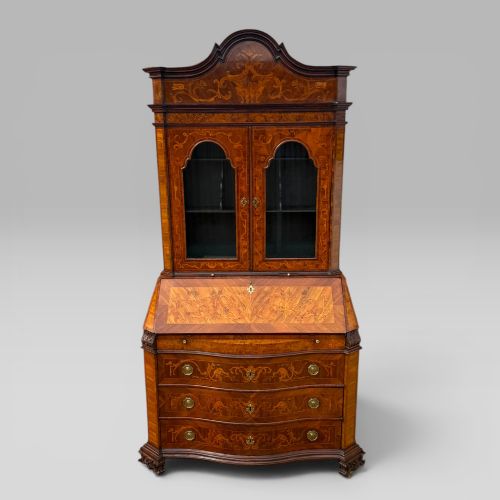
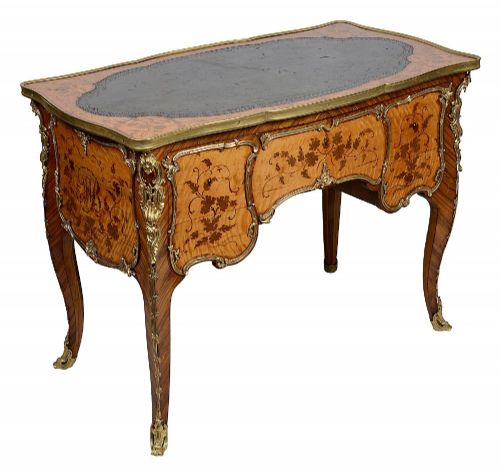
A serpentine inlaid desk is a piece of antique writing furniture defined by its undulating, curving front and detailed wood inlay. These pieces draw on Georgian, Victorian, and Edwardian traditions alongside French Louis XV and Napoleon III revival styles.
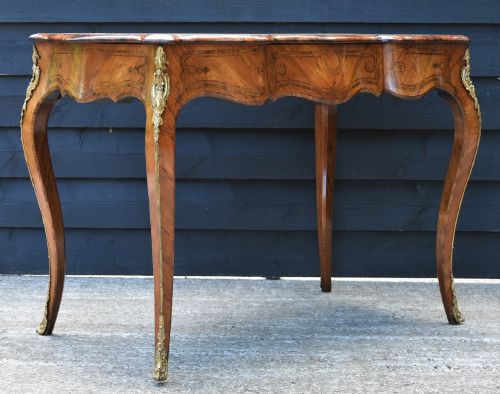
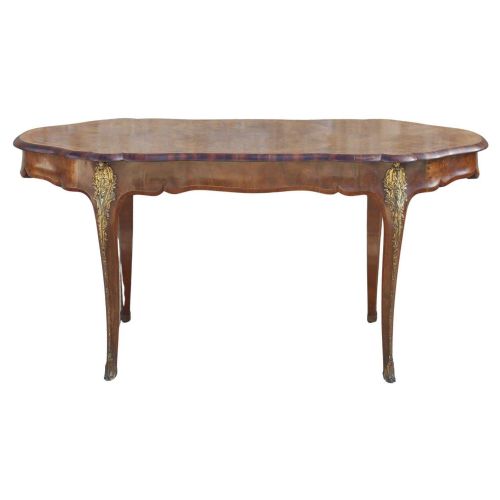
The versions most commonly met on this page date from the nineteenth century and typically employ French or English forms such as the bureau plat, kneehole desk, or bureau de dame. Their makers often combined writing surfaces with elaborate marquetry work to serve both ornamental and practical functions in a formal room.
How they were made
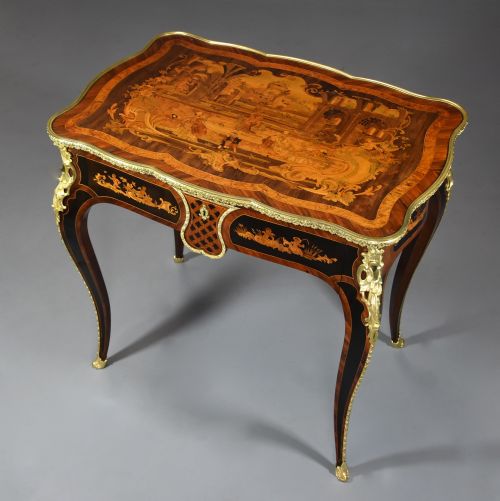
Craftsmen built these desks using a foundation of solid woods like mahogany or walnut, applied with finely cut veneers of satinwood, kingwood, or tulipwood to create contrasting patterns. Marquetry designs were painstakingly pieced together from various tinted woods, while brass or ormolu mounts and galleries provided structural edging and decorative accents.
The distinct serpentine outline required precise woodworking techniques to shape the wooden frames and drawers along a curving trajectory without compromising the integrity of the joints. Surface finishes relied on hand-applied polish that brought out the natural grain and the complex colours of the inlaid motifs.
The selection includes pieces spanning the Georgian, Victorian, and Edwardian periods, alongside nineteenth-century French revival designs.
What varies in quality
The standard of a serpentine inlaid desk rests primarily on the crispness of the cabinetmaking and the complexity of the marquetry. Superior examples exhibit tightly controlled curves that remain true over time, alongside floral or geometric inlays that integrate seamlessly into the surrounding wood without visible gaps.
Hardware and secondary timbers also distinguish finer pieces from simpler workshop output. High-grade desks utilise substantial cast ormolu mounts, well-figured cabinet woods throughout the interior, and meticulously fitted drawers that operate smoothly within their curved housings.
Maple and Co·Maison Millet
The Serpentine Inlaid Desk Glossary
- Serpentine
- A furniture shape characterised by a front that curves outward in the centre and inward at the sides. This contour demands advanced woodworking skill to execute properly.
- Marquetry
- The art of applying small pieces of veneer to a structure to form decorative patterns or pictorial scenes. Craftsmen selected different wood species to achieve natural colour contrasts.
- Bureau Plat
- A freestanding writing table fitted with drawers across the frieze, popular in eighteenth and nineteenth-century France. These desks are typically finished on all sides so they can stand in the middle of a room.
- Ormolu
- Gilt bronze ornamentation applied to the mounts, feet, and edges of fine furniture. The technique involves treating brass or bronze with an amalgam of gold.
- Satinwood
- A durable, lustrous timber native to the tropics, prized for its golden-yellow sheen. It frequently appears as a primary veneer on late eighteenth and nineteenth-century English pieces.
Serpentine Inlaid Desk: Frequently Asked Questions
Where were these desks placed?
These desks were historically positioned in principal reception rooms, libraries, or private boudoirs where their decorative qualities could be fully appreciated. Freestanding variants often occupied the centre of a room rather than sitting against a wall.
Because many examples feature finished backs and intricate marquetry visible from all angles, they served as centrepieces of interior arrangement. Their compact proportions also made them suitable for writing correspondence in domestic settings.
How do I care for inlaid wood?
Inlaid wooden surfaces require stable environmental conditions with minimal exposure to direct sunlight and radical humidity shifts. Natural waxes applied sparingly help preserve the polished finish without building up excessive residue.
Avoid placing hot or damp objects directly onto the veneer, as nineteenth-century polishes and delicate stringing can be sensitive to moisture and heat. Gentle dusting with a dry, soft cloth remains the best method for daily upkeep.
How do I distinguish French and English styles?
French pieces frequently incorporate heavier ormolu mounts, elaborate boullework, and curved cabriole legs influenced by Louis XV revival designs. The woods chosen often lean towards exotic veneers like kingwood and tulipwood paired with pictorial marquetry.
English variants tend to show restraint in their mounts, relying instead on the natural grain of satinwood or mahogany combined with precise geometric stringing. Their forms often reflect Georgian or Edwardian cabinetmaking traditions with straight or gently tapering supports.
Were these desks used for writing?
They were primarily designed for light correspondence, reading, and managing personal accounts rather than heavy administrative work. Many incorporated specialised compartments or leather-lined writing surfaces suited to quill and ink.
Over time, the functional role of these pieces shifted as domestic habits changed, leading some to be adapted as dressing tables or display surfaces while retaining their original cabinetry.