

Serpentine Burr Walnut Chest
A serpentine burr walnut chest offers a distinctive undulating silhouette paired with rich, knotted wood grain that catches the eye immediately.
Serpentine Burr Walnut Chest
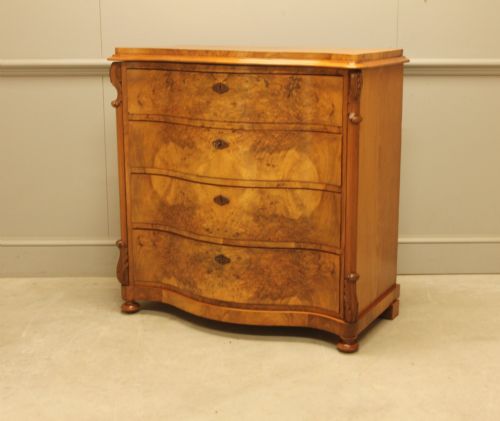
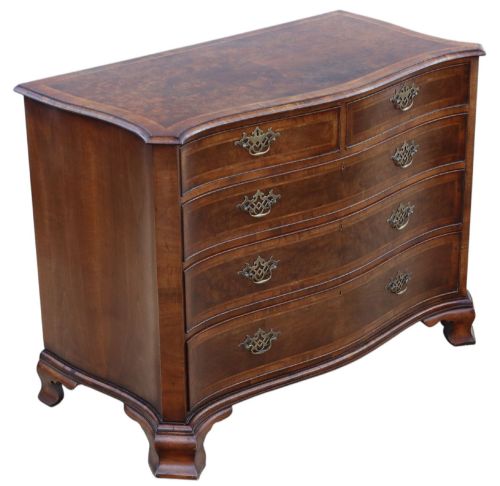
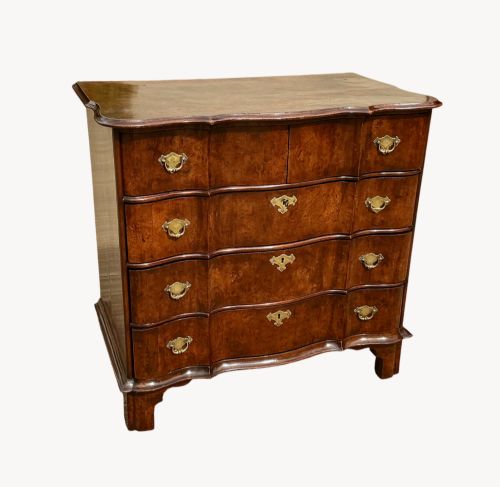
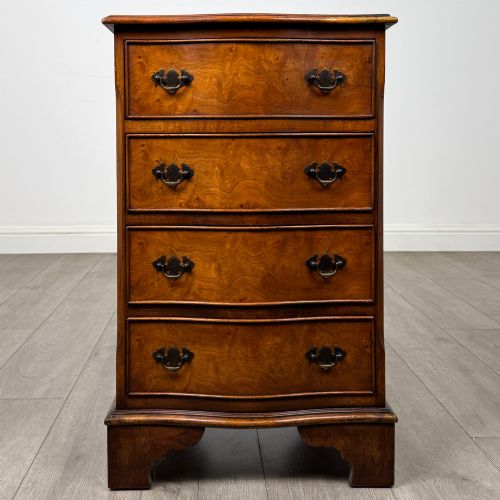
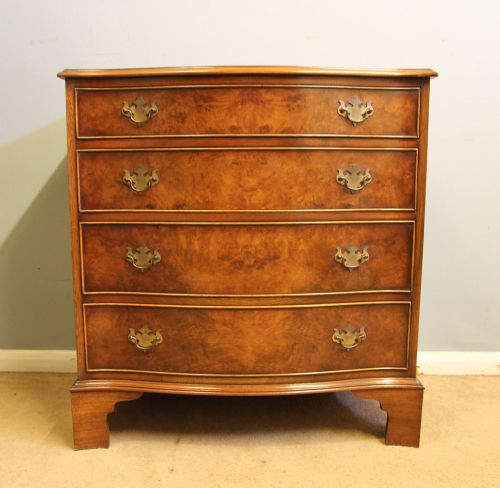
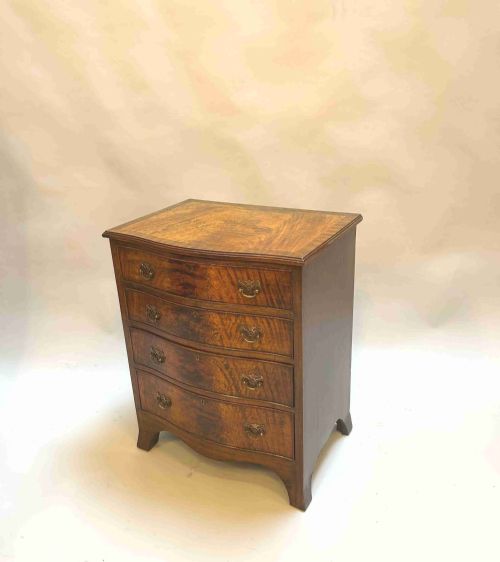
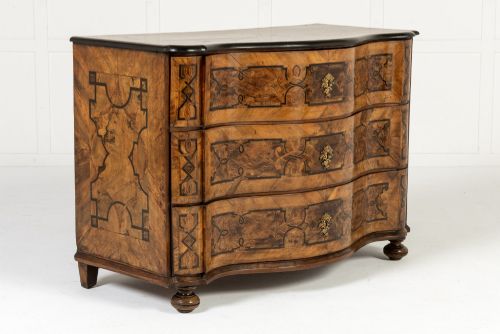
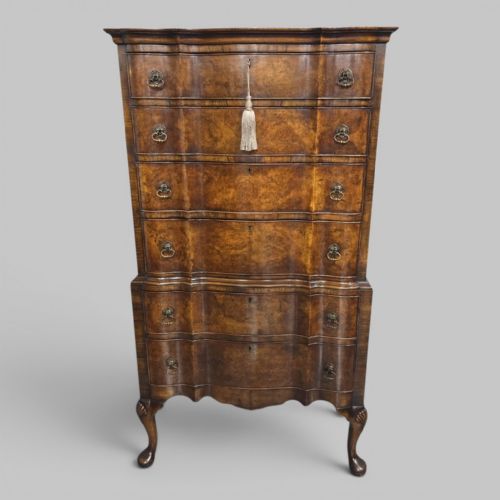
A serpentine burr walnut chest combines a curving, undulating front profile with the highly figured grain of burr timber. These pieces range from substantial 18th-century continental commodes to 20th-century Georgian Revival examples produced in the Edwardian era and the 1920s or 1930s.
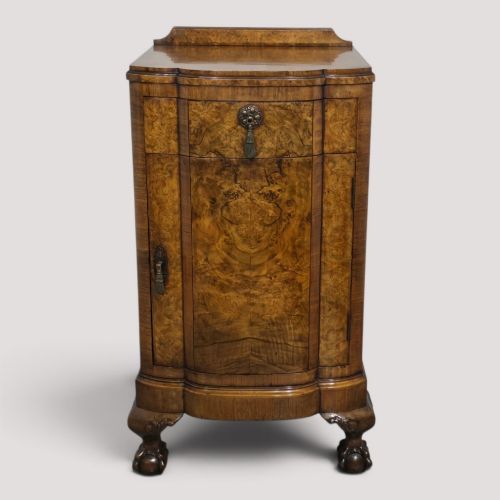
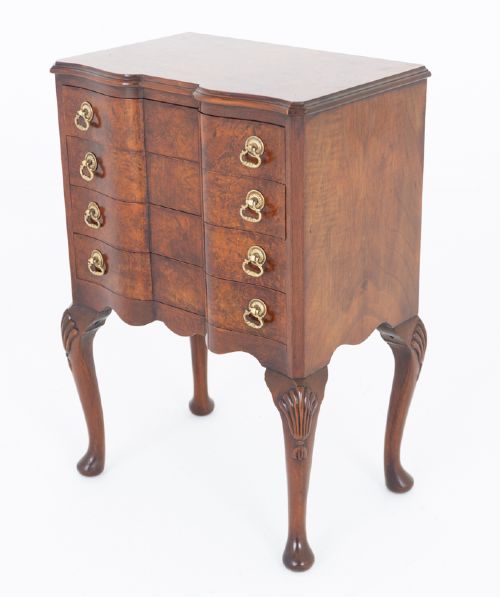
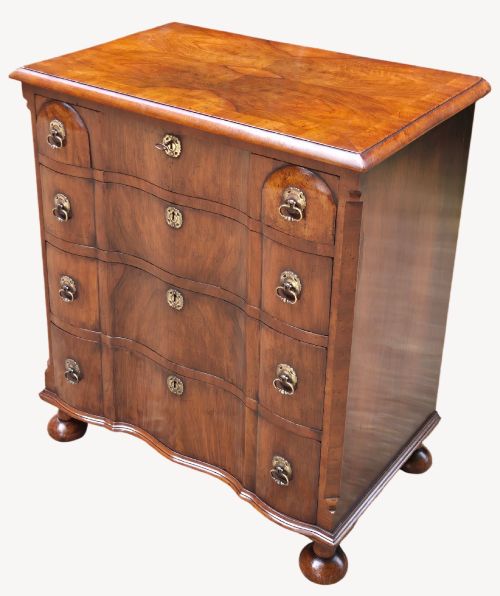
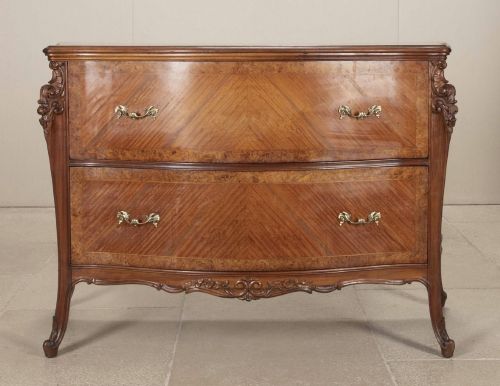
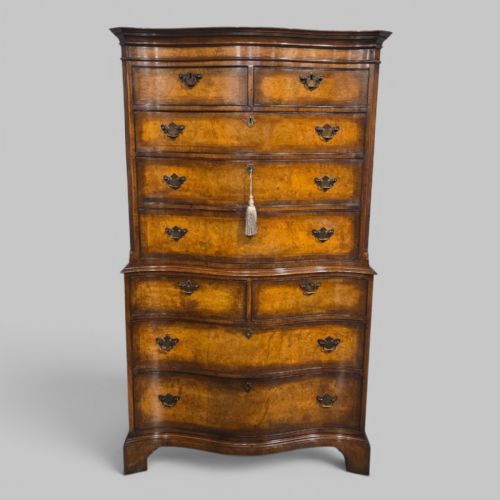
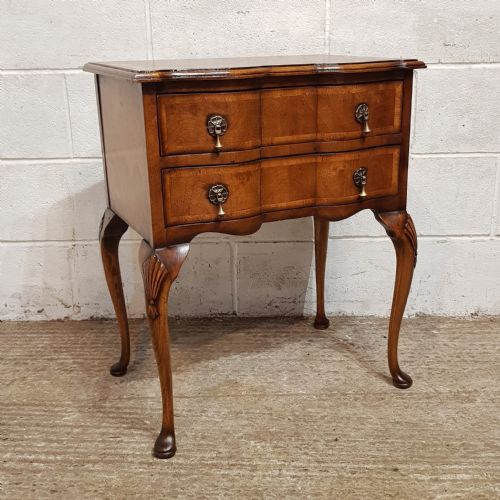
While the grandest examples appear as 18th-century pieces or tall chests on stands, the version most frequently encountered on this page is the smaller 20th-century chest of drawers or bedside table. These later interpretations often draw upon Queen Anne, Georgian, and Rococo design traditions to create decorative storage for modern spaces.
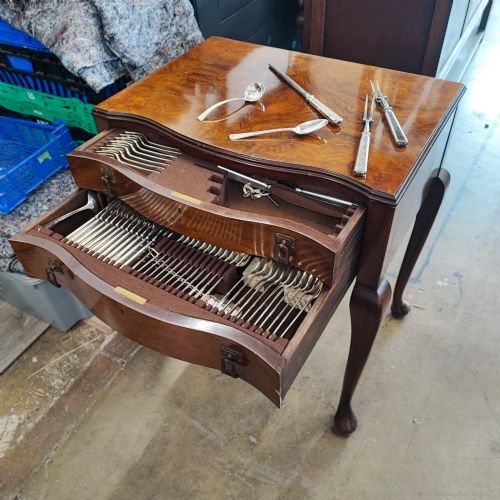
The form spans standard drawer arrangements, bachelors chests equipped with brushing slides, and bedside cabinets. The defining characteristic across these variations remains the sinuous curve of the front facade, which softens the geometry of traditional bedroom furniture.
How they were made
Cabinet makers utilised thin veneers of burr walnut, cut from the knotted growths of the tree where the grain twists irregularly, laid over secondary structural timbers such as oak or fruitwood. This technique displays intricate, swirling patterns across the curved drawer fronts that solid timber cannot achieve.
The distinct serpentine outline requires expert shaping of the solid walnut or veneered carcase, often complemented by crossbanding and brass hardware. Ormolu mounts and fine inlay appear on continental commodes, whilst English revival pieces rely primarily on the natural optical movement of the burr veneer.
Listings feature burr walnut, oak, fruitwood, and satinwood materials across chests dating from the eighteenth century to the 1930s.
What varies in quality
The standard of a serpentine burr walnut chest rests principally on the choice and symmetry of the veneer work. Master craftsmen selected burr slices carefully to mirror patterns across the drawers, whereas lesser pieces display disjointed grain or plain timber substitution.
Construction methods and the crispness of the serpentine shaping dictate the tier of the piece. Smooth movement in the drawers, precise matching of crossbanding, and well-executed proportions separate workshop interpretations from standard production items.
The Serpentine Burr Walnut Chest Glossary
- Serpentine
- A furniture front shaped with a central convex curve flanked by two concave curves, or vice versa, creating a continuous wave. This undulating profile requires advanced woodworking skill to veneer accurately.
- Burr Walnut
- Timber harvested from the gnarled excrescences of walnut trees, prized for its dense, swirling cluster of knots and eyes. It provides a highly decorative surface layer for fine cabinet work.
- Commode
- A low chest of drawers, often of continental origin, frequently standing on elegant legs. The term encompasses grand 18th-century examples as well as later revival pieces.
- Brushing Slide
- A pull-out shelf integrated above the top drawer of a chest, historically used for folding clothes or writing notes. It remains a desirable feature among collectors of period storage furniture.
- Crossbanding
- A narrow strip of veneer laid around the border of a drawer front or top with the grain running perpendicular to the central panel. This technique frames the primary burr walnut grain.
Serpentine Burr Walnut Chest: Frequently Asked Questions
Where should I place a serpentine burr walnut chest?
These chests function effectively in bedrooms, hallways, or living rooms as statement storage pieces. Their curved fronts allow them to sit comfortably in spaces where a sharp rectangular corner might obstruct movement.
Because the wood grain provides strong visual texture, placing the piece against a plain wall lets the natural patterns of the burr walnut stand out without competing with surrounding decor.
How do I care for burr walnut veneer?
Burr walnut requires stable indoor humidity and protection from direct sunlight to prevent the thin veneer from drying or fading. Regular dusting with a soft, dry cloth maintains the finish without needing harsh polishes.
Avoiding placement near heat sources or radiators ensures the wood underlying the curved serpentine facade does not warp or shrink over time.
What is the difference between an 18th-century and a 20th-century chest?
Eighteenth-century examples display authentic period construction techniques, hand-cut dovetails, and patination gathered over generations of use. They often originate from continental workshops in Germany, Italy, or France.
Twentieth-century pieces, including Georgian Revival and Edwardian interpretations, offer the same decorative serpentine aesthetic and figured burr walnut surfaces while suiting contemporary domestic proportions.