


Sepia Tone Watercolour Painting
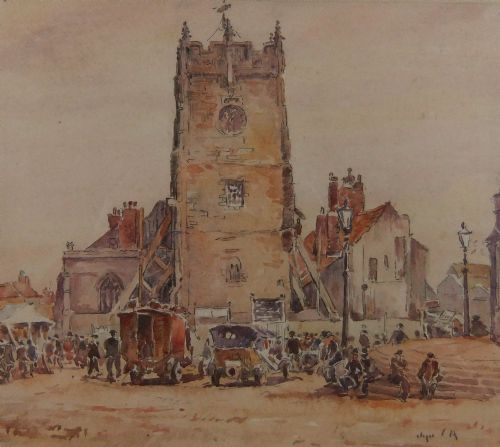
These sepia tone watercolour painting works capture monochromatic washes and ink lines, offering a restrained palette that prioritises tonal depth over bright colour.
Sepia Tone Watercolour Painting
A sepia tone watercolour painting relies on monochromatic brown pigments, ink, and wash to build architectural views, townscapes, and rural scenes. These works capture light and shadow through subtle gradations rather than full polychrome palettes, originating across the nineteenth and twentieth centuries.
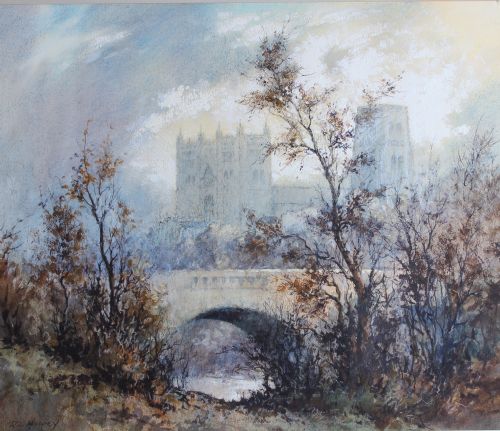
Buyers will encounter framed landscape waterpaintings, topographical views, and maritime scenes produced by British artists. The selection ranges from early nineteenth-century monochrome ink and wash studies to mid-century depictions of cathedrals and historic streets.
Pieces span Victorian, Edwardian, and mid-century British art traditions, often mounted behind glass in giltwood or simple frames. Each painting demonstrates the restrained handling characteristic of traditional British watercolour practice.
Materials and construction
Artists built these compositions using watercolour pigment, sepia wash, and ink applied to heavy paper supports. Pencil underdrawings frequently remain visible beneath the fluid monochrome layers, mapping out architectural perspectives and topographical contours.
Makers utilised fine brushes for precise ink linework alongside broader washes to establish atmospheric skies and shadowed stonework. Finished works were secured behind glass and housed in giltwood or wooden frames to protect the delicate paper surfaces.
Several depictions feature cathedral towers and ancient mills, proving artists loved a draughty old building as much as a sunny riverbank.
Evaluating quality and handling
The distinction between works rests upon the surety of the initial pencil drawing and the control of the monochrome wash. Masterly handling creates crisp architectural details alongside atmospheric depth without muddying the paper.
Provenance and documented authorship elevate certain pieces, particularly when signed by established regional or national artists. The harmony between the mount, frame, and the paper sheet also contributes to the overall integrity of the piece.
John Smith Atherton·Robert Leslie Howey·Charles James Lauder·Lieutenant Harold E Frecker·Tom Dudley·Dame Laura Knight·Fred Lawson·J.D. Walker·John Thistle
The Sepia Tone Watercolour Painting Glossary
- Sepia
- A brown pigment historically derived from the ink sac of the cuttlefish, widely used for monochromatic drawing and wash.
- Topographical
- Representing specific real-world locations, buildings, or landscapes with a focus on accurate local detail.
- Giltwood
- Wood that has been coated with a thin layer of gold leaf or gold-coloured pigment, commonly used for traditional picture framing.
- Wash
- A thin, fluid layer of watercolour pigment spread evenly across paper to create transparent areas of tone or colour.
- Gouache
- An opaque water-based paint composed of pigment, water, and a binding agent such as gum, often used alongside transparent watercolour.
Sepia Tone Watercolour Painting: Frequently Asked Questions
What is a sepia tone watercolour painting?
It is an artwork created primarily in shades of brown wash and ink, focusing on tonal contrast rather than full colour.
These pieces often depict landscapes, city views, and architectural subjects from the nineteenth and twentieth centuries.
How do I care for these paintings?
Keep works away from direct sunlight to prevent the sepia pigments and paper from fading over time.
Display them in stable indoor environments with minimal humidity fluctuations to protect the paper and frame.
How do I identify the period?
Examine the framing style, paper type, and artist signatures alongside any recorded dates in the titles.
Victorian and Edwardian pieces often feature distinct mounting techniques and handwriting styles typical of their era.
Are these works original art?
Yes, the selections comprise original hand-painted watercolours and ink drawings rather than mass-produced reproductions.
Brushstrokes, pencil guidelines, and paper textures distinguish each unique creation.