



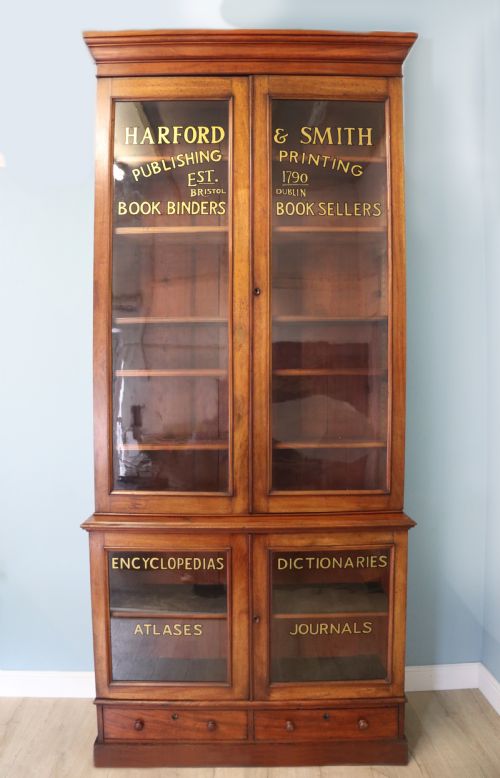


Sectioned Glass Cabinet
A sectioned glass cabinet gives your room architectural presence while keeping your volumes and collections safe behind timber and glazing.
Sectioned Glass Cabinet
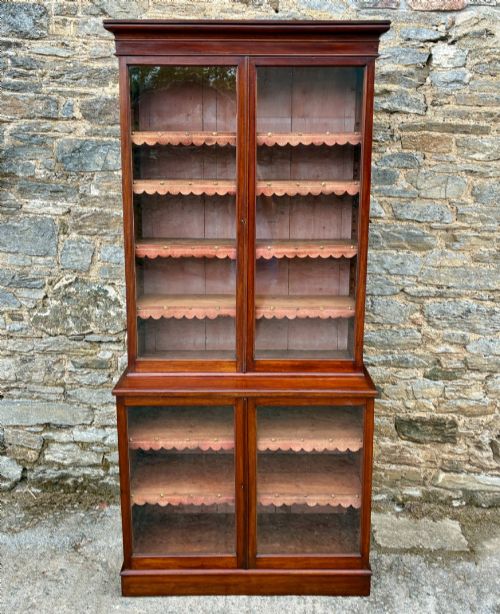
When you search for a sectioned glass cabinet, you are looking at modular or multi-tier bookcases and display cases designed to house books and prized possessions in separate compartments. The pieces seen here span the Victorian, Edwardian, and later periods, ranging from large breakfront furniture to individual stacking units.
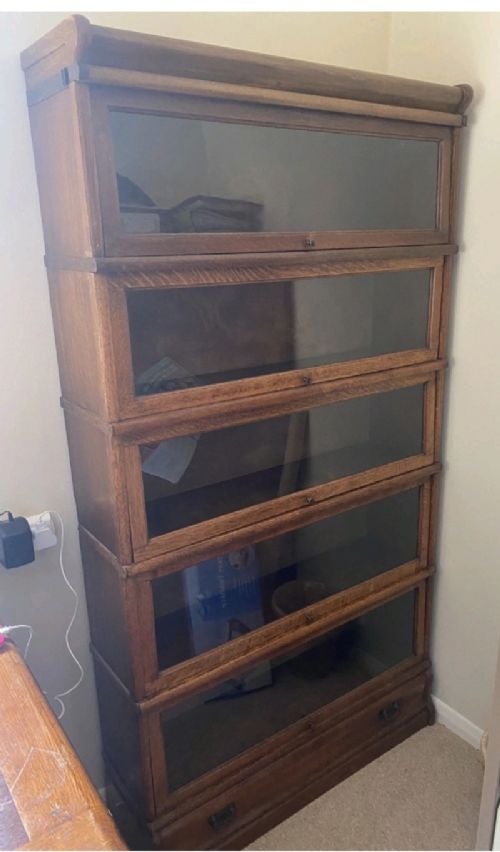
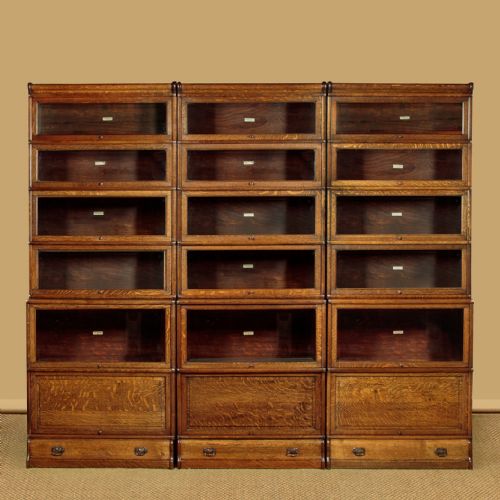
The most common form you will meet on this page is the oak sectional bookcase, often constructed in multiple tiers with glass doors that lift and slide back. These stackable office and library cabinets combine utilitarian storage with distinct period character, making them adaptable for modern rooms.
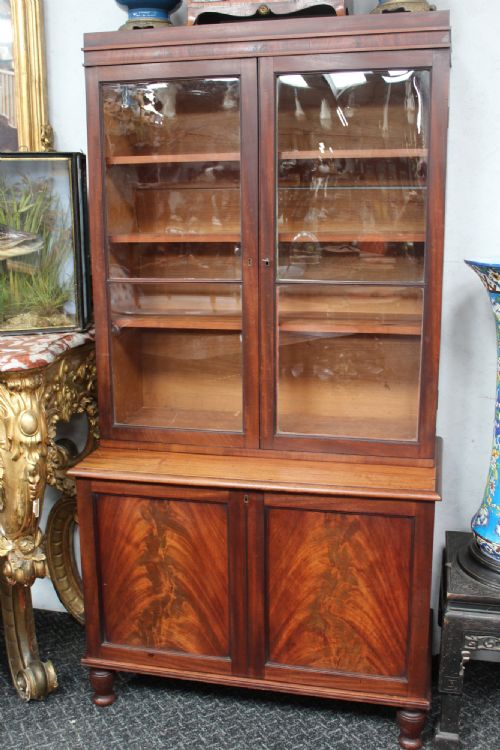
Alongside modular stacking units, the selection includes tall two-section mahogany bookcase cabinets and breakfront designs built in the nineteenth and early twentieth centuries. These larger pieces offer substantial display space with integrated drawer bases or secretaire compartments.
How they were made
Makers built these cabinets using solid hardwoods such as mahogany and oak, framing the compartments to support heavy rows of books. Glazing is fitted into wooden doors or leaded panels, sometimes enhanced with brass hardware on the drawers and lifting mechanisms.
Sectional designs required precise joinery so that individual tiers stacked securely without shifting, while larger breakfront and two-part cabinets relied on traditional carcase construction. Finishes range from polished mahogany to limed oak and original untreated surfaces.
Sectioned Glass Cabinet Retail Price Guide 2026
Typical asking prices for sectioned glass cabinet among the pieces listed under this phrase on Sellingantiques today, from the lower quarter to the upper quarter. They describe what is for sale here now, not the wider market.
The listings on this site feature oak and mahogany pieces spanning from the early nineteenth century through the nineteen-thirties.
What varies in quality
The distinction between standard utility office shelving and finer domestic library furniture lies in the timber selection and the refinement of the moulding. Cabinet-makers working in the Georgian Revival or Victorian traditions used dense, well-figured mahogany and applied detailed cornices.
The integrity of the mechanism in stacking units, particularly the smooth operation of the glazed doors and the retention of original brass fittings, marks the difference between a utilitarian survivor and a well-preserved piece.
Globe Wernicke·Lebus·Minty
The Sectioned Glass Cabinet Glossary
- Breakfront
- A large cabinet design where the central section projects forward from the flanking wings. This creates depth and architectural variety across the front elevation.
- Secretaire
- A cabinet incorporating a pull-down writing drawer that conceals small pigeonholes and inner compartments. It combines a desk with a traditional bookcase.
- Leaded glass
- Glass panes held together by narrow strips of lead, often seen in Arts and Crafts and early twentieth-century doors. This technique adds decorative pattern to the transparency.
- Limed oak
- Timber treated with a specialised finish that leaves a whitish pigment in the open grain. This technique lightened the appearance of oak furniture during the early twentieth century.
Sectioned Glass Cabinet: Frequently Asked Questions
What is a sectional bookcase?
A sectional bookcase is made of separate modular tiers that stack on top of one another to form a tall storage unit. Each tier usually has its own glass door to protect the contents.
This modular design allowed libraries and offices to add storage capacity incrementally by simply purchasing another tier.
How do the glass doors work?
Many stacking cabinet doors feature a lifting mechanism that allows the glass panel to slide smoothly into the cabinet above the books. This mechanism keeps the door out of the way while you select a volume.
Other traditional cabinets use hinged wooden doors fitted with glass panes that swing open on brass hinges.
Can I separate the stacking tiers?
Yes, stacking units are engineered to come apart into individual sections, a base, and a top cornice. This modularity made them easy to transport up narrow staircases and rearrange.
When assembled, gravity and internal locating pins keep the tiers stable and aligned.
How do I date these cabinets?
Dating relies on timber choices, construction techniques, and stylistic markers such as hardware and cornices. Victorian pieces often showcase dark polished mahogany and heavy architectural mouldings.
Early twentieth-century stacking units in oak reflect the practical demands of offices and homes from the Edwardian era onwards.