




Sectioned Display Cabinet
A sectioned display cabinet offers structured storage for collections, combining glass panels and divided interior tiers to showcase volumes and curiosities.
Sectioned Display Cabinet
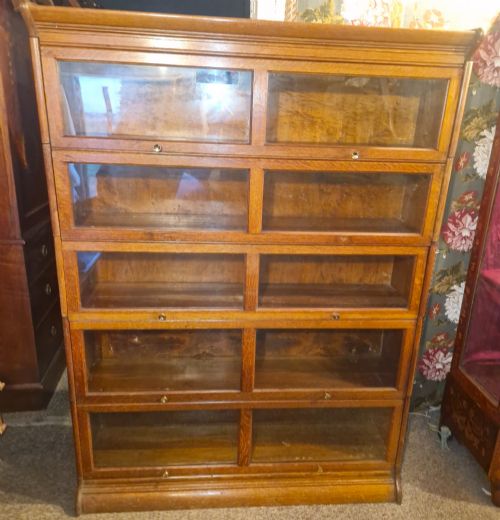
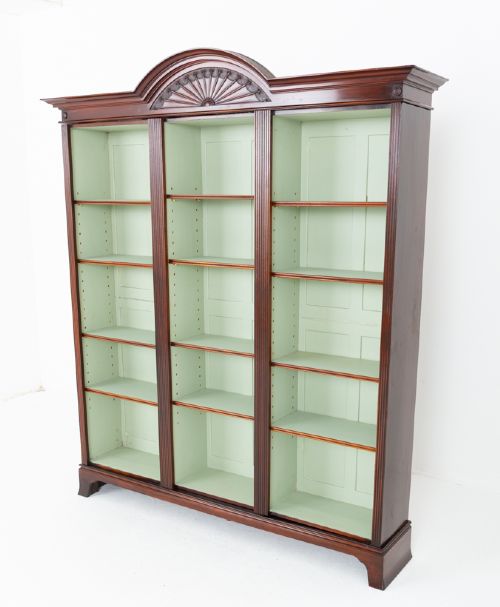
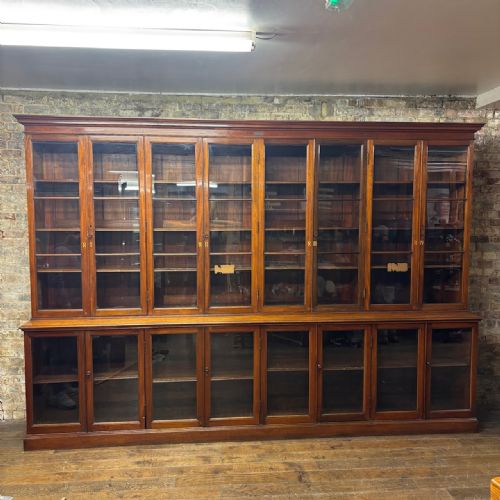
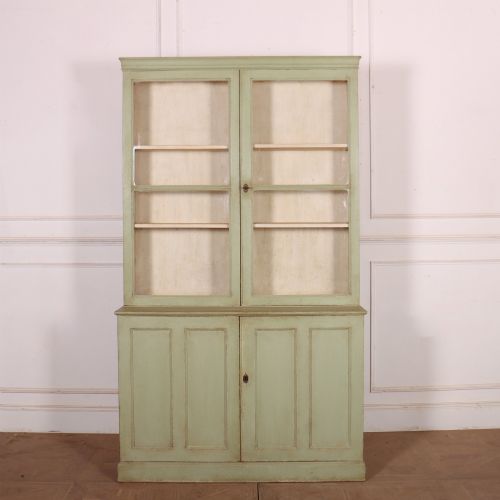
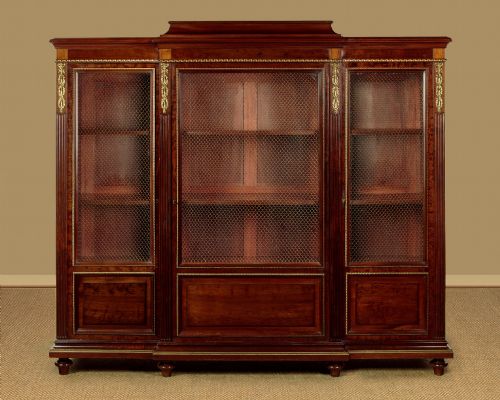
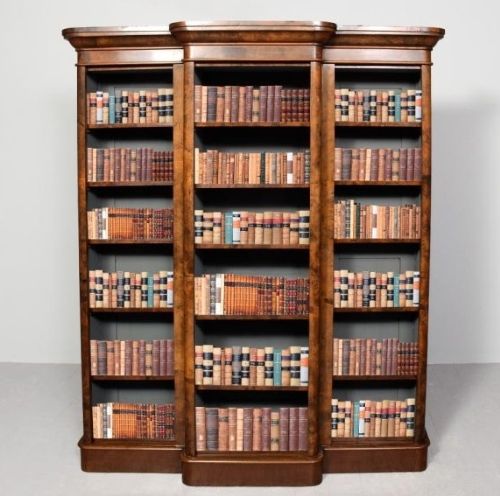
A sectioned display cabinet provides segmented storage for books and decorative objects, frequently appearing in multi-part formats across periods such as the Victorian and Edwardian eras. Buyers searching for a sectioned display cabinet encounter modular stacking bookcases and breakfront architectural forms constructed to display libraries and collections clearly.
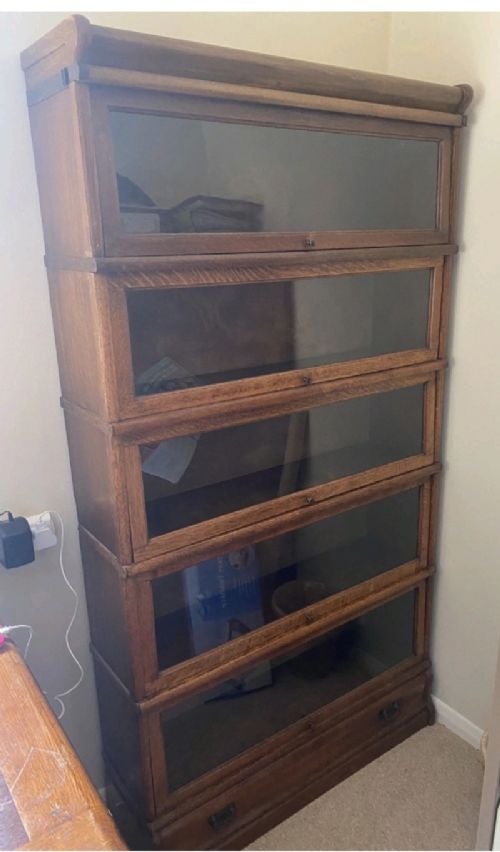
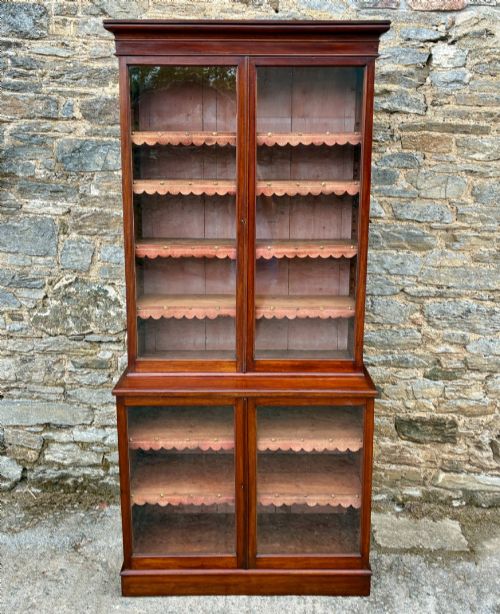
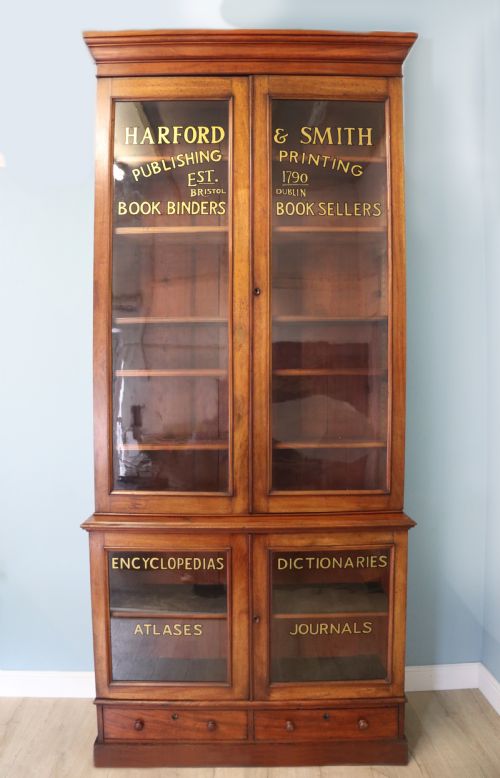
The material palette of these cabinets relies heavily on mahogany, oak, and burr walnut, often fitted with glass doors or arranged as open shelving bays. Many examples utilise modular multi-section designs, including specific mechanical stacking systems with glazed fronts.
Origins span formal Georgian Revival and Regency styles down to utilitarian country pine dressers and early twentieth-century limed oak iterations. The structural division into sections allows tall or wide bookcases to be moved and installed more readily than solid single-piece carcases.
How they were made
Cabinetmakers incorporated brass hardware, adjustable shelving tracks, and specialised modular lifting frames for sectional units. Finishes range from polished burr walnut veneers to ebonised details and parcel-gilding.
The assembly relies on pegged joints, carcase divisions, and modular stacking mechanisms designed to separate into distinct tiers for transport.
Sectioned Display Cabinet Retail Price Guide 2026
Typical asking prices for sectioned display cabinet among the pieces listed under this phrase on Sellingantiques today, from the lower quarter to the upper quarter. They describe what is for sale here now, not the wider market.
Listings feature modular stacking oak bookcases alongside large breakfront mahogany library cabinets and multi-section walnut display units.
What varies in quality
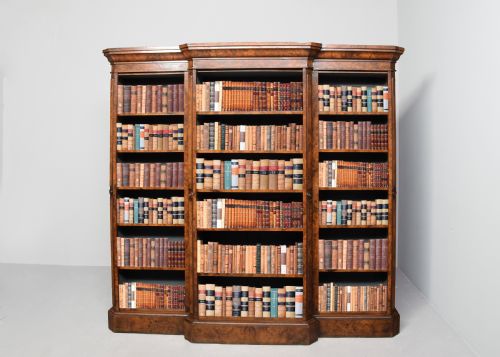
The selection of timber veneers, such as figured burr walnut or satinwood, dictates the visual prominence and richness of the exterior surfaces. Superior pieces display book-matched grain patterns and precise brass mounts that elevate the architectural presence.
Internal engineering marks the division between standard utility furniture and superior craftsmanship, seen in smooth-functioning modular stacking mechanisms, original glass, and finely adjustable shelving systems. The integrity of the sectional divisions ensures that stacked tiers align precisely without binding.
Globe Wernicke·Lebus·Minty
The Sectioned Display Cabinet Glossary
- Breakfront
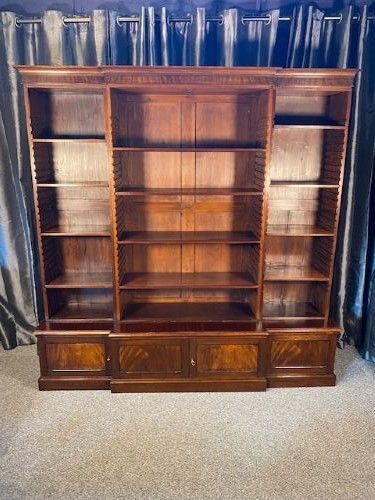
- A cabinet design where the central section projects forward from the flanking wings. This configuration creates a pronounced architectural rhythm across larger library bookcases.
- Sectional bookcase
- A modular shelving unit built in multiple stackable tiers that can be separated for moving. These often feature upward-lifting glass doors.
- Vitrine
- A glass-fronted display cabinet intended for the presentation of decorative objects and specimens. The frame is frequently embellished with parcel-gilding or fine veneers.
- Secretaire
- A cabinet incorporating a pull-down writing drawer fitted with internal pigeonholes and small drawers. It combines desk functionality with upper bookcase storage.
- Glazed
- Fitted with glass panels to enclose shelves while permitting visibility of the contents. Glazing bars divide the glass into smaller panes.
Sectioned Display Cabinet: Frequently Asked Questions
How do sectional bookcases separate?
Sectional bookcases divide into individual horizontal tiers, cornices, and drawer bases that lift apart. This modular construction allowed large libraries to be transported in manageable components.
Each tier rests upon the one below, often secured by internal pins or side tracks rather than permanent fixings.
What are glazed cabinet doors used for?
Glazed doors protect books and decorative objects from dust while keeping them fully visible. They are essential for display-oriented library furniture.
Wooden frames hold individual glass panes, sometimes divided by decorative astragals into geometric patterns.
How do I adjust the shelves?
Adjustable shelves rest on internal wooden support strips, metal pins, or rack-and-pinion tracks fitted to the cabinet interior. This allows vertical spacing to be altered for different book heights.
Many period bookcases feature slotted pilasters that let you reposition shelves without using tools.
Where were breakfront cabinets placed?
Breakfront cabinets stood against the principal walls of Victorian and Georgian libraries, dining rooms, and drawing rooms. Their grand scale suited formal reception spaces.
The projecting centre section anchored the furniture visually within large architectural rooms.