

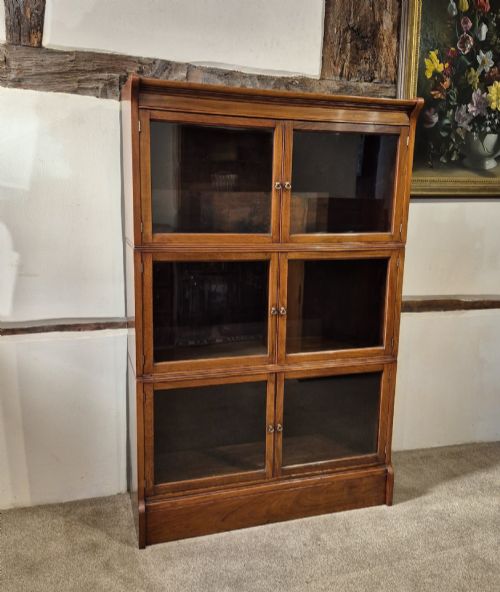
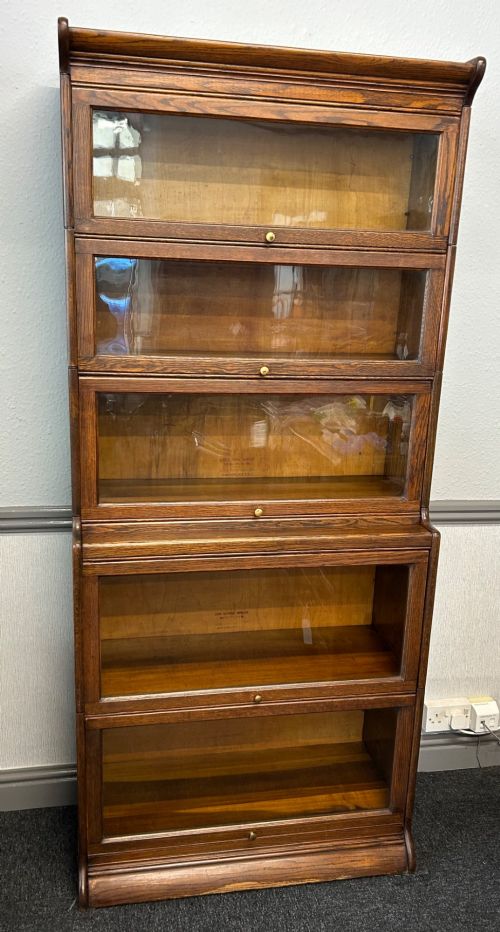
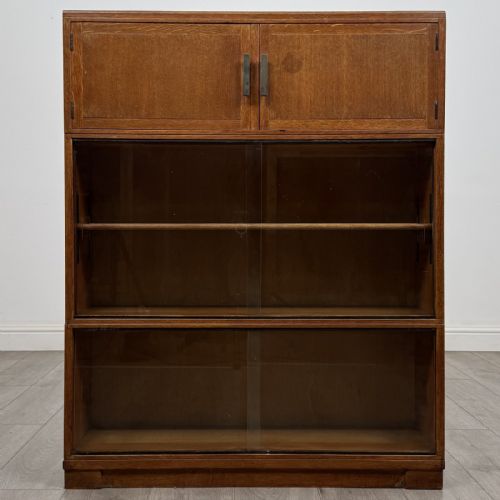
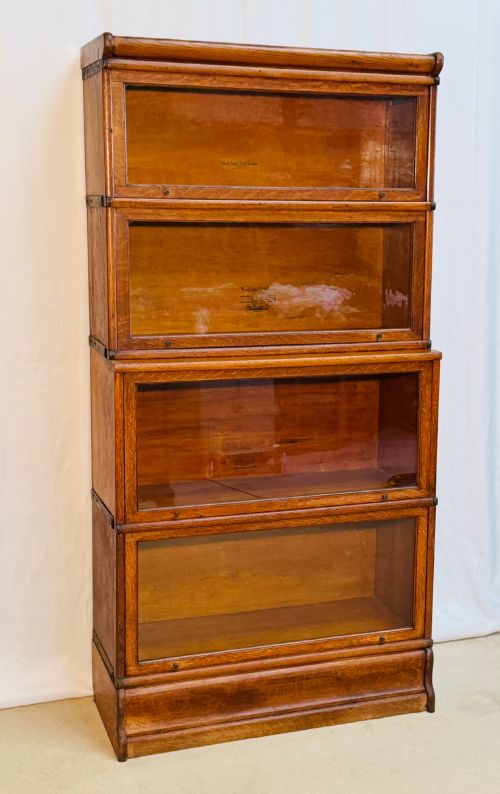



Sectional Office Bookcase
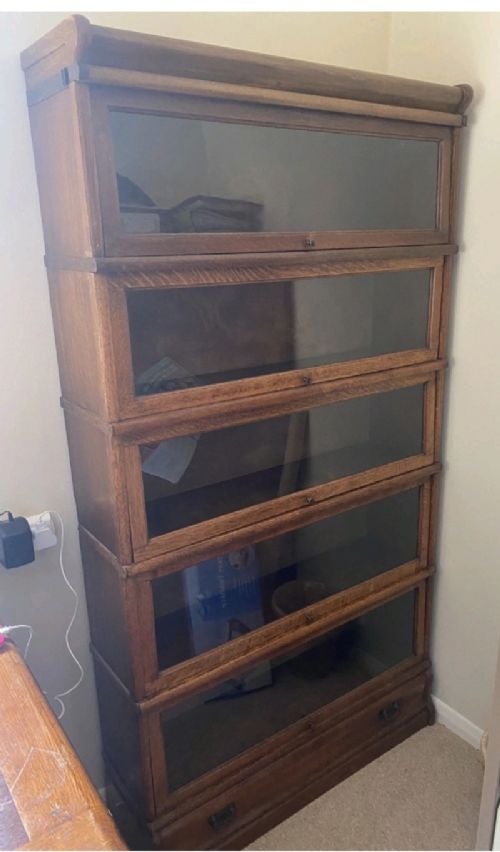
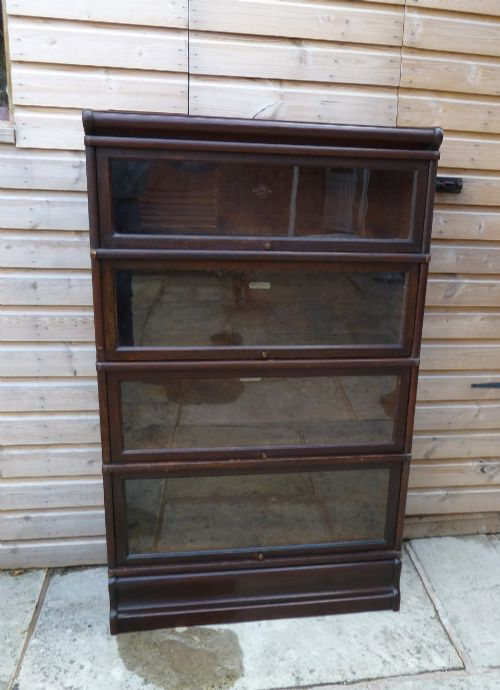
A sectional office bookcase organises your volumes behind stacking glazed tiers that lift and slide to protect the paper inside.
Sectional Office Bookcase
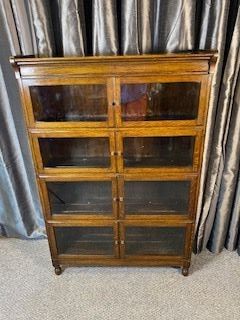
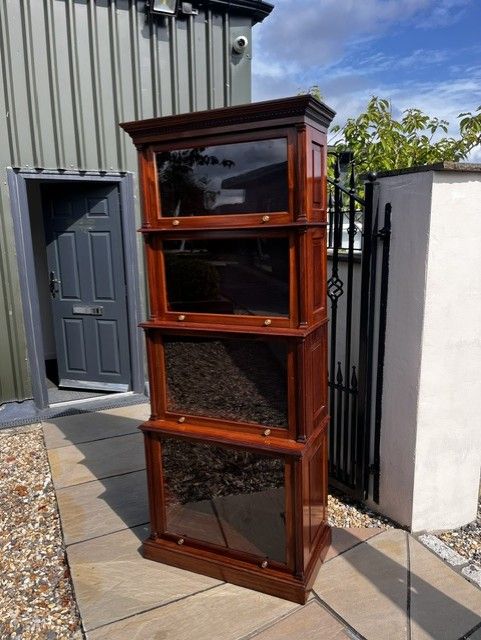
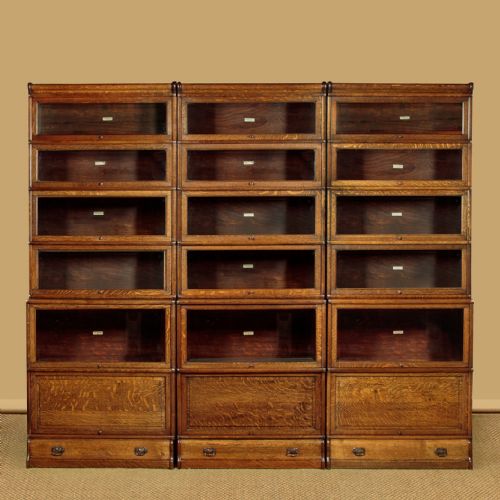
A sectional office bookcase provides modular storage using independent modular tiers that stack together, commonly known as barristers or stacking bookcases. When you search for this phrase, you encounter pieces designed primarily in oak or mahogany, often featuring glazed doors with glass or leaded panes.
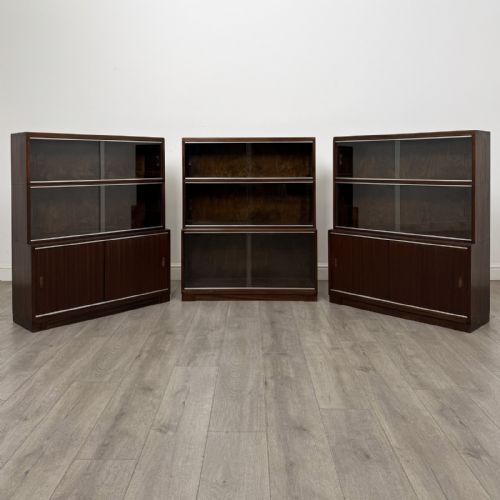
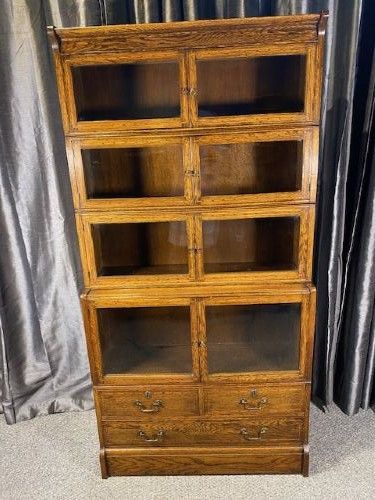
The versions most frequently met on this page date from the Edwardian period through to the 1930s, encompassing styles such as Edwardian, Art Deco, and 1920s commercial designs. Many examples incorporate specific mechanical systems like the Wernicke system elastic bookcase, and some include useful storage drawers at the base.
These bookcases serve professional and domestic interiors alike, offering adjustable height through their modular stacking design. Individual tiers separate easily, allowing the furniture to adapt as collections grow or as rooms change.
Materials and construction
Makers constructed these modular units principally from solid oak and mahogany, applying brass hardware for handles and connectors. Glass panels provide visibility for the books while protecting volumes from dust and handling.
The mechanical action relies on up-and-over doors or sliding glass doors that recess smoothly into the cabinet above each shelf. Certain variants incorporate leaded glass within the wooden framework, reflecting the architectural preferences of the period.
Sectional Office Bookcase Retail Price Guide 2026
Typical asking prices for sectional office bookcase among the pieces listed under this phrase on Sellingantiques today, from the lower quarter to the upper quarter. They describe what is for sale here now, not the wider market.
Some barristers ensured their sliding doors operated smoothly by waxing the wooden tracks with ordinary household soap.
Distinctions in quality
Quality in a modular bookcase resides in the precision of the stacking joints and the smooth operation of the lifting door mechanism. Finer pieces demonstrate careful timber selection, particularly in matched oak grains or solid mahogany construction.
Makers' marks and proprietary systems such as those by Globe Wernicke, Macey, or Gunn denote standard production methods of the era. The presence of integrated base drawers or leaded glass indicates a more ambitious commercial specification than plain multi-tier stacks.
Globe Wernicke·Macey·Gunn
The Sectional Office Bookcase Glossary
- Barristers bookcase
- A sectional bookcase with stacking glazed tiers designed to protect law books or reference volumes. The upward-lifting doors slide back into the cabinet body.
- Globe Wernicke
- A prominent modular bookcase system utilising standardised stacking sections. This proprietary design revolutionised office and library storage.
- Up and over doors
- Glazed cabinet doors fitted with internal linkages that allow them to lift outward and slide horizontally into the shelf recess. This mechanism permits access without swinging outward into room space.
- Modular stacking
- A method of construction where separate cabinet tiers rest one upon another without permanent fixings. It enables the assembly to grow taller as libraries expand.
- Golden oak
- A bright, warm oak finish favoured during the Edwardian period. Manufacturers applied this tone to accentuate the natural grain of the timber.
Sectional Office Bookcase: Frequently Asked Questions
How do sectional bookcases work?
Each tier operates as an independent wooden box with a glazed door that lifts and slides back into the recess above the books. The sections simply stack on top of a base plinth and beneath a top cornice without screws.
This modular design allows you to separate the tiers for easy transport or to reconfigure the height of the cabinet by adding or removing individual shelves.
Are these bookcases easy to move?
Because the units disassemble into individual tiers, moving them proves straightforward compared to a heavy single-piece bookcase. You lift off the top cornice, then lift each glazed shelf section away one by one.
Once separated, the individual components are manageable for one or two people to carry safely before reassembling them in a new location.
How do I date an office bookcase?
Dating relies on timber choices, hardware materials, and manufacturer stamps found inside the cabinet sections. Pieces from the Edwardian era typically feature golden oak finishes and patent paper labels from makers like Globe Wernicke or Gunn.
Later examples from the 1920s and 1930s introduce mahogany construction, Art Deco geometric touches, or heavier commercial hardware reflecting shifting office aesthetics.
Can I add more sections later?
Finding matching sections depends on locating pieces of the same width, depth, and manufacturer system. Because dimensions and door mechanisms varied between makers like Macey and Globe Wernicke, sections from different makers rarely interlock correctly.
Collectors generally look for complete sets or matching tiers from the same maker to ensure seamless stacking and uniform wood tones.