
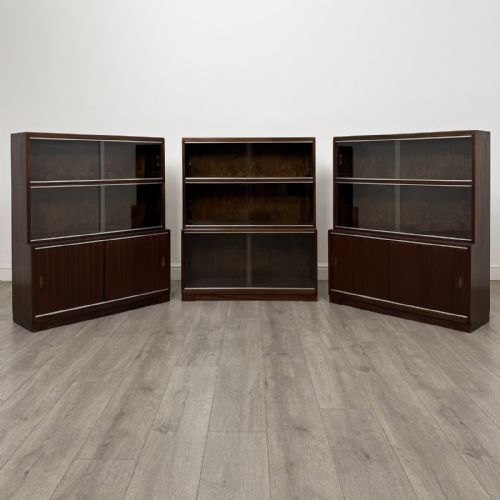
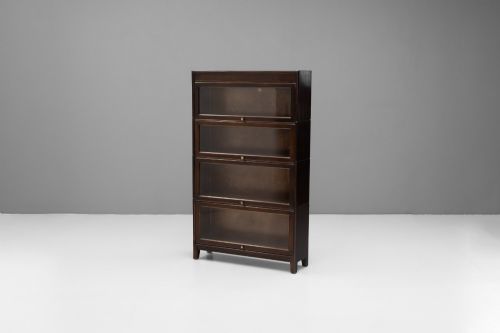
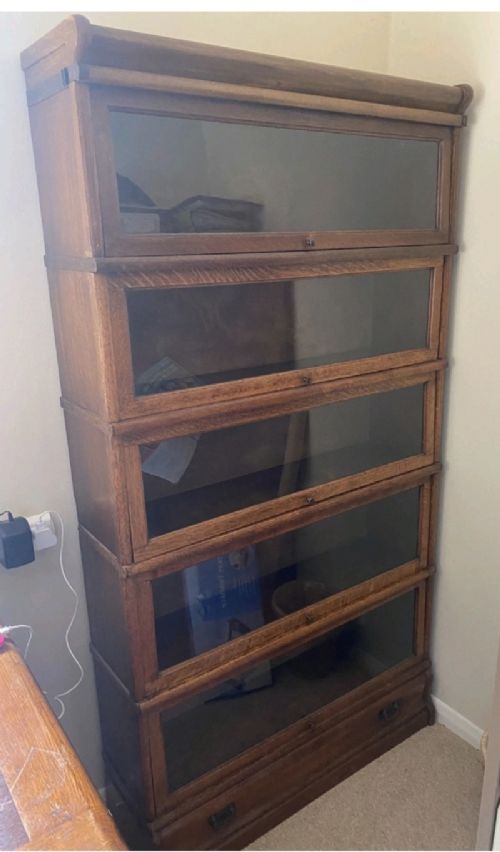
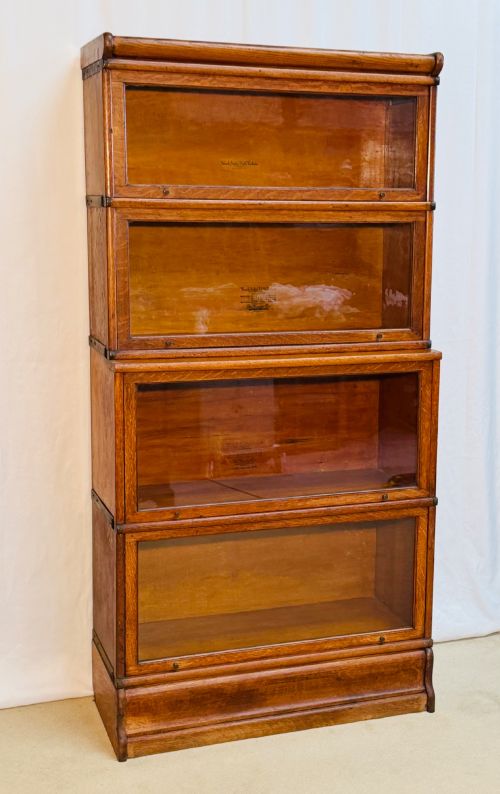

Sectional Glass Cabinet
A sectional glass cabinet offers a modular answer to library storage, stacking glazed tiers together for access and display.
Sectional Glass Cabinet
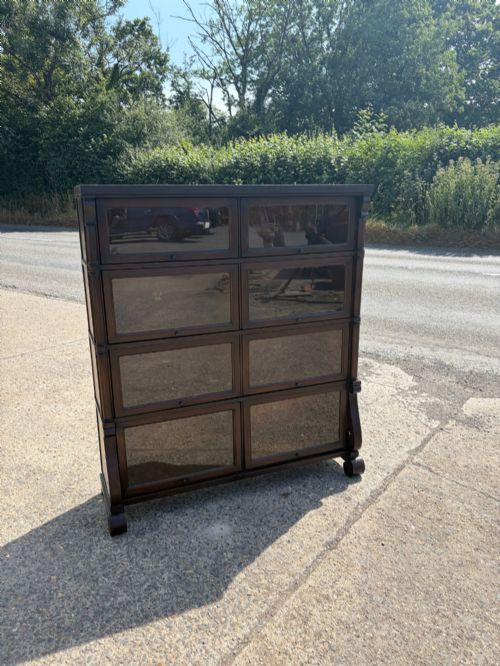
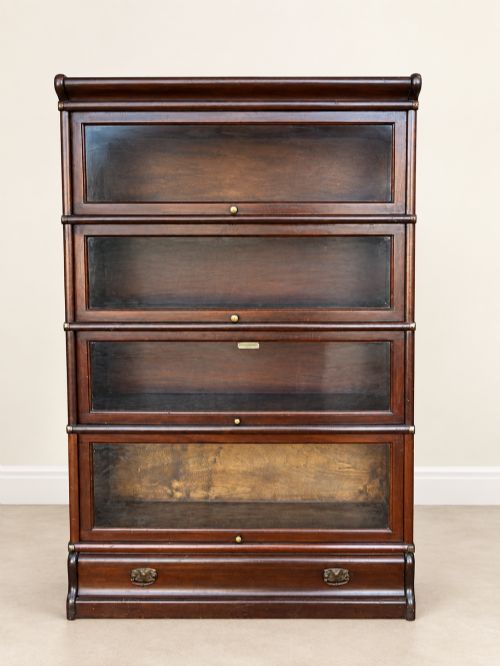
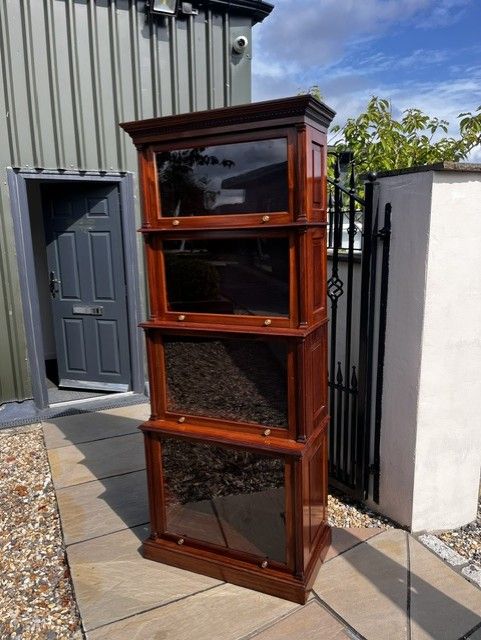
A sectional glass cabinet stands as a modular piece of furniture designed to house books and display objects in stacked, independent tiers. When buyers search for a sectional glass cabinet, they encounter modular lawyer bookcases and office shelving systems dating from the Edwardian era through the nineteen-thirties.
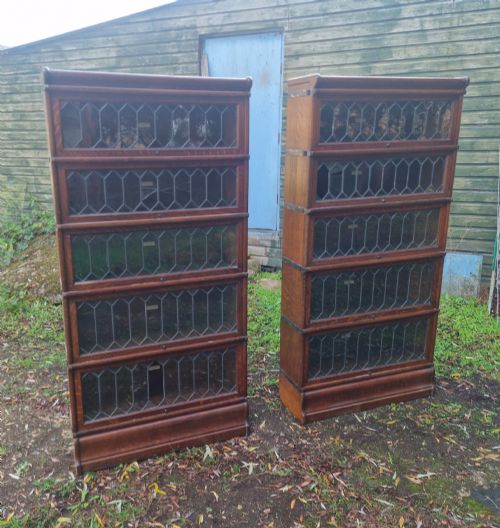
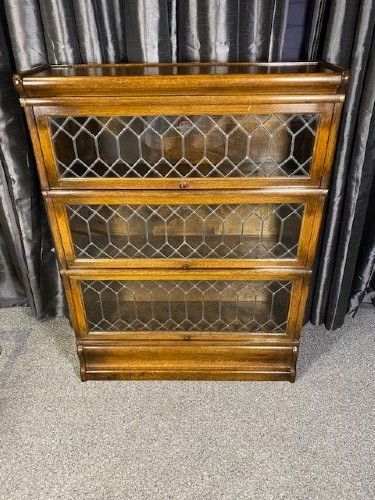
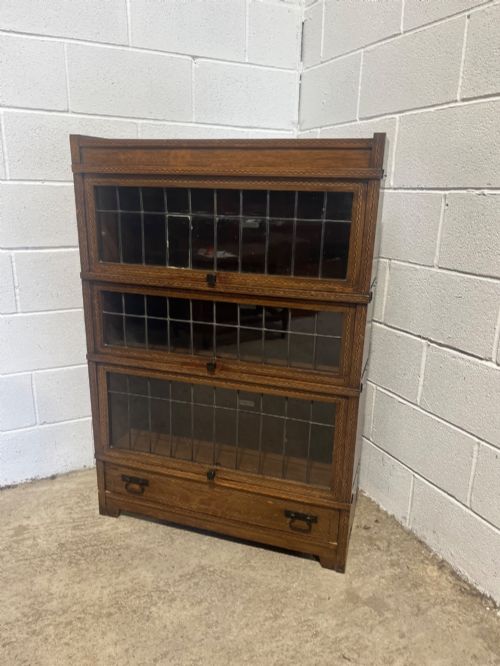
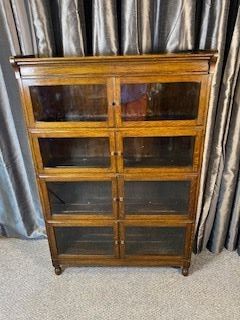
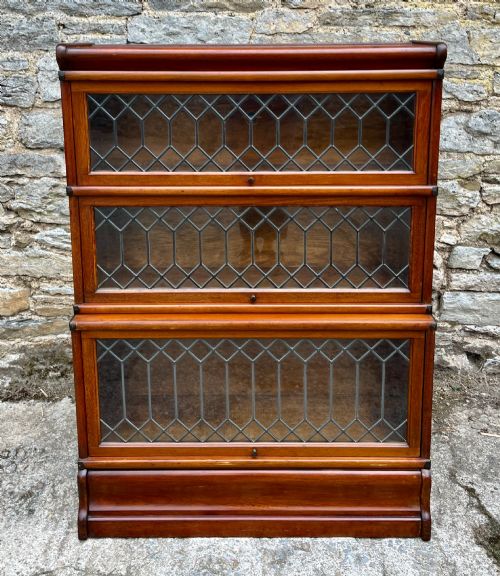
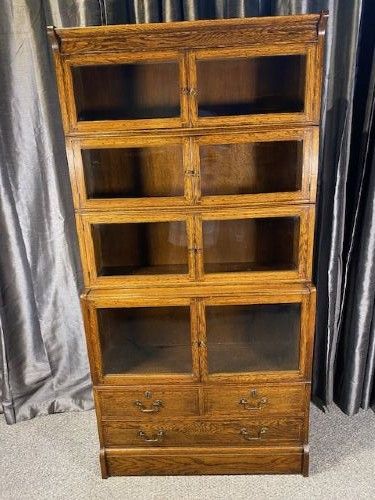
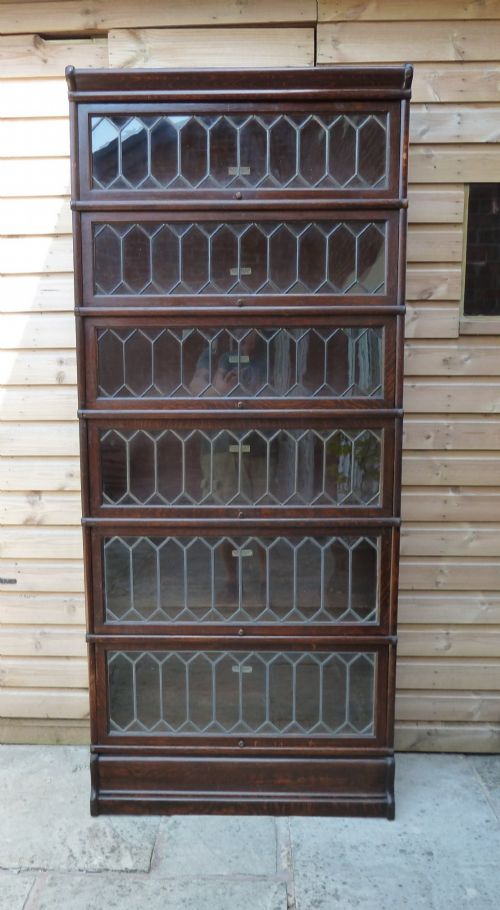
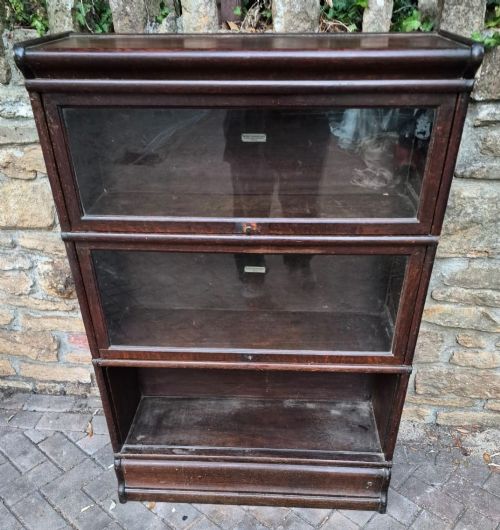
The pieces on this page appear predominantly in oak and mahogany, taking the form of bookcases and shelving units. Common variants include leaded glass doors, sliding glass panels, and configurations featuring drawers to the base.
Makers such as Globe Wernicke, Gunn Furniture, Macey, Lebus, Minty, and Heal's dominate the offerings, spanning styles from Arts and Crafts and Art Deco to Mid-Century Modern and commercial production of the nineteen-twenties.
How they were made
Makers utilised solid oak and mahogany alongside veneers, framing the individual tiers with brass hardware and handles. Up and over door mechanisms require precise peg and runner tracks to allow the glazed panels to lift and slide smoothly into the recess above each shelf.
Lead cames hold the individual panes together in leaded glass doors, creating geometric patterns typical of Edwardian and Arts and Crafts design. The modular sections rest one upon another using interlocking plinths and cornices, allowing the cabinet to grow or shrink in height as required.
Listings feature oak and mahogany constructions spanning the Edwardian period through the nineteen-fifties, incorporating leaded glass and brass hardware.
What varies in quality
The distinction between standard commercial units and superior examples rests in the timber selection and the mechanical precision of the stacking tiers. Golden oak and solid mahogany versions with intact brass hardware and matching sectional depths represent the higher tier of production.
Proprietary stacking systems by established makers demonstrate tighter joinery and smoother door actions than generic copies of the period. Original bases and matching cornices complete an ensemble, whereas mismatched tiers reveal a later assembly of parts.
Globe Wernicke·Gunn Furniture·Macey·Lebus·Minty·Heal's
The Sectional Glass Cabinet Glossary
- Sectional bookcase
- A modular piece of furniture built from separate stacking tiers with glass doors. Each tier functions as an independent shelf box.
- Barrister bookcase
- An alternative term for a stacking office bookcase designed with glazed up and over doors. The design allowed legal professionals to transport their libraries securely.
- Lead came
- A narrow strip of milled lead with a channel profile used to hold glass pieces together in leaded windows and doors. These create the structural grid for decorative glazing.
- Up and over door
- A pivoting door mechanism that swings outward slightly before sliding horizontally into the top of the cabinet section. This allows the glass front to vanish out of the way while books are accessed.
Sectional Glass Cabinet: Frequently Asked Questions
What is a sectional glass cabinet?
A sectional glass cabinet is a modular bookcase built from multiple stacking tiers with glass doors. Each tier lifts off independently.
The design originated to house professional libraries, allowing users to add extra shelves as their book collections expanded.
How do barrister bookcase doors work?
The doors use a metal scissor mechanism or pin guide that allows the glazed panel to lift outward and slide inward above the books.
This keeps the shelf open without requiring clearance space for hinged doors to swing outward into the room.
Can sectional cabinets be taken apart?
Yes, the individual tiers lift off the base plinth and detach from the top cornice. The modular sections simply stack on top of each other.
This construction made transport straightforward for travelling lawyers and growing offices in the early twentieth century.
How do I date these cabinets?
Dating relies on timber choices, hardware styles, and maker marks stamped on the interior or back panel. Edwardian and nineteen-twenties pieces frequently feature quarter-sawn oak or rich mahogany.
Arts and Crafts examples often show leaded glass patterns, while later mid-century versions adopt simpler flush wooden frames.