




Second Empire Table
A second empire table brings together heavy brass mounts and rich woods from the nineteenth century to anchor a room with a distinct silhouette.
Second Empire Table
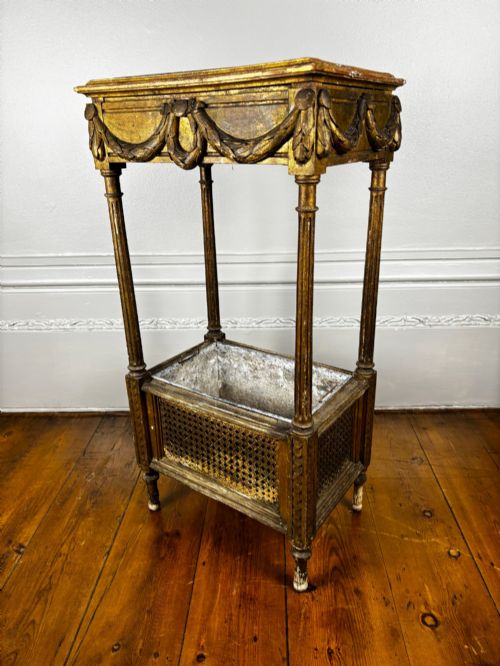
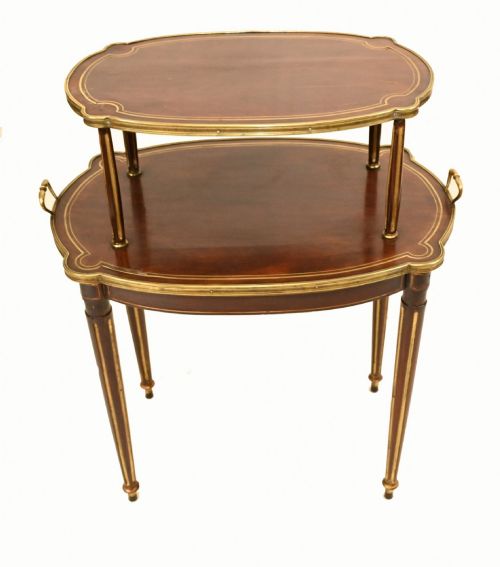
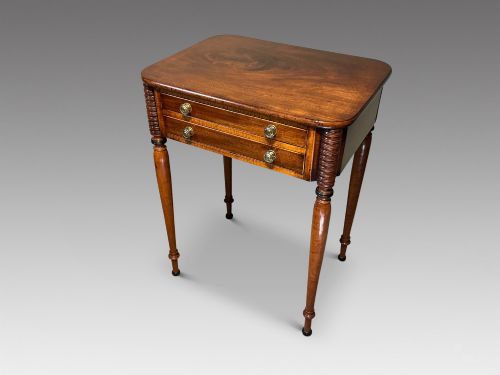
A second empire table draws on nineteenth century French design, appearing primarily as side tables, card tables, writing tables, and occasional stands. These forms reflect the grandeur of the Napoleon III period alongside later revivals, offering practical surfaces defined by classical proportions.
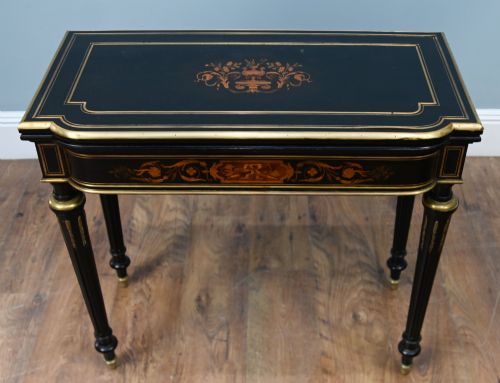
The materials span mahogany, burr walnut, and ebonised wood, frequently decorated with marble tops and cast metal mounts. You will often find smaller gueridon stands and games tables carrying the darker woods and inlaid details typical of the era.
While the phrase points to grand imperial aesthetics, the pieces themselves serve as functional furniture for domestic rooms. Their presence relies on contrasting timber tones and polished metal rather than sheer scale.
Judging the execution
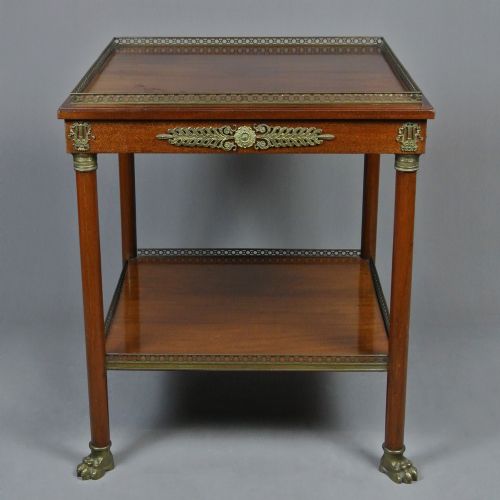
Quality rests in the crispness of the bronze and ormolu mounts, where finely chased details show the skill of the foundry rather than a soft, mass-produced cast. Timber selection also dictates value, with well-figured burr walnut or rich mahogany elevating the piece.
The precision of the marquetry and the soundness of the underlying joinery separate standard workshop output from finer examples. Heavy marble tops and integrated canework demand careful alignment to maintain structural integrity over time.
Second Empire Table Retail Price Guide 2026
Typical asking prices for second empire table among the pieces listed under this phrase on Sellingantiques today, from the lower quarter to the upper quarter. They describe what is for sale here now, not the wider market.
Several tables here hide writing surfaces and games boards beneath their tops, proving that nineteenth-century desks loved a secret.
Auguste Cain·Japy Frères·Deniere and Cailleaux·P.H. Mourey
The Second Empire Table Glossary
- Ormolu
- Gilded bronze applied to furniture mounts and clock cases. This technique involves coating cast bronze in a gold amalgam to produce a bright metallic finish.
- Marquetry
- The art of applying thin veneers of different woods to a surface to create decorative patterns. It requires precise cutting and fitting of each piece.
- Ebonised wood
- Timber treated to resemble ebony, usually through staining or painting. This dark finish gained immense popularity during the Napoleon III period.
- Gueridon
- A small French occasional table, frequently round and supported by a central pillar or three legs. These tables often feature marble inserts or canework.
- Bureau plat
- A flat-topped writing desk fitted with drawers. These desks sit freestanding in a room and display finished woodwork on all sides.
Second Empire Table: Frequently Asked Questions
How do I style a second empire table?
These tables suit traditional or eclectic interiors where their dark woods and gilt mounts provide a strong focal point. Pair them with complementary nineteenth-century lighting or mantel clocks to echo the period aesthetic.
Keep surrounding decor relatively simple to let the intricate marquetry and bronze mounts stand out without cluttering the space.
Can I use these tables for daily writing?
Writing tables and bureau plat examples from this period offer functional work surfaces with integrated drawers. Their sturdy timber construction makes them practical for regular use.
Ensure you protect polished wooden surfaces and marble tops from moisture and scratches by using appropriate desk pads or blotters.
How do I identify Napoleon III furniture?
Napoleon III pieces frequently feature ebonised wood, elaborate gilt bronze mounts, and floral marquetry. They borrow heavily from earlier French styles while embracing rich, dark finishes.
Look for the characteristic use of rouge marble tops and contrasting timber veneers that typify French cabinetmaking from the 1860s and 1880s.
What is the difference between a gueridon and a side table?
A gueridon is specifically a small round table, often featuring a marble top or canework supported by a central column or delicate legs. Side tables tend to be rectangular and sit flush against a wall.
Both forms utilise similar nineteenth-century materials like mahogany, walnut, and ormolu mounts.