


Second Empire Light
Second empire light brings heavy gilt bronze and patinated metal into domestic spaces through candelabra, wall lights, and lamps.
Second Empire Light
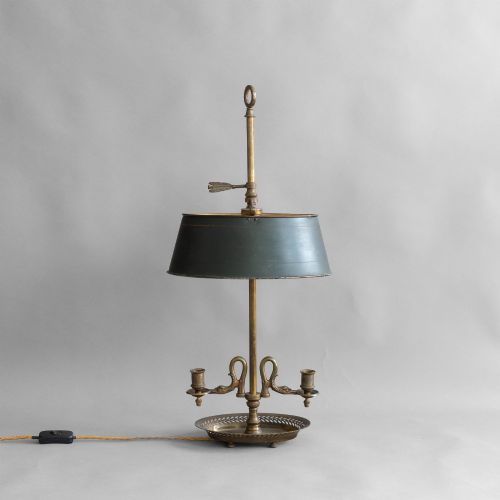
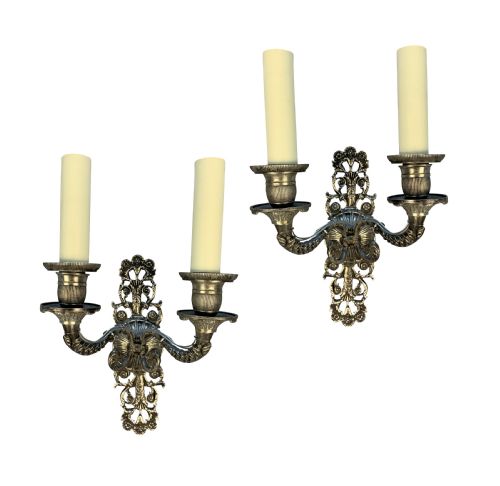
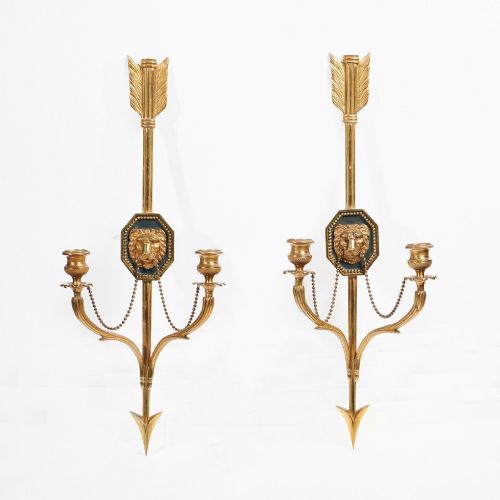
Second empire light encompasses wall lights, sconces, candelabra, and table lamps originating mainly from the nineteenth century and associated French periods. Buyers seeking these items encounter gilt bronze, brass, and ormolu formations styled after French Empire, Napoleon III, and Rococo Revival aesthetics.
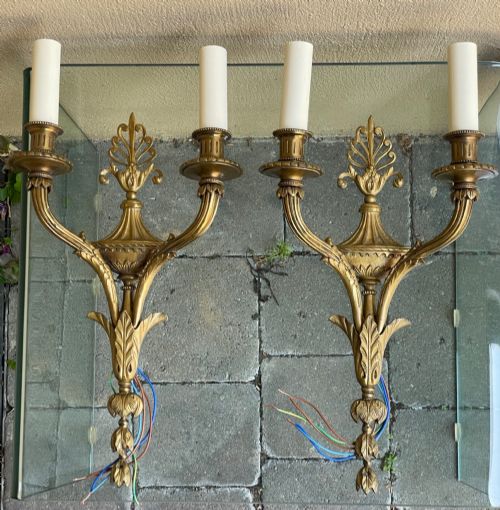
The most common formats on this page are pairs of wall lights and candelabra featuring figural elements such as cherubs. Pieces date across the eighteen-hundreds, with later interpretations extending into the early twentieth century alongside English Regency styles.
Table lamps and lamp bases also appear, occasionally converted from earlier oil lamps or desk lighting configurations. The selection leans heavily toward French manufacture, utilising marble and glass components within the primary metal frameworks.
How they were made
Cast bronze and brass form the structural core of these items, frequently finished with fire gilding or ormolu to achieve a bright golden sheen. Patinated bronze is often combined with polished gilt surfaces to create contrast on figural torchères and candelabra.
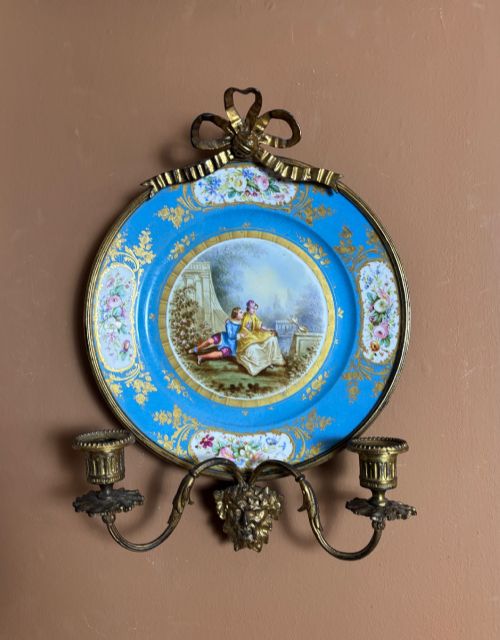
Secondary materials such as marble, frosted glass, and porcelain complement the metalwork, particularly in table lamps and console lighting. Assembly methods involve precise fitting of arms, sockets, and decorative cherubs or classical motifs.
Listings feature items spanning the eighteenth century through the nineteen-thirties, with a strong concentration of nineteenth-century French gilt bronze and brass pieces.
What varies in quality
The retention and quality of the original gilding or ormolu dictate visual impact, as does the integration of patinated bronze with bright metal accents. Weight, structural rigidity, and the harmony of paired components further define the standing of individual lighting pieces.
Auguste Cain·François-Christophe-Armand Toussaint
The Second Empire Light Glossary
- Ormolu
- Gilt bronze created by applying a mixture of gold and mercury to a bronze base and heating it. This historic technique produces a durable, warm golden surface found on many French pieces.
- Girandole
- An ornamental branched wall light or candelabrum, often incorporating mirrors or reflective backplates. These fixtures multiply the illumination in a room.
- Toleware
- Lacquered or enamelled sheet metal painted in various colours. It appears on lighter decorative items such as specific wall fixtures.
- Patinated bronze
- Bronze treated chemically or through exposure to develop a dark surface layer. This dark tone provides contrast against gilt or polished bronze elements.
- Candelabra
- Branched lighting devices designed to hold multiple candles or, in later adaptations, electric bulbs. They form a central category of nineteenth-century decorative metalwork.
Second Empire Light: Frequently Asked Questions
What is second empire light?
Second empire light refers to nineteenth-century lighting fixtures, including wall sconces, candelabra, and lamps produced during the Napoleon III era and related French periods. These objects are defined by opulent metalwork and classical or revivalist ornamentation.
Items in this category utilise materials like gilt bronze, brass, and marble to create decorative impact in domestic interiors.
How do I identify a napoleon iii lamp?
Napoleon III lamps typically feature heavy bronze or brass construction, often incorporating figures such as cherubs, classical drapery, or frosted glass shades. They reflect the ornate tastes of the mid to late nineteenth century in France.
Many examples start as oil lamps or console lights that later undergo conversion for modern electrical use while retaining their original brass and copper bodies.
Are these wall lights electrified?
Lighting pieces on this page span various periods and include both original hardwired fixtures and items adapted for modern use over time. Conversions from oil to electricity often occurred during the twentieth century.
Buyers should examine the internal wiring and fittings of each sconce or candelabrum to understand its current functional state.
What materials are most common?
Gilt bronze, brass, and patinated bronze dominate the construction of these nineteenth-century pieces, frequently paired with ormolu mounts. Secondary materials include marble bases and frosted or clear glass.
Porcelain elements also appear on select candelabra and lamp bases, adding colour and texture to the metallic frameworks.