

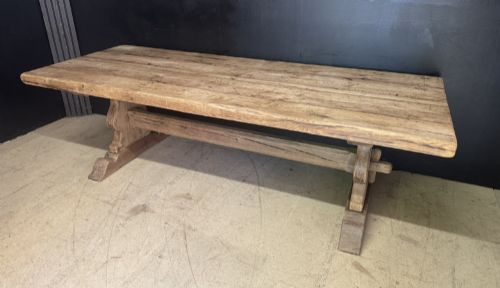
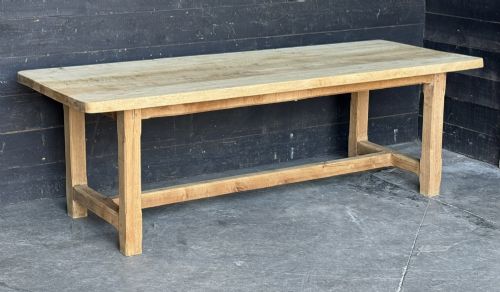
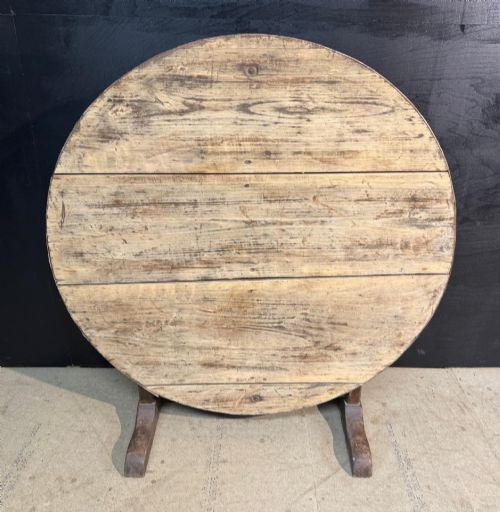
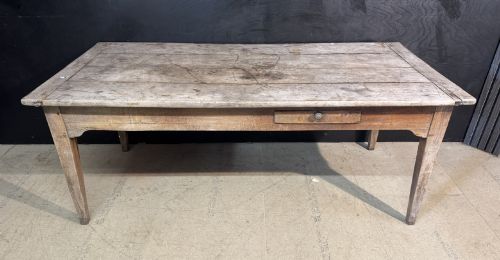
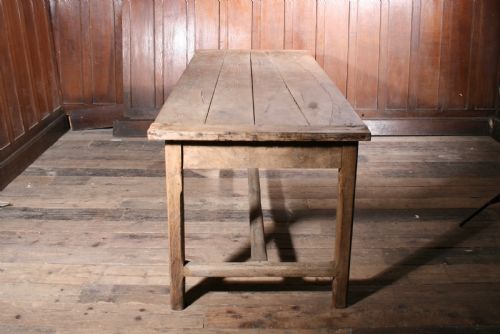
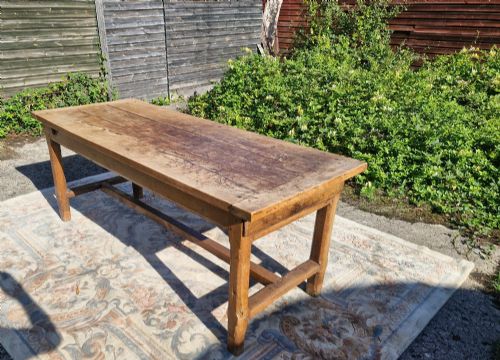
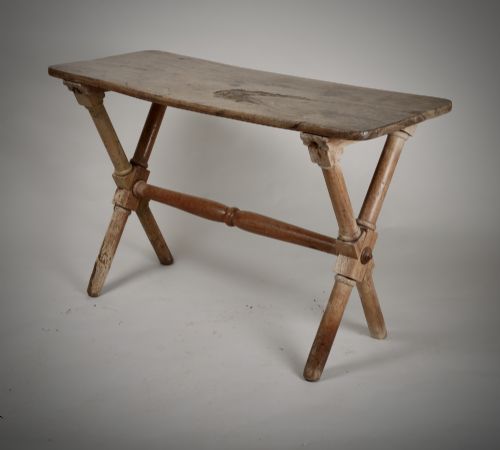
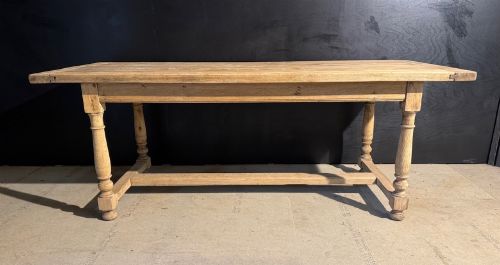

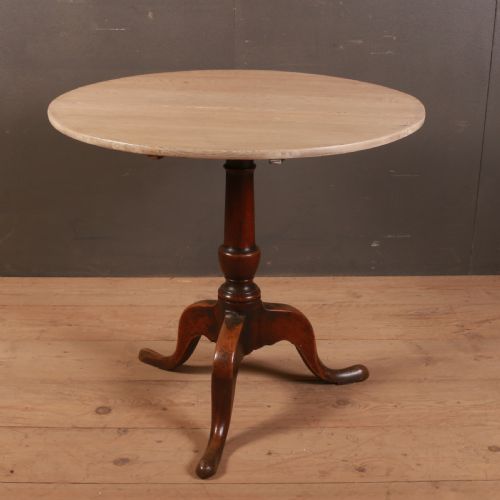


Scrubbed Top Oak Table
These scrubbed top oak table examples bring working history straight into a room, offering the weathered surface and sturdy presence every country interior needs.
Scrubbed Top Oak Table
A scrubbed top oak table is a utilitarian surface built for daily labour and long meals, appearing here in forms ranging from grand dining tables to compact tavern and tripod pieces. The selection spans the eighteenth, nineteenth, and early twentieth centuries, drawing on English, Welsh, French, and Dutch vernacular traditions.
Buyers meet sturdy farmhouse kitchen formats alongside refectory, cricket, and trestle designs. Oak provides the foundational strength, often paired with pine, sycamore, elm, or glass depending on the regional workshop origins.
How they were made
Construction relies on solid timber boards joined to form thick tabletops, mounted upon robust legs and stretchers designed to withstand heavy daily use. Workshops utilised local hardwoods, combining oak surfaces with structural pine or elm elements.
Surfaces received extensive scrubbing to maintain hygiene in kitchens and dairies, leaving behind a pale, tactile grain structure devoid of heavy varnishes. Joinery techniques prioritize utilitarian endurance, utilising pegs and mortise joints rather than concealed fixings.
Scrubbed Top Oak Table Retail Price Guide 2026
Typical asking prices for scrubbed top oak table among the pieces listed under this phrase on Sellingantiques today, from the lower quarter to the upper quarter. They describe what is for sale here now, not the wider market.
Some tables retain subtle hollows worn into the wood by generations of busy hands resting on the edge during long kitchen suppers.
What varies in quality
Quality rests upon the integrity of the timber and the depth of character earned through decades of genuine use. Superior examples display harmonious proportions and substantial timber thickness without relying on excessive restoration.
The relationship between the scrubbed top and the supporting base dictates visual balance. Finer pieces retain original regional characteristics, such as integrated drawers or particular leg turnings, while maintaining structural stability.
The Scrubbed Top Oak Table Glossary
- Scrubbed oak
- Timber top washed repeatedly to remove grease and stains, resulting in a pale, matte finish. This process highlights the natural grain pattern.
- Cricket table
- Small, three-legged occasional table of vernacular English or Welsh origin. The tripod design ensures stability on uneven stone floors.
- Trestle table
- Form consisting of two or more supports holding up a horizontal top. This design allows maximum legroom along the length of the board.
- Vernacular
- Objects designed and built by local tradesmen for practical everyday use rather than high-style academic design. These pieces reflect regional materials and domestic habits.
Scrubbed Top Oak Table: Frequently Asked Questions
What is a scrubbed top oak table?
A scrubbed top oak table is a heavy utilitarian surface historically used for food preparation and communal dining. Decades of vigorous washing create the characteristic pale, weathered finish.
These pieces originate from various regional traditions across Britain and continental Europe, spanning several centuries of domestic life.
How were these tables used originally?
They served as the central workspace in farmhouse kitchens, dairies, and taverns where durability mattered above all else. People prepared meals, kneaded bread, and gathered for family suppers around them.
Their robust construction meant they could handle constant scrubbing and heavy loads without losing structural integrity.
How do I live with a scrubbed table?
Living with a scrubbed oak table requires accepting that the surface already bears the marks of history. Spills and daily use simply add to the existing patina rather than damaging a pristine finish.
Maintenance involves gentle cleaning with mild soap and water, avoiding harsh chemical polishes that alter the dry timber texture.
How do I tell periods apart?
Earlier eighteenth-century pieces often display hand-pit-sawn board marks and simpler jointing methods tied to regional workshops. Nineteenth and early twentieth-century examples incorporate more standardised timber dimensions while retaining traditional forms.
Examining the underside construction and the wear patterns on the feet helps establish the likely age of the piece.