

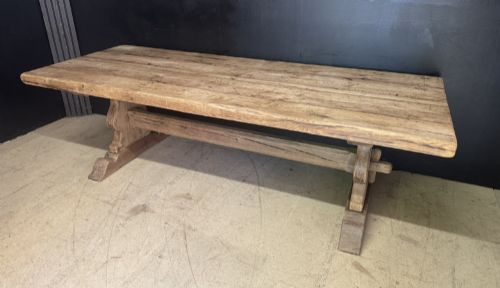
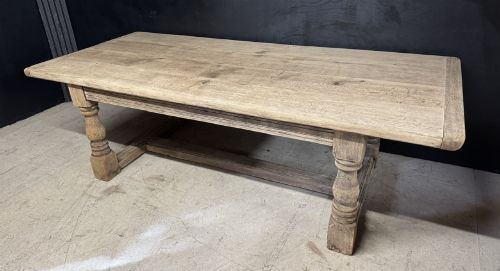
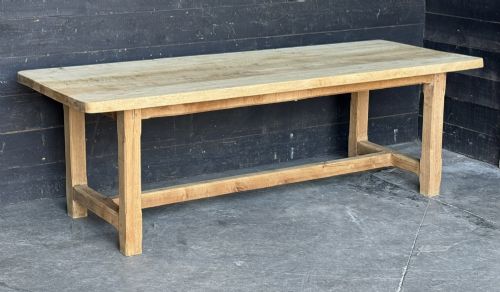
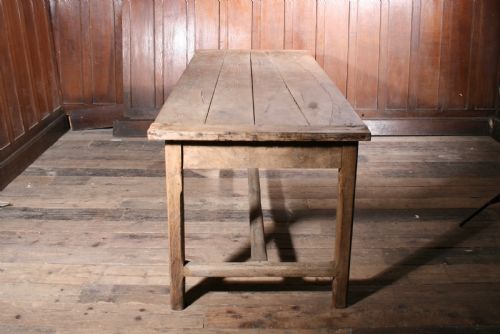
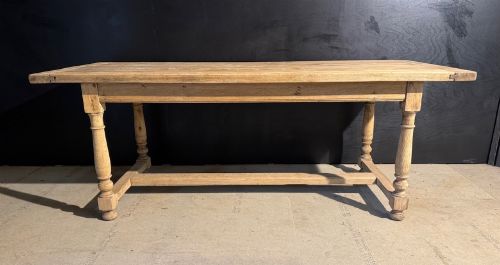


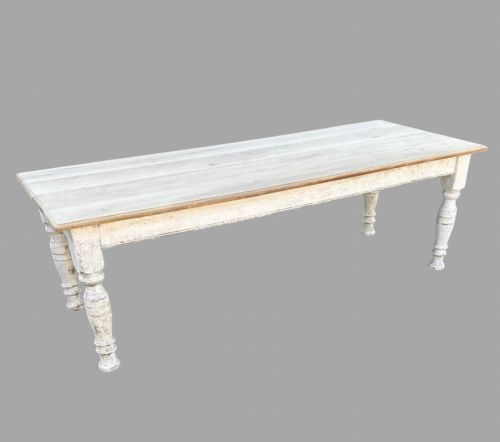
Scrubbed Oak Refectory Table
A scrubbed oak refectory table brings honest utility to a dining room through robust timber and straightforward construction.
Scrubbed Oak Refectory Table
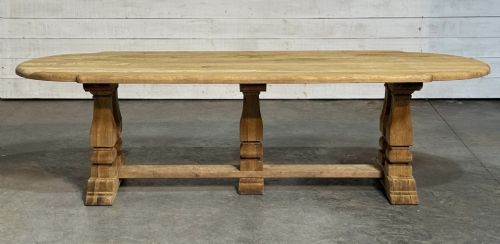
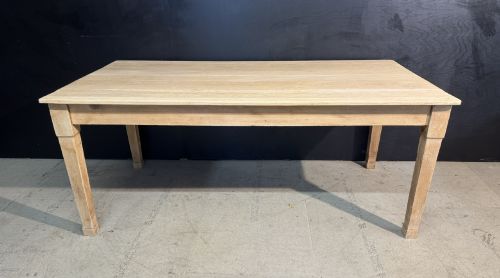
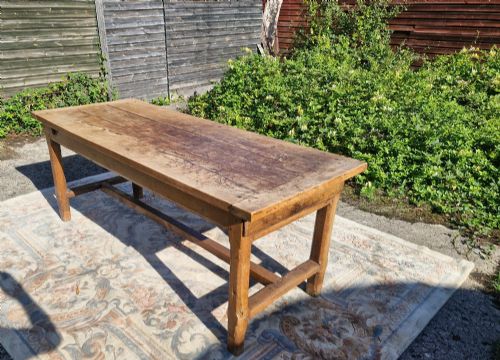
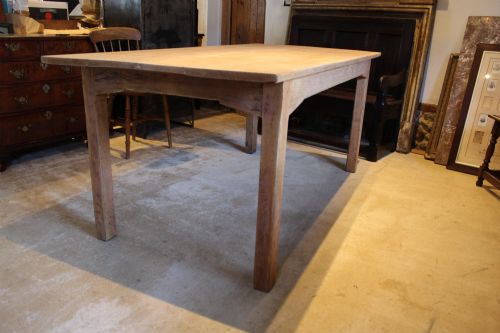
A scrubbed oak refectory table is a dining surface rooted in utilitarian history, designed for communal meals in kitchens, taverns, and farmhouses. Buyers seeking this phrase encounter sturdy timber dining tables spanning several eras, notably the Georgian period, the nineteenth century, and the early decades of the twentieth century.
The versions most commonly met on this page belong to the twentieth century and the nineteenth century, often grouped under styles such as rustic farmhouse, French provincial, and Scandinavian country. These pieces primarily function as large dining or kitchen tables, accommodating multiple seats for daily use.
Origins vary across the evidence from French and Swedish examples to Welsh tavern pieces and English styles. Each piece shows the linear proportions typical of refectory and trestle designs adapted for domestic or commercial dining.
How they were made
Construction relies heavily on solid oak for the primary surfaces and structural members, sometimes supplemented by pine or poplar for secondary parts such as leaves or underframes. Timber selection dictates the weight and load-bearing capacity of these long dining tables.
Surfaces often show the pale, scrubbed finish characteristic of bleached oak, achieved through historical washing and scrubbing of the wood to remove grease and stains. Paint traces appear on certain provincial examples, showing how past owners decorated utilitarian furniture.
Scrubbed Oak Refectory Table Retail Price Guide 2026
Typical asking prices for scrubbed oak refectory table among the pieces listed under this phrase on Sellingantiques today, from the lower quarter to the upper quarter. They describe what is for sale here now, not the wider market.
Styles recorded across these dining tables include French provincial, rustic farmhouse, Scandinavian country, and Edwardian.
What varies in quality
Quality differences emerge in the selection and integrity of the timber, particularly the density of the oak grain and the stability of the long top boards. Tables made from dense, well-seasoned oak maintain a flatter surface and resist warping better over centuries of use.
The construction of the underframe and the tightness of the joints determine the rigidity of the table during everyday dining. Superior examples demonstrate careful joinery that keeps large trestle or refectory bases steady without excessive wobble.
The Scrubbed Oak Refectory Table Glossary
- Scrubbed oak
- Oak timber that has been repeatedly washed and scrubbed with water and stiff brushes, removing surface grime and leaving a pale, clean grain. This finish is common on antique farmhouse tables.
- Trestle table
- A table consisting of two or more support frames connected by a longitudinal beam or stretcher, holding a horizontal top. This design allows maximum legroom along the length of the table.
- Bleached oak
- Oak that has undergone a whitening process or prolonged scrubbing to lighten its natural colour. It produces a soft, neutral tone favoured in provincial and country interiors.
Scrubbed Oak Refectory Table: Frequently Asked Questions
How do I clean a scrubbed oak table?
Clean the surface using a damp cloth and mild soap, avoiding harsh chemical cleaners that strip the natural grain.
Dry the wood thoroughly afterwards to prevent moisture damage and maintain the pale scrubbed appearance.
Will an antique refectory table seat eight people?
Many large refectory and farmhouse tables in the evidence measure sufficiently long to accommodate eight or more diners.
Check the overall length and the placement of the legs or trestles to ensure chairs fit comfortably underneath.
How do I tell a nineteenth-century table apart from a twentieth-century one?
Nineteenth-century and Georgian examples often show deeper patina and hand-cut joinery marks formed by older woodworking tools.
Twentieth-century pieces from the 1900s to 1920s frequently display the popular bleached finishes and simpler country styling.
Can I use a farmhouse table in a modern kitchen?
These tables integrate well into contemporary spaces due to their neutral oak materials and straightforward rectangular forms.
Their robust construction handles daily kitchen activities while adding historical character to the room.