

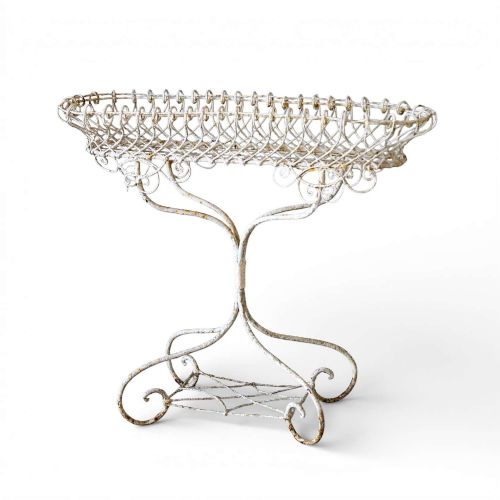

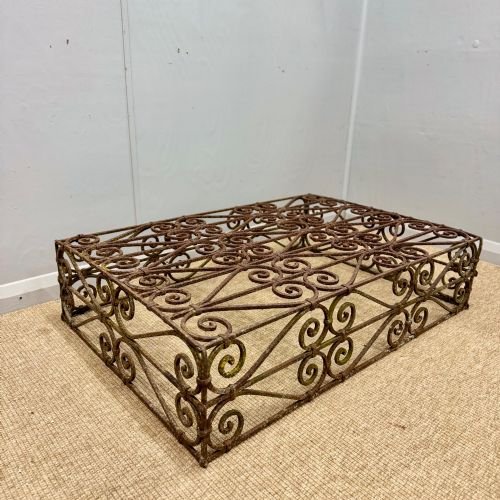



Scrollwork Iron Stand
A scrollwork iron stand brings utilitarian structure and ornate flourish into a room, offering sturdy support for plants, bakers' wares, or display.
Scrollwork Iron Stand
A scrollwork iron stand spans several practical domestic and garden forms, ranging from plant stands and jardinières to bakers racks, patisserie racks, and console tables. These pieces combine robust metal frameworks with surfaces of marble, wood, or lattice wire, serving both storage and decorative functions.
The pieces appearing on this page stretch across the nineteenth century, the Edwardian period, and the nineteen-twenties, drawing on French country, French provincial, Victorian, Art Nouveau, and rustic English country house traditions. Plant stands and bakers racks form the most prominent selections among these listings.
Originating in domestic kitchens, commercial bakeries, and grand gardens alike, these stands adapt readily to modern interiors as coffee tables, shelving units, or hallway consoles. Their construction balances industrial utility with decorative metalwork.
Buyers seeking a scrollwork iron stand will encounter versatile furnishings defined by forged curves, scrolled bases, and durable metal frames designed to carry significant weight while maintaining a light, open silhouette.
How they were made
Construction relies heavily on wrought iron, steel, and painted metal, shaped by hand into the characteristic loops, curves, and strapwork that define scrollwork. Blacksmiths and metalworkers heated and hammered these bars to form rigid structural supports and intricate decorative motifs.
Many stands incorporate contrasting materials such as polished marble tops, solid wood shelves, or gleaming brass bases to soften the industrial nature of the ironwork. Protective finishes including paint and gilding were applied to deter rust and enhance the visual depth of the metal.
Scrollwork Iron Stand Retail Price Guide 2026
Typical asking prices for scrollwork iron stand among the pieces listed under this phrase on Sellingantiques today, from the lower quarter to the upper quarter. They describe what is for sale here now, not the wider market.
Listings combine 19th-century, Edwardian, and 1920s periods, using wrought iron, brass, marble, and wood across plant stands, bakers racks, and console tables.
What varies in quality
The distinction between ordinary and exceptional pieces lies in the fluidity and precision of the hand-forged scrollwork, where tighter, more deliberate manipulation of the iron creates superior decorative harmony. The weight and gauge of the metal also dictate structural integrity, separating fragile utility items from substantial, enduring furniture.
Integration of secondary materials heavily influences overall quality, particularly the thickness and figuring of fitted marble tops or the integrity of original painted and gilded surfaces. Pieces retaining genuine patination and careful assembly demonstrate higher craftsmanship than later assemblies.
The Scrollwork Iron Stand Glossary
- Scrollwork
- Ornamental work consisting of spiralling scrolls and curves. This metalwork forms the decorative backbone of nineteenth-century plant stands and bakers racks.
- Bakers rack
- A tall metal shelving unit historically used by bakers for cooling loaves and pastries. These units typically feature open lattice or wire shelves supported by iron frames.
- Jardinière
- An ornamental pot or stand for holding plants or flowers. In iron furniture, these often take the form of raised stands with integrated baskets or ring holders.
- Strapwork
- Ornamental work composed of flat, ribbon-like strips of metal or leather. This technique provides both structural bracing and geometric decoration on garden tables.
- Patisserie rack
- A commercial storage unit of French origin designed for pastry display. They share the open metal framework and tiered shelving characteristic of bakers racks.
Scrollwork Iron Stand: Frequently Asked Questions
What rooms suit a scrollwork iron stand?
These versatile stands suit kitchens, conservatories, living rooms, and hallways depending on their specific form. Plant stands and low tables integrate naturally into garden rooms, while bakers racks serve well as kitchen storage or dining room shelving.
Their open iron frameworks allow light to pass through, preventing smaller spaces from feeling crowded. This transparency helps them sit comfortably alongside both rustic wooden furniture and polished interior schemes.
How were bakers racks originally used?
Bakers racks originated in European bakeries as functional cooling and storage furniture for freshly baked bread and pastries. The open wire and lattice shelves permitted air circulation around hot trays.
Over time, domestic households adopted these robust metal units for general pantry storage and display. Today they transition smoothly into modern homes as practical shelving for books, kitchenware, and decorative items.
How do I care for iron furniture?
Wrought iron and painted metal require minimal maintenance beyond regular dusting with a dry or slightly damp cloth. Keeping painted or gilded surfaces dry prevents moisture damage.
For pieces kept in gardens or conservatories, checking joints and applying appropriate protective waxes helps preserve the metal. Marble tops benefit from simple sealing to guard against stains from everyday use.
How can I tell the period of a stand?
Dating relies on observing construction methods, material combinations, and stylistic markers such as Art Nouveau curves or Victorian proportions. Earlier nineteenth-century examples often display heavier hand-forged wrought iron and traditional joinery.
Twentieth-century pieces tend toward lighter steel construction and simpler painted finishes. Examining the wear on secondary materials like marble or wood also provides clues to a piece's age.