
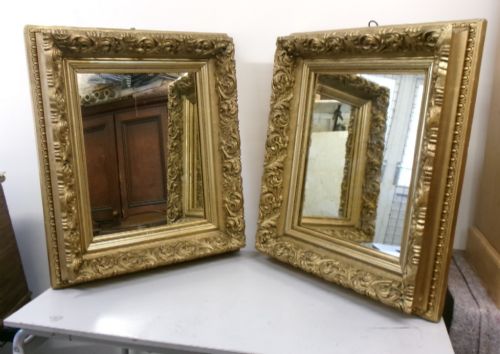
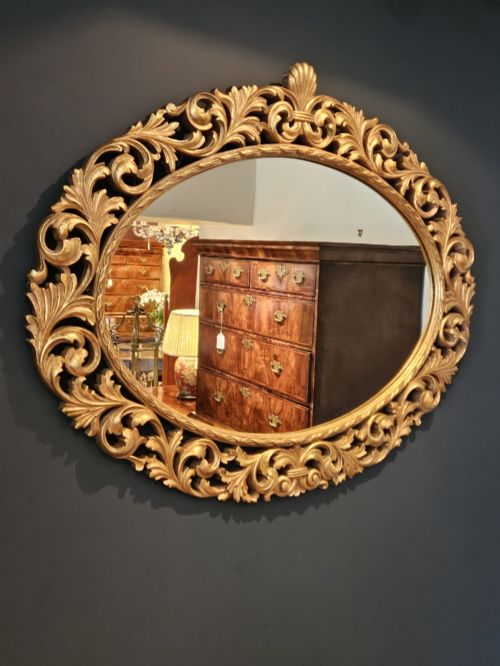
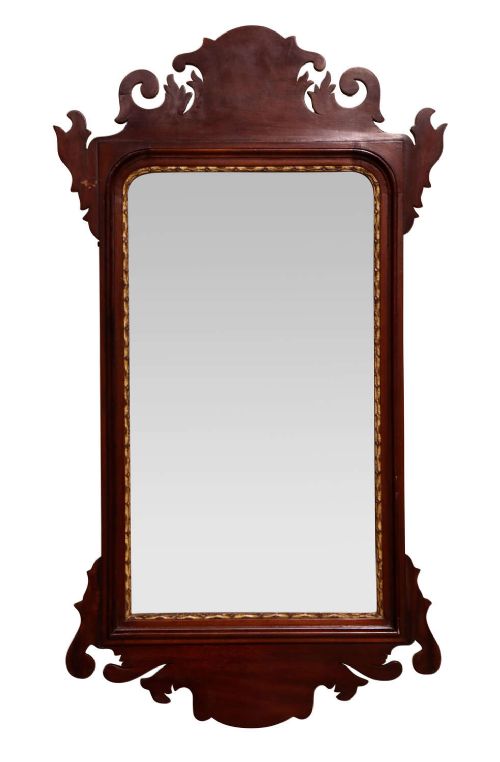
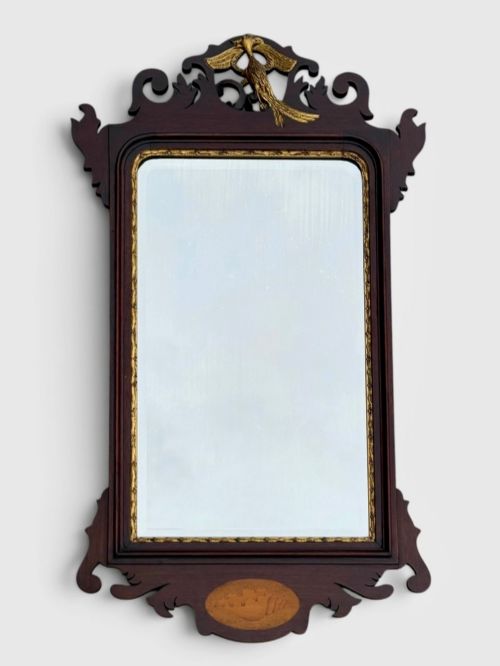




Scrolled Wood Mirror
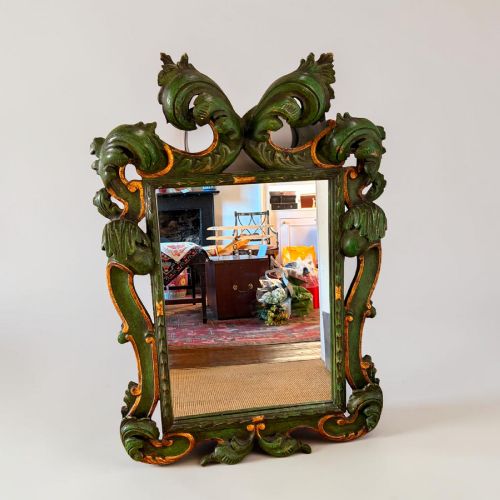
A scrolled wood mirror brings warmth and intricate carved detail to a room, using classic timber frames and sweeping lines.
Scrolled Wood Mirror
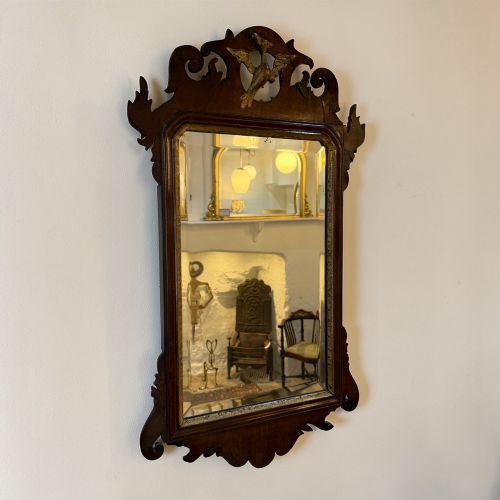
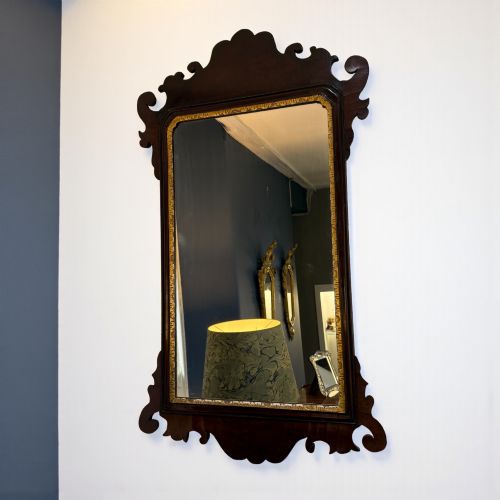
When you search for a scrolled wood mirror, you find wall-hanging and dressing pieces defined by carved wooden frames. The selections here span the Georgian and Victorian eras, alongside later revival pieces.
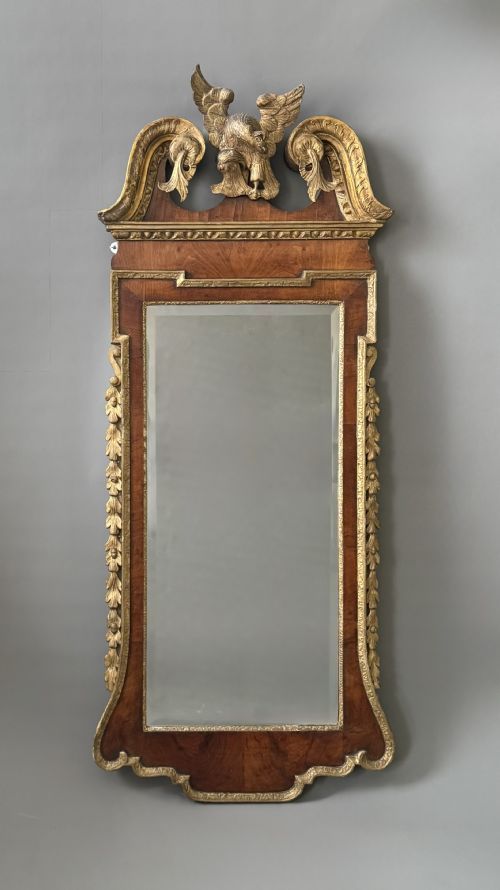
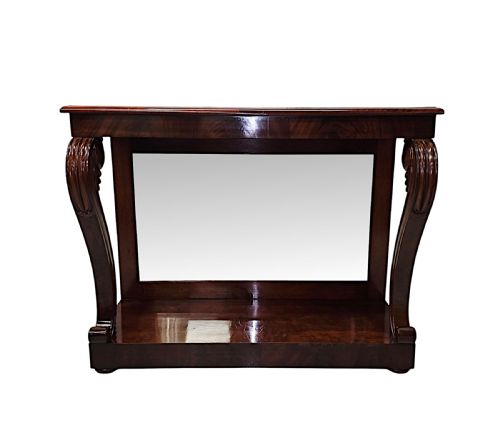
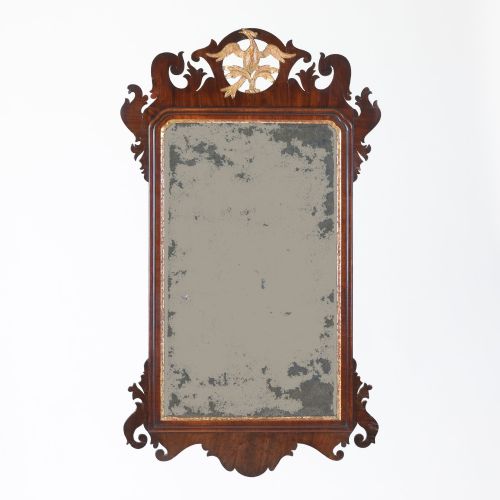
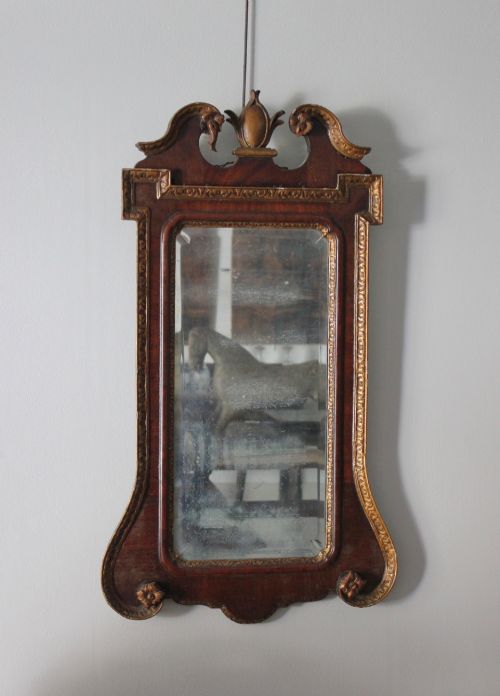
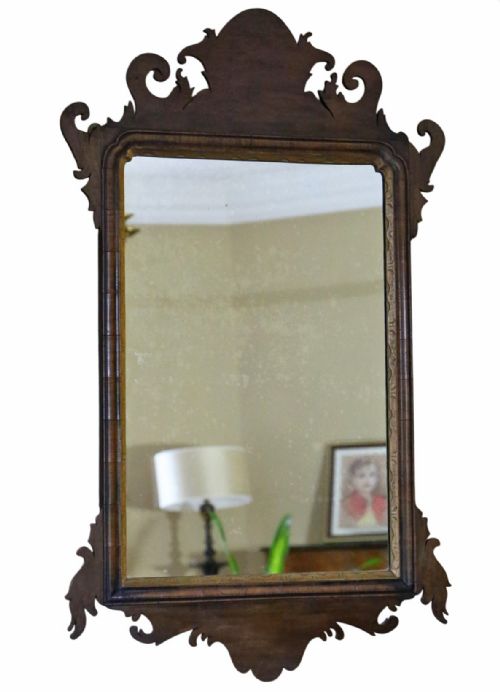
Mahogany and walnut form the core of these frames, often paired with parcel-gilt details or fret-cut silhouettes. Wall mirrors dominate the listings, alongside overmantels and dressing table variants.
Many examples lean into Georgian and Chippendale styles, featuring scrollwork, pierced fretwork, and carved crests such as the ho-ho bird.
How they were made
Cabinetmakers shaped dense hardwoods like mahogany and walnut using hand saws and chisels to achieve complex fretwork and scroll profiles. Giltwood and gesso layers were frequently applied to enrich specific carved sections with a gold leaf finish.
Reflecting plates of the period were hand-silvered or engraved, set into the timber rebates behind protective backboards. Joinery relied on traditional pinned mortise and tenon corners to support the weight of the glass.
What varies in quality
The refinement of the carving separates standard joinery from superior examples, particularly in the crispness of the scroll edges and pierced fretwork. Depth and dimension in the wooden layers indicate a more skilled hand during construction.
The survival of original glass plates and untouched surface patination elevates a piece. Subtle details, such as well-executed parcel-gilt highlights and balanced proportions, distinguish the best workshop output.
The Scrolled Wood Mirror Glossary
- Fretwork
- Openwork ornamentation carved or cut out from a flat board of timber. This technique creates intricate geometric or scroll patterns along the frame.
- Parcel-gilt
- A decorative treatment where only specific portions of a wooden frame receive gold leaf or gilt. It highlights carved motifs against a dark timber background.
- Gesso
- A plaster-like mixture applied to wood surfaces to provide a smooth base for gilding. It holds fine detail for moulded decorative elements.
- Vauxhall plate
- An early type of mirror glass characterised by bevelled edges and occasional slight imperfections. It is named after the famous London glasshouse.
Scrolled Wood Mirror: Frequently Asked Questions
How do I date a wooden mirror?
Examine the timber species, construction joints, and backboards to estimate the period of manufacture. Secondary woods and tool marks often reveal whether a piece dates to the Georgian era or a later revival.
Style indicators like fretwork patterns and gilding techniques provide further clues. Comparing the mirror plate characteristics helps confirm the age of the glass relative to the frame.
Where should I hang a wall mirror?
Position a wall mirror above a fireplace mantel, console table, or sideboard to anchor the surrounding furniture. Ensure the hanging fixings match the weight of the timber and glass.
Consider natural light sources when placing the mirror to brighten darker corners of the room. Wall height matters for reflection angles, ideally aligning with eye level.
Are these frames made of solid wood?
Most period frames utilise solid hardwoods such as mahogany or walnut for structural integrity and carved sections. Veneers appear on larger flat expanses, particularly in later revival examples.
Carved ornaments and applied scrolls are typically carved from the same timber or built up in gesso over a wooden base.