

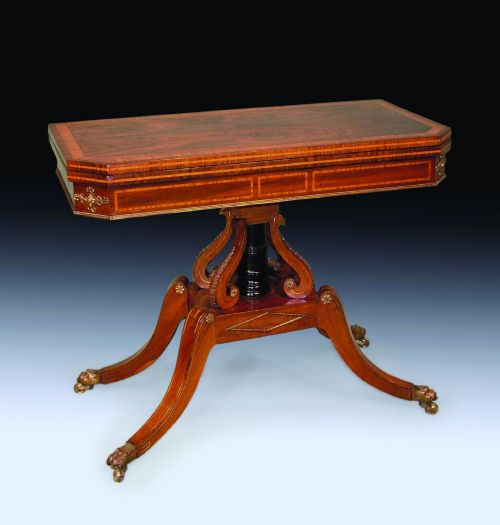


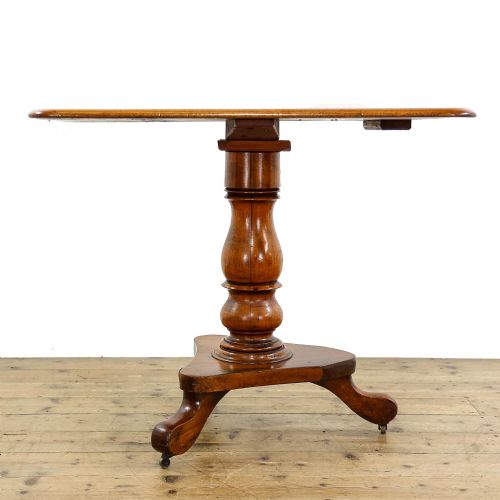

Scrolled Table Base
These scrolled table base designs bring organic curves and steady mass to dining rooms, hallways, and drawing rooms alike.
Scrolled Table Base
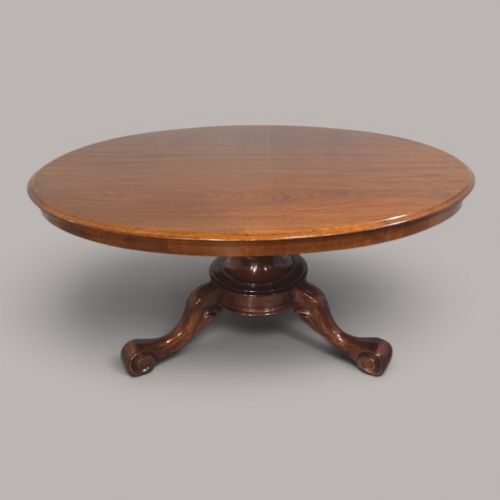
A scrolled table base supports surfaces ranging from large circular dining tables and breakfast tables to compact coffee tables and console tables. These pieces emerge primarily from the nineteenth century, spanning the Regency, William IV, and Victorian eras, alongside French Provincial and French Rococo Revival interpretations.
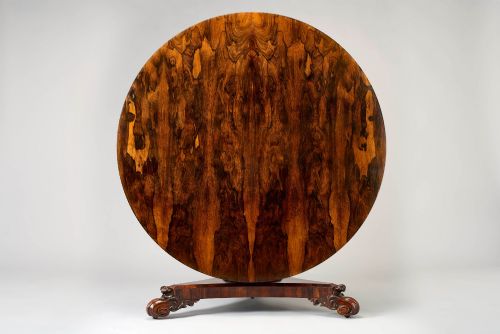
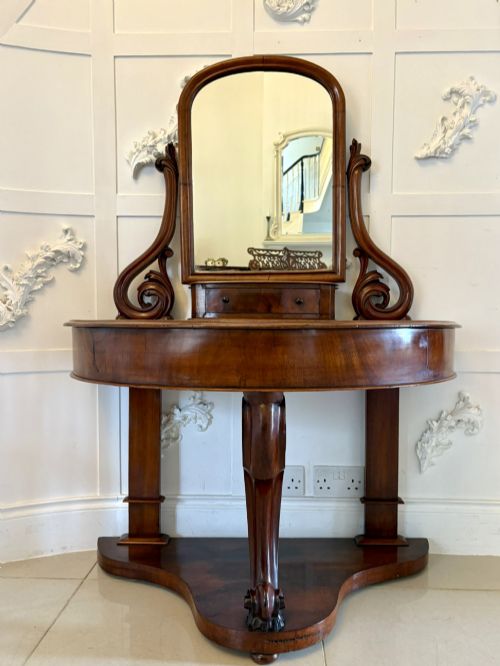
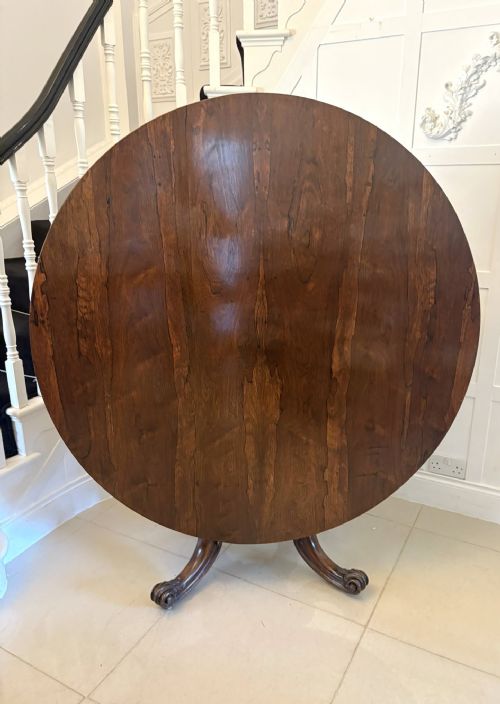
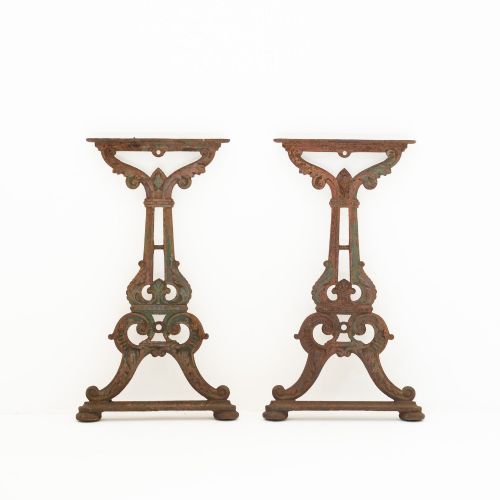
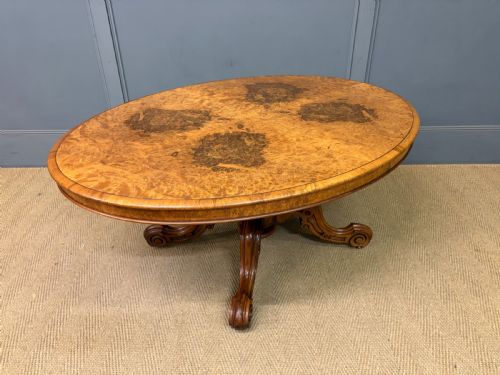
Buyers meet varied iterations on this page, including heavy mahogany pedestal dining tables, rosewood card tables, burr walnut breakfast tables, and utilitarian cast iron occasional frameworks. The defining scrollwork appears carved into dense timbers, cast in iron and bronze, or wrought into metal frames that carry marble and glass tops.
Materials and construction methods
Cabinetmakers and metalworkers utilised rich hardwoods such as mahogany, rosewood, burr walnut, and satinwood alongside durable metals including cast iron, gilt bronze, and wrought iron. Timber bases rely on substantial turned pillars, quadrapod feet, and hand-carved scroll brackets to anchor heavy tops.
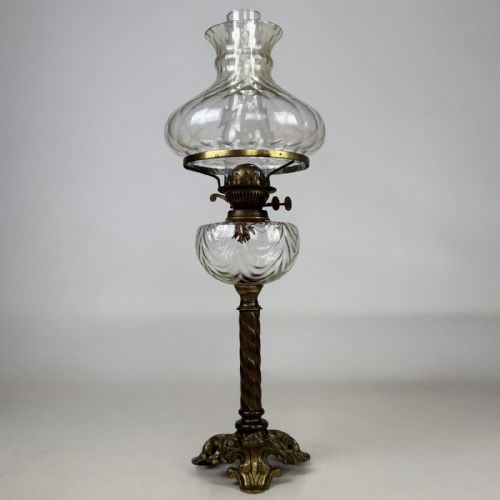
Metal variations employ sand casting for iron scrollwork and fire gilding for bronze lamp and table components. Surface treatments include radial wood veneers, polished marble inserts, and glass shades paired with brass oil lamp fittings.
Scrolled Table Base Retail Price Guide 2026
Typical asking prices for scrolled table base among the pieces listed under this phrase on Sellingantiques today, from the lower quarter to the upper quarter. They describe what is for sale here now, not the wider market.
Distinguishing quality in construction
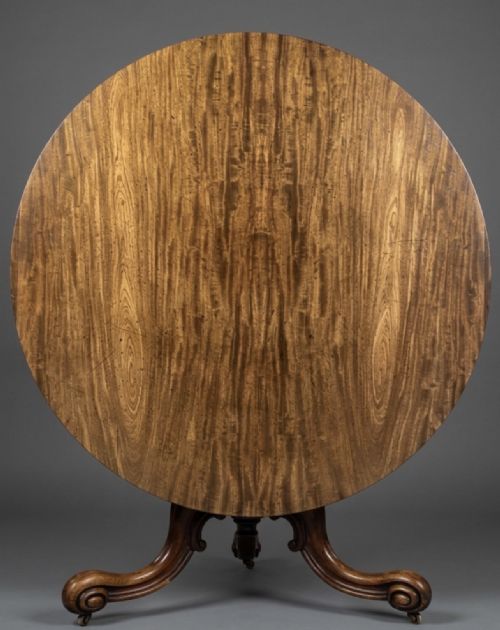
Superior examples exhibit deep, crisp hand-carving within the timber scrolls and solid structural integration between the pedestal and the feet. Finer tables demonstrate carefully selected veneers, such as burr walnut or radially matched mahogany, which are balanced across the top and base.
Lesser items rely on simpler cast metal work or plain timber turnings with minimal decorative enrichment. The weight and rigidity of the supporting architecture dictate how well the piece bears heavy marble tops or large dining surfaces.
The Scrolled Table Base Glossary
- Tilt top
- A tabletop mechanism allowing the surface to pivot vertically when not in use. This conservation feature saved valuable floor space in historic interiors.
- Card table
- A folding table designed for evening gaming, often lined with baize and supported on a pedestal base with a swivel top.
- Gonçalo Alves
- A dense exotic hardwood with distinct contrasting figuring, utilised by cabinetmakers during the Regency and William IV periods.
- Gilt bronze
- Metal cast objects coated in a fine layer of gold, commonly seen on nineteenth-century decorative mounts and lamp bases.
Scrolled Table Base: Frequently Asked Questions
What periods do these bases come from?
The pieces span the nineteenth century, taking in Regency, William IV, and Victorian eras, with occasional twentieth-century French wrought iron work.
Craftsmen of these periods employed distinct regional timbers and metal casting techniques that define each decade.
How were these tables used originally?
They served central functions in formal rooms, operating as dining surfaces, breakfast tables, card tables, and heavy console furniture.
Many featured tilt mechanisms or robust pedestals to accommodate the daily social demands of nineteenth-century households.
How do I maintain wood and iron bases?
Timber elements require standard application of beeswax and soft cloth polishing to protect the grain and historic polish.
Iron and bronze components need dry dusting and protection from moisture to prevent oxidation on the metal surfaces.
How do I distinguish Regency from Victorian bases?
Regency and William IV pieces often display crisper classical proportions with rosewood or mahogany timbers and bold brass inlay.
Victorian iterations frequently introduce heavier burr walnut veneers, cast iron structures, and more exuberant floral or scroll carvings.