
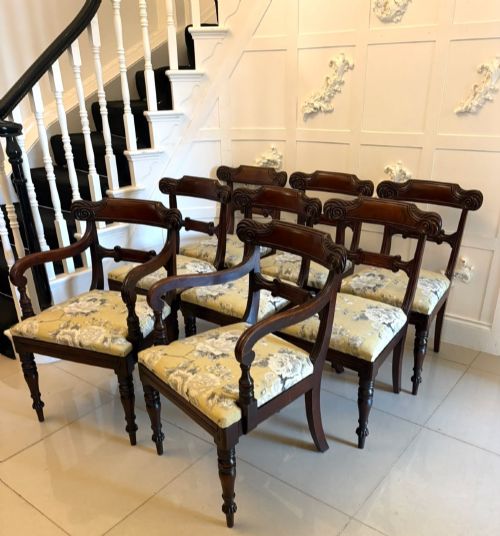
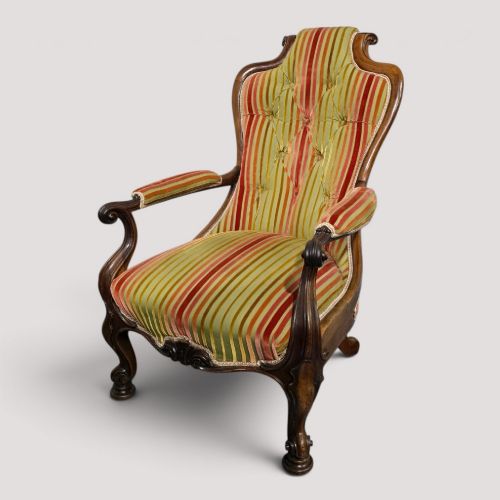
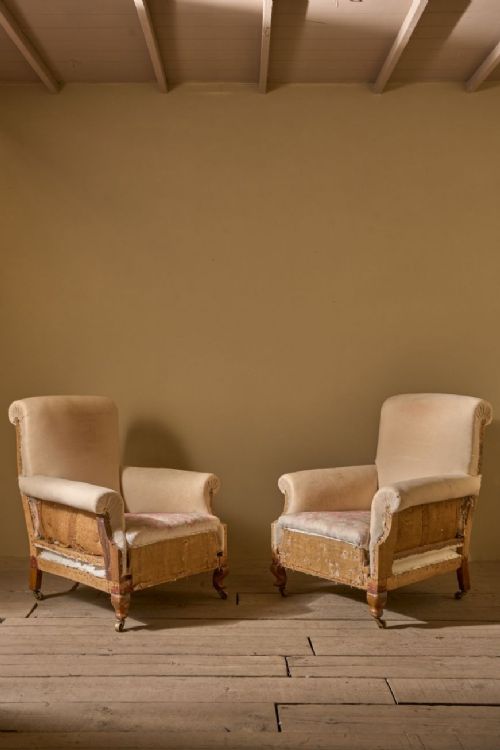

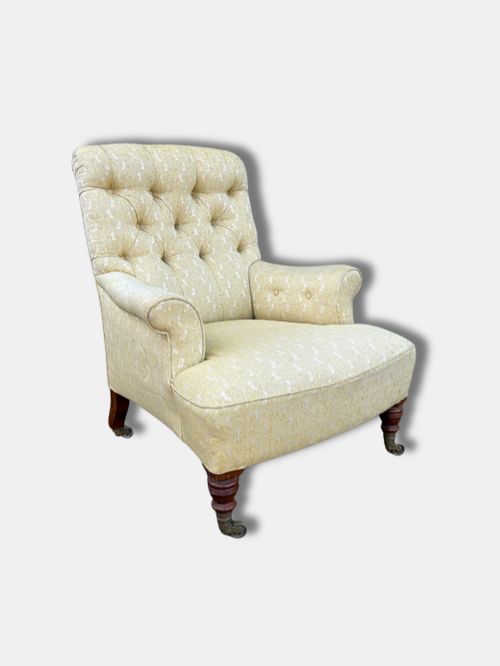

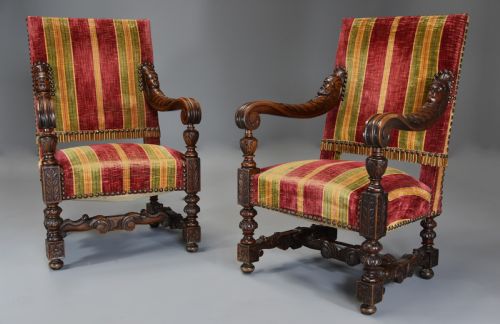

Scrolled Back Armchair
These scrolled back armchair selections bring together centuries of timber framing and sprung upholstery for a traditional interior.
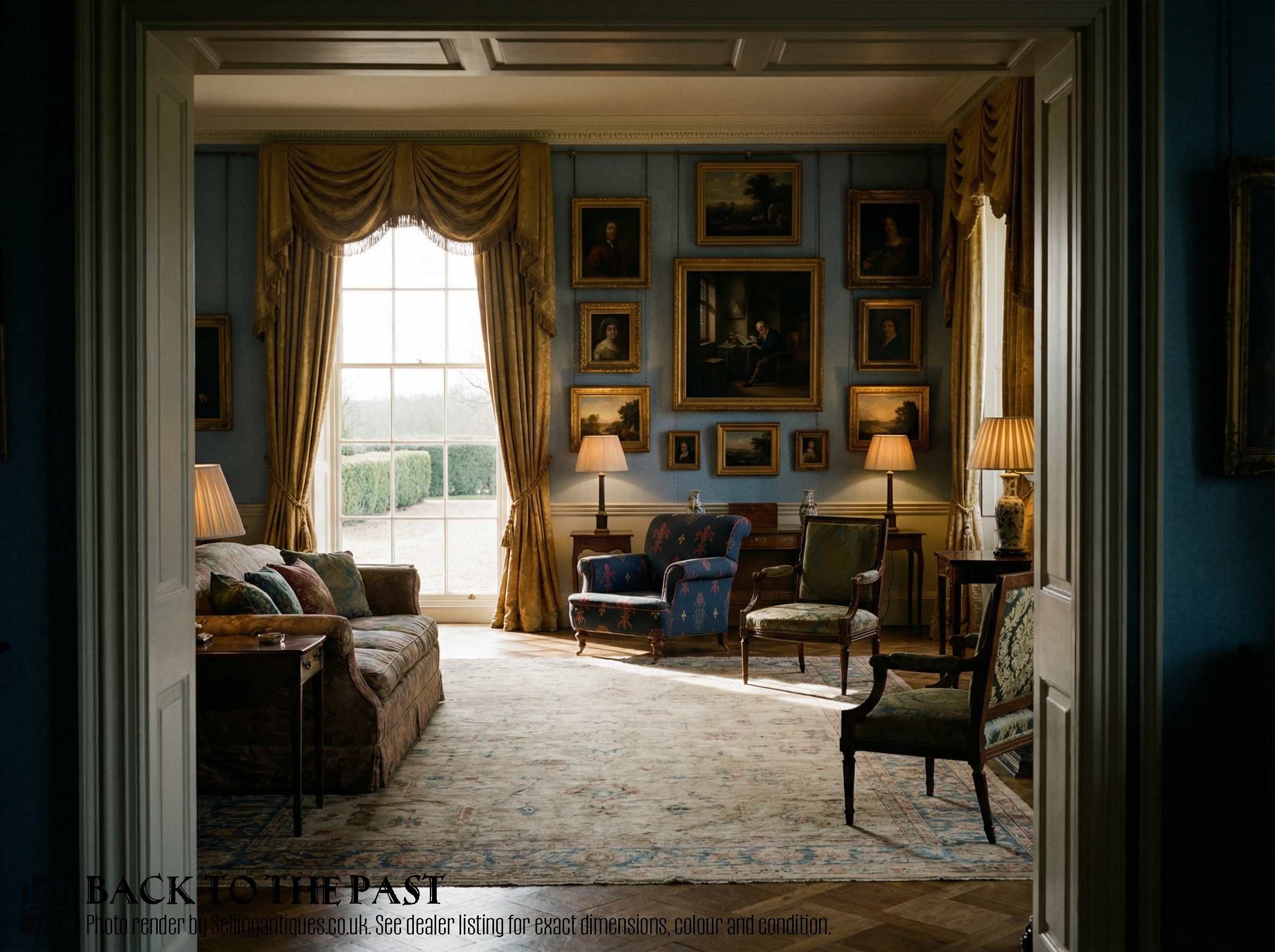
How they were made
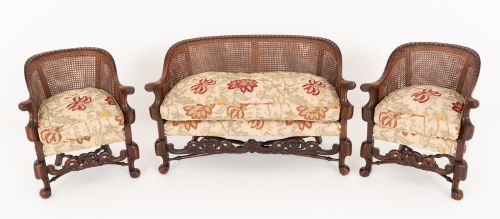
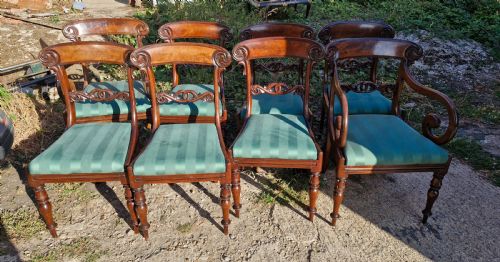
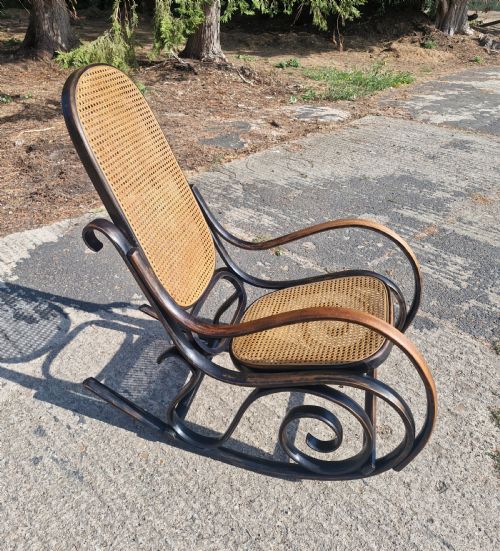
Construction relies heavily on durable hardwoods like mahogany and walnut, shaped through turning, carving, and steam-bending depending on the period. Frames are joined securely to bear the weight of daily sitting, often incorporating cane panels or exposed wooden rails alongside the main structure.
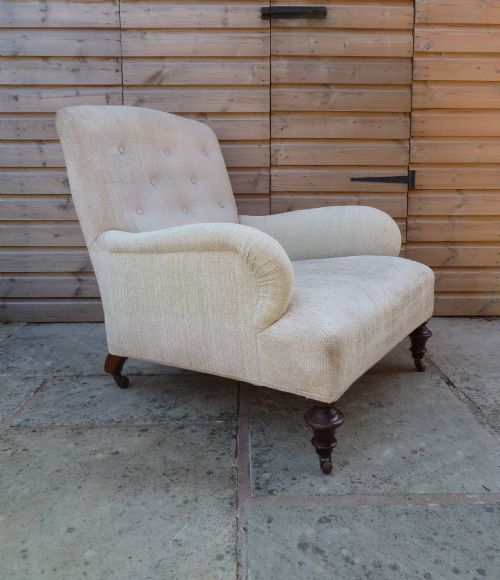
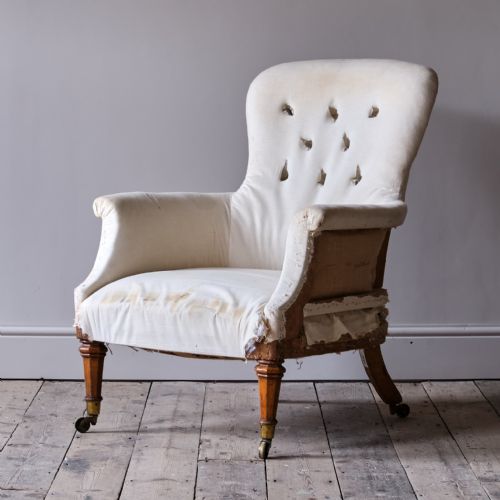
Upholstery techniques progressed from simple pad stuffing to complex sprung interiors covered in fabrics such as velvet, calico, tapestry, and wool. Brass tacks frequently secure the fabric edges on traditional frames, while specialised pieces like library chairs integrate clever mechanical transformations.
What varies in quality
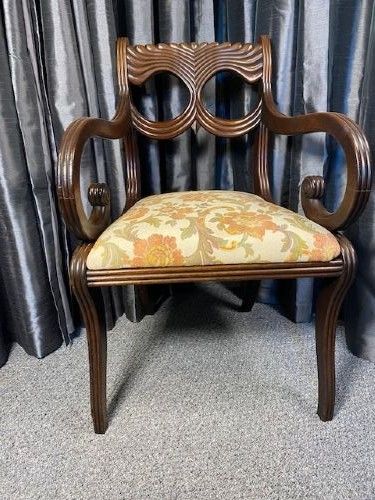
Quality in a scrolled back armchair rests on the integrity of the timber frame and the depth of the carving. Crisp execution of the scrollwork on the arms and crest rail distinguishes superior pieces from standard workshop output.
The standard of the underlying upholstery work and the choice of covering fabric dictate the overall finish. Pieces retaining their original cane work or bearing maker signatures reflect a higher tier of craftsmanship.
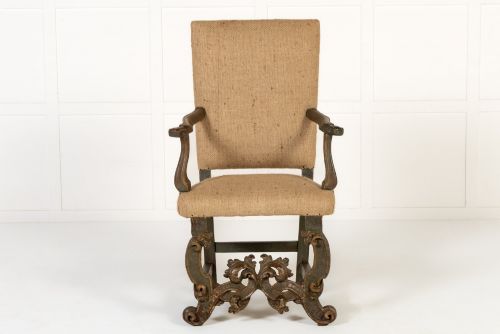
The listings span from seventeenth-century walnut frames to twentieth-century bentwood rockers, utilising mahogany, cane, and velvet.
Howard and Sons·John Taylor and Sons
The Scrolled Back Armchair Glossary
- Carver
- An armchair designed with arms, traditionally placed at the heads of a dining table. These match a set of smaller side chairs.
- Bergere
- An enclosed armchair with stuffed upholstery and cane or panelled sides. The style originates from France and often includes a loose seat cushion.
- Library armchair
- A sturdy seat built for study spaces, sometimes featuring reading desks or metamorphic steps. Mahogany and leather are common components.
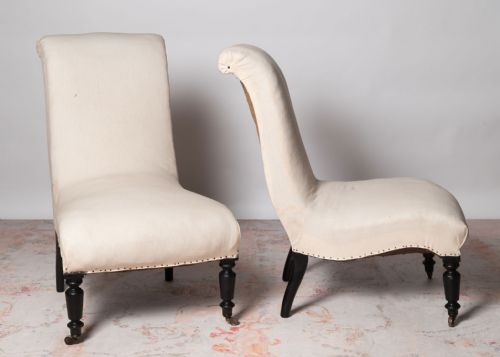
- Slipper chair
- A low-seated bedroom chair without arms, designed for ease of dressing. They frequently feature scrolled backs and short legs.
- Button back
- An upholstery method where depressions are formed in the padding by stitching buttons through to the frame. This creates a diamond pattern.
Scrolled Back Armchair: Frequently Asked Questions
What defines a scrolled back armchair?
A scrolled back armchair is identified by the distinctive outward or inward curve of its upper frame or wooden armrests. This shaping provides both ergonomic support and a decorative silhouette.
Such forms appear across multiple historical periods, shifting from heavy seventeenth-century styles to lighter nineteenth-century library and parlour seats.
How do I date a wooden armchair?
Dating relies on observing the primary timber, the style of the legs, and the construction methods used in the frame. Mahogany and walnut point towards specific Regency and Victorian eras.
Secondary indicators include the presence of hand-carved details, cane weaving, and the type of upholstery remnants left within the internal webbing.
Where were these armchairs used?
These seating options served diverse functions depending on their form, ranging from formal dining rooms to private studies and bedrooms. Library chairs accommodated long hours of reading.
Lower fireside and slipper variants were kept in private chambers, while larger upholstered club chairs furnished English country house drawing rooms.
Can I use these chairs daily?
Most antique armchairs are structurally robust enough for regular sitting, provided the wooden frame and internal joints remain stable. Professional checks ensure the webbing supports modern weights.
Selecting pieces with durable fabric coverings allows them to function practically within contemporary living spaces without losing their traditional character.