


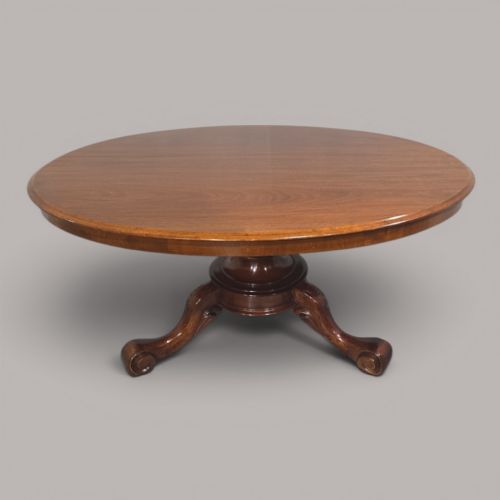
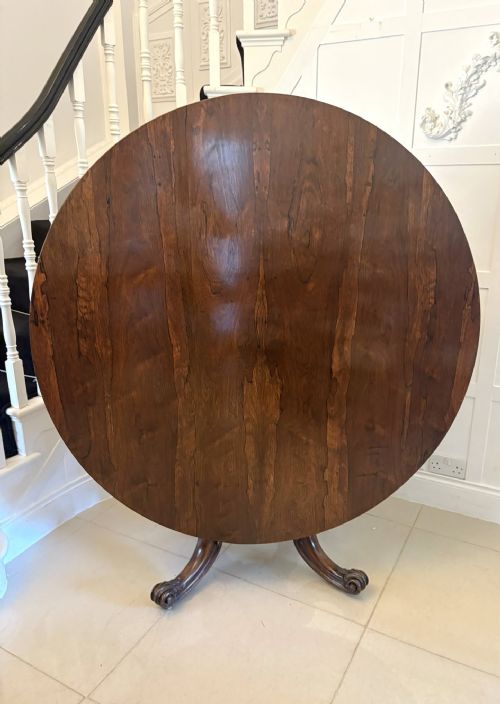


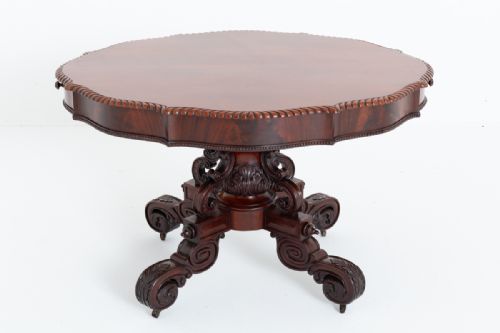
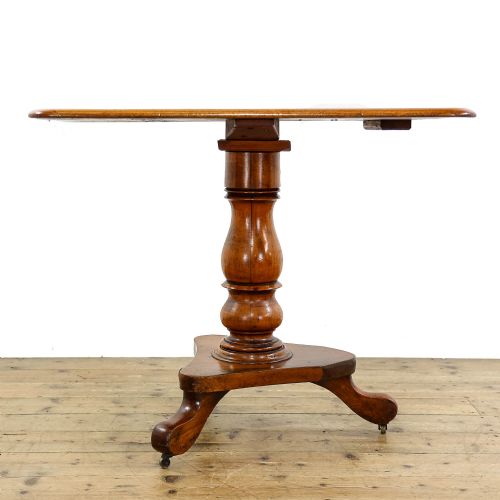

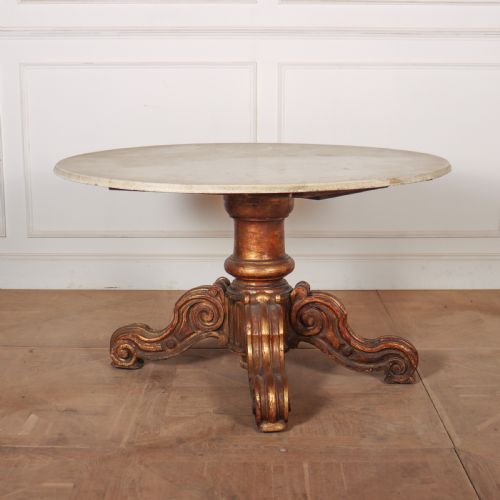
Scroll Base Pedestal Table
A scroll base pedestal table brings sculptural timber and steady support to a room, uniting functional surface with classical curves.
Scroll Base Pedestal Table
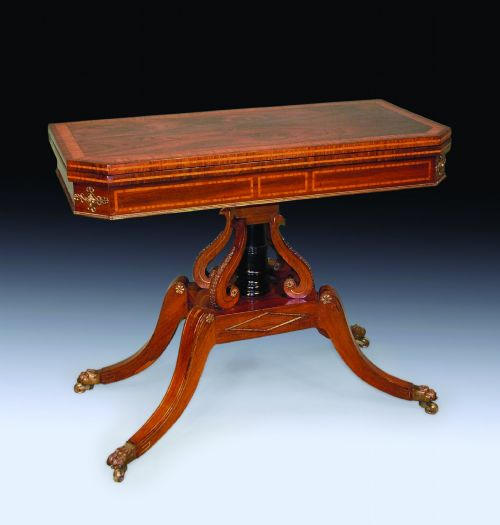
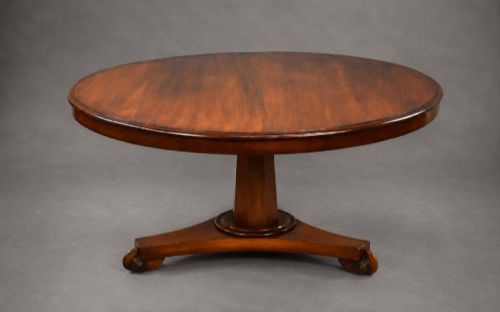
A scroll base pedestal table combines a central column or support with curved, ornamental feet, creating a distinct silhouette found across dining, coffee, card, and console formats. These pieces emerge predominantly from the nineteenth century, encompassing Regency, William IV, and Victorian periods.
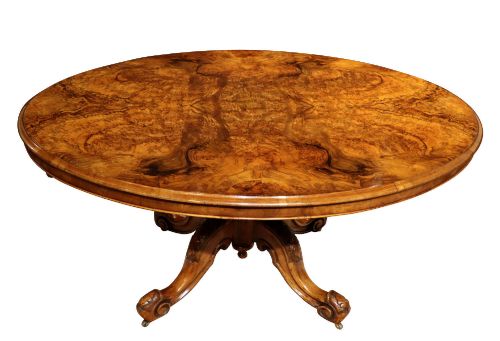
The forms vary widely in scale, ranging from large circular dining tables and breakfast tables to smaller side tables, centre tables, and occasional coffee tables. Buyers frequently encounter circular and oval timber tops resting upon carved wooden pedestals with detailed feet.
Origins and styling lean heavily towards British craftsmanship of the eighteen-fifties, sixties, and seventies, alongside French Rococo Revival influences. The search phrase covers both grand tilt-top dining variants and compact occasional furniture.
Construction and Materials
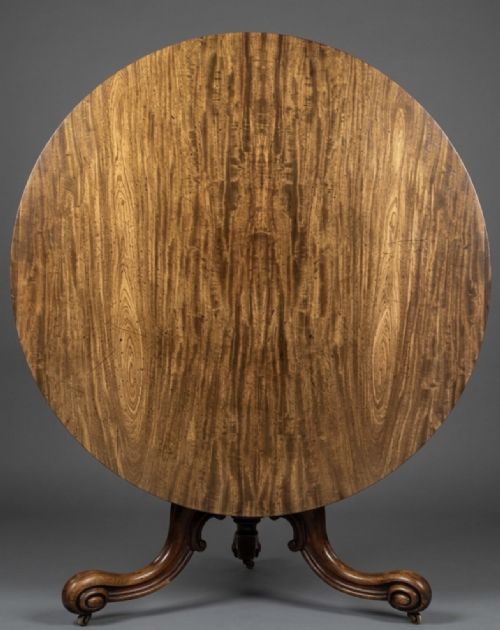
Makers construct these tables using dense hardwoods such as mahogany, rosewood, and walnut, frequently applying fine veneers including burr walnut and satinwood to the primary surfaces. Grain selection plays a central role in the visual impact of the timber tops.
Structural stability relies on robust pedestals often paired with brass elements and occasionally marble tops on console formats. Carving defines the scroll work on the bases, requiring skilled hand-chiselling to achieve the characteristic sweeping contours.
Scroll Base Pedestal Table Retail Price Guide 2026
Typical asking prices for scroll base pedestal table among the pieces listed under this phrase on Sellingantiques today, from the lower quarter to the upper quarter. They describe what is for sale here now, not the wider market.
Assessing Quality
Excellence in a scroll base pedestal table lies in the depth and crispness of the carved scrollwork on the base, where hand-finished detail distinguishes superior examples from simpler production. The choice of timber veneer also dictates stature, particularly when highly figured burr walnut or rich rosewood is selected for the top.
Proportion between the central column and the footprint of the pedestal governs the visual balance of the piece. Superior examples maintain structural integrity and smooth mechanics in tilt-top or card table formats without compromising the elegance of the silhouette.
The Scroll Base Pedestal Table Glossary
- Pedestal table
- A table supported by a single central pillar or column rather than four corner legs. This design allows for greater seating clearance around the perimeter.
- Scroll base
- A table support featuring curved, ornamental scrolls reminiscent of rolled parchment or classical architectural brackets. It provides both aesthetic movement and a wide footprint for stability.
- Tilt top
- A tabletop hinged to the central pedestal so it can pivot to a vertical position when not in use. This mechanism allowed tables to be stored against walls in period interiors.
- Burr walnut
- Timber harvested from the unusual growth knots of a walnut tree, yielding a highly swirled and mottled grain pattern. Cabinet makers prize it for decorative veneering.
- Quadrapod base
- A pedestal support resting upon four radiating feet or legs. It offers enhanced balance for larger dining and breakfast tables.
Scroll Base Pedestal Table: Frequently Asked Questions
What rooms suit a scroll base pedestal table?
These tables adapt well to dining spaces, entrance halls, and principal living areas depending on their scale. Dining and breakfast formats anchor a room while offering comfortable legroom.
Smaller side, console, and coffee table variants fit neatly against walls or beside seating arrangements, bringing period character to domestic interiors.
How do I distinguish Regency from Victorian examples?
Regency and early nineteenth-century pieces often display restrained classical lines, sometimes incorporating brass inlay or rosewood veneers. Proportions tend to be linear and architectural.
Victorian and later nineteenth-century pieces lean towards heavier carving, burr walnut veneers, and elaborate French Rococo Revival flourishes with robust circular or oval tops.
Can a tilt top table be used flat permanently?
Yes, tilt top mechanisms include a brass catch or wooden wedge to lock the surface securely in the horizontal position for everyday use. The pivoting function is primarily an historical space-saving feature rather than a daily requirement.
Locking mechanisms remain stable when properly engaged, supporting standard dining or display items safely.
How do I care for rosewood and mahogany surfaces?
Polishing timber surfaces with traditional beeswax maintains the lustre of nineteenth-century veneers and solid woods. Avoid placing pieces in direct sunlight or near heat sources to prevent timber shrinkage.
Using coasters and mats protects polished mahogany and rosewood from moisture rings and thermal marking.