



Scottish Seascape Painting
When you search for scottish seascape painting, you uncover coastal views and marine scenes executed in oil and watercolour across the Victorian era into the mid-twentieth century.
Scottish Seascape Painting
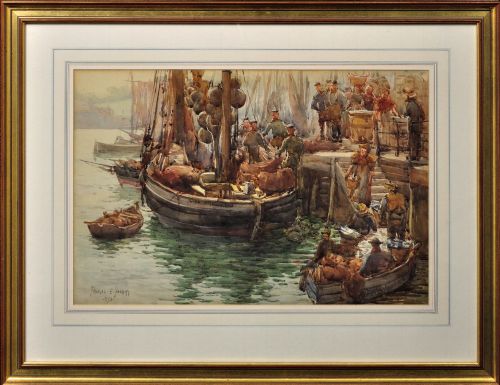
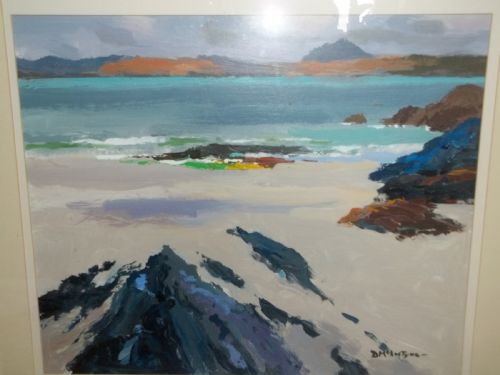
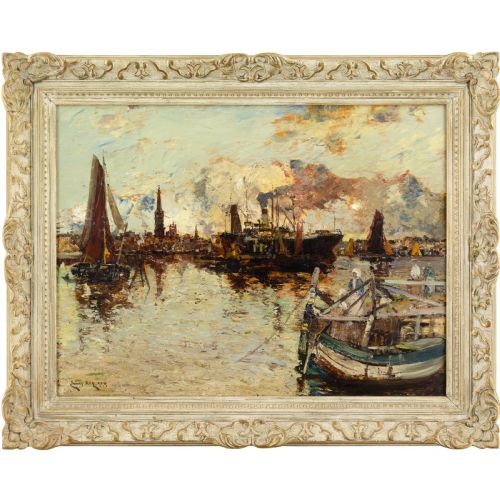
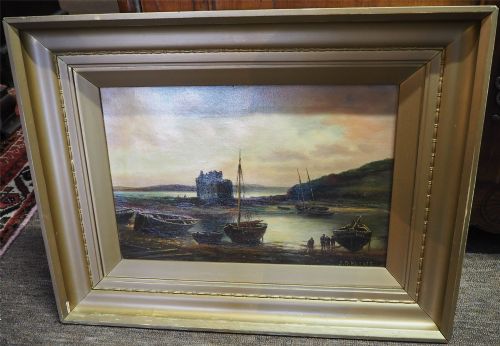
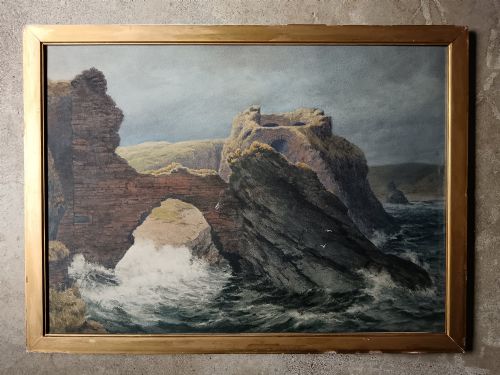
A scottish seascape painting captures the coastal geography, harbours, and waters of Scotland through the lens of nineteenth and twentieth-century artists. These works range from late Victorian watercolours depicting coastal castles to mid-century modern oil paintings of calm shorelines.
The pieces on this page emerge primarily from the Victorian period, the nineteenth century, and subsequent decades up to 1960. You will encounter framed watercolours on paper and oil paintings on canvas, often housed within gilt wood frames.
Subjects span from Dunbar Castle and Crail Harbour in Fife to the Hebrides and the Mull of Kintyre. Artists recorded local activities such as oyster picking, netting salmon, and fisher folk alongside moody marine atmospheres.
Materials and Technique
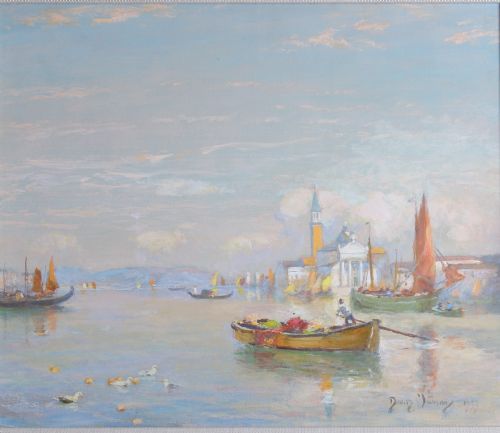
Artists relied primarily on oil paint on canvas or watercolour on paper to capture the shifting light of the sea and sky. These mediums allowed painters to render both broad atmospheric effects and precise architectural details of coastal boats and harbours.
Many surviving works retain their period gilt wood frames, which complement the tones of the oil and watercolour compositions. The application of paint ranges from tight Victorian academic realism to looser Impressionist and Post-Impressionist brushwork.
Scottish Seascape Painting Retail Price Guide 2026
Typical asking prices for scottish seascape painting among the pieces listed under this phrase on Sellingantiques today, from the lower quarter to the upper quarter. They describe what is for sale here now, not the wider market.
The inventory records multiple works from Scottish coastal locations including Crail Harbour, the Hebrides, and the Mull of Kintyre.
Evaluating Quality
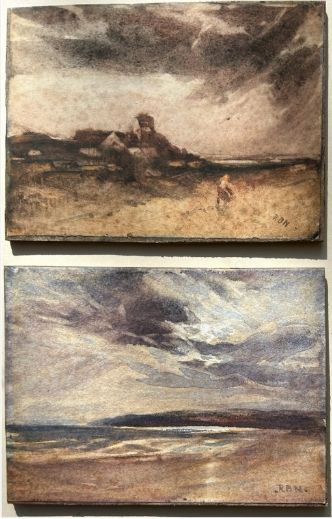
Quality rests upon the artist's ability to command light, atmosphere, and water within the composition rather than the mere age of the piece. Stronger works display confident handling of paint or watercolour, capturing the specific mood of the Scottish coast.
The relationship between the subject and its execution defines the upper tier of these works, where brushwork feels deliberate and expressive. Condition of both the canvas or paper surface and the original gilt wood frame also contributes to the standing of an individual piece.
Robert Buchan Nisbet RSW·Sir David Murray RA·Donald McIntyre·James Kay RSW·Joseph Farquharson RA·John Moxon·John Douglas Perrett·Alfred Henry Vickers·James Torrington Bell·Owen Bowen·Robert Macaulay Stevenson·Richard Ball Spencer·Hirst Walker·James G Faulds·Samuel Bough RSA
The Scottish Seascape Painting Glossary
- Watercolour
- A paint consisting of pigment suspended in a water-soluble vehicle, frequently applied to paper in these coastal scenes.
- Oil on Canvas
- Pigment mixed with an oil medium and applied to a stretched canvas support, common in marine and landscape art.
- Gilt Wood
- Wood carved and covered with a thin layer of gold leaf or gold-coloured metal, forming the traditional frames for these paintings.
- Impressionism
- A style of painting that focuses on the accurate depiction of light and its shifting qualities, visible in several Scottish works on this page.
- Victorian
- Pertaining to the reign of Queen Victoria, a period represented here through marine art and coastal watercolours.
Scottish Seascape Painting: Frequently Asked Questions
What periods do these paintings cover?
The works span from the Victorian era and the nineteenth century through the early decades of the twentieth century, up to 1960. Artists worked across these changing decades, adopting styles from traditional marine art to Impressionism and Mid-Century Modernism.
This broad timeline means you will find nineteenth-century watercolours alongside mid-century oil paintings. Each piece reflects the aesthetic approach of its specific decade.
Are these paintings on canvas or paper?
The listings include both oil paintings on canvas and watercolours executed on paper. Each medium offers a distinct texture and visual weight suited to marine subjects.
Canvas works often feature rich oil paint layers, while watercolours provide a lighter, luminous quality. Both mediums are typically preserved within period frames.
Where do these coastal scenes depict?
The locations focus specifically on Scottish coastal geography, including Fife, the Hebrides, the Mull of Kintyre, and specific sites like Dunbar Castle and Crail Harbour. Some scenes extend to nearby waters such as Leith and Antwerp.
Artists travelled along the shoreline to record local landmarks, harbours, and maritime activities. These settings ground the paintings in authentic Scottish topography.
How should I frame and display them?
Many pieces come in their original gilt wood frames, which complement the historical character of the artwork. When displaying oil paintings or watercolours, keep them away from direct sunlight and excessive moisture to protect the canvas or paper.
Allowing adequate wall space lets the framing and the scale of the coastal composition speak for itself. Proper placement preserves the condition of both the medium and the wood.