



Scottish Seascape Oil Painting
A Scottish seascape oil painting brings the grey light and restless water of northern coasts directly into a room.
Scottish Seascape Oil Painting
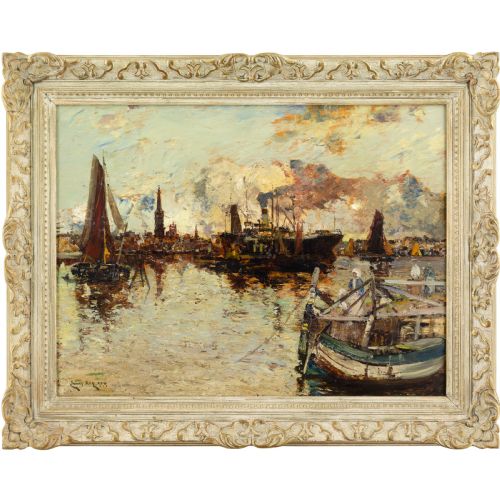
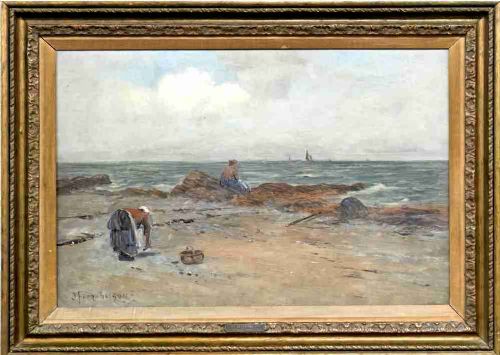
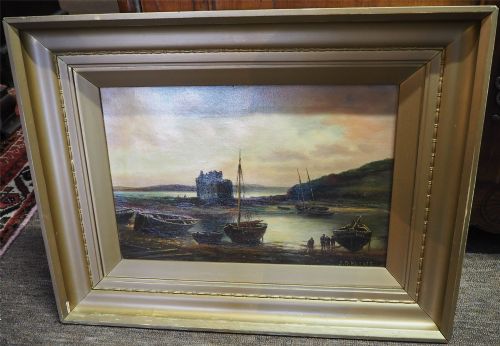
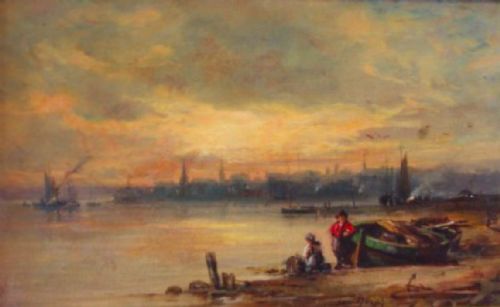
A Scottish seascape oil painting captures coastal scenes, harbours, and maritime activity executed in oil on canvas or board. These works emerge from the Victorian era through the mid-twentieth century, recording the shifting weather and waters of northern shores.
Buyers encounter Victorian marine art alongside works from the Edwardian period and mid-century movements such as Scottish Impressionism. Common subjects include local fisher folk, moored vessels, and quiet inlets ranging from the Solway to Fife.
The selection ranges from traditional nineteenth-century maritime canvases to looser Post-Impressionist interpretations of light and water. Each piece documents a specific coastal viewpoint or harbour life from a bygone era.
Materials and technique
Artists painted primarily with oil paint upon stretched canvas or board, utilising the rich medium to build texture in water and sky. Brushwork varies from tight, detailed nineteenth-century maritime recording to the broader, more gestural strokes of later impressionist hands.
Frames play a significant role in presentation, frequently constructed from wood and finished with gold leaf or gilt wood. These surrounds often reflect the period of the painting, providing structural depth and visual weight to the canvas.
Listings feature works spanning the nineteenth century through the 1960s, executed in oil on canvas and wood.
Quality and execution
Quality rests upon the artist's command of light, atmosphere, and proportion in difficult coastal conditions. Stronger works convey the palpable dampness of air and movement of tide with economy and precision.
The handling of the medium distinguishes standard decorative production from the output of accomplished painters. Superior canvases demonstrate confident brushwork in the rendering of water and sky rather than stiff, formulaic application.
James Kay RSW·Joseph Farquharson RA·Donald McIntyre·John Douglas Perrett·Alfred Henry Vickers·James Torrington Bell·Owen Bowen·Robert Macaulay Stevenson·Richard Ball Spencer·James G Faulds·Samuel Bough RSA·David Fulton RSW
The Scottish Seascape Oil Painting Glossary
- Oil on canvas
- Pigment suspended in a drying oil, applied to a woven fabric support stretched across a wooden frame. This combination allows for rich colour blending and textured surface applications that endure for centuries.
- Gilt wood
- Timber carved or moulded and coated with a thin layer of gold leaf or metallic paint. It provides a reflective, ornate border designed to complement and elevate the framed artwork.
- Scottish Impressionism
- A regional painting movement characterised by rapid brushwork and a focus on natural light outdoors. Practitioners sought to capture the fleeting atmospheric conditions of northern landscapes and seas
- Marinescape
- A painting depicting the sea, ships, or coastal views. These works focus heavily on maritime subjects, weather conditions, and marine navigation.
Scottish Seascape Oil Painting: Frequently Asked Questions
How do I date a Scottish seascape oil painting?
Examine the canvas stretcher, framing materials, and the style of the signature or inscription on the reverse. Victorian works often utilise heavier gilt wood frames and traditional lining methods.
Changes in clothing styles on figures and the type of vessels depicted also offer reliable clues to the decade of execution.
What is Scottish Impressionism?
Scottish Impressionism refers to the regional adoption of plein air painting techniques during the late nineteenth and early twentieth centuries. Artists focused on capturing transient effects of light and weather.
These canvases typically feature looser brushstrokes and a lighter palette than earlier Victorian academic marine paintings.
Are these paintings usually signed?
Many works bear the artist's signature, often placed discreetly in a lower corner or inscribed on the stretcher frame behind the canvas. Some historical pieces remain unsigned or carry indistinct signatures from the period.
Examine the brushwork and subject matter alongside known regional painting styles when a signature is absent.
How should I care for an oil painting?
Keep the canvas away from direct sunlight, damp environments, and rapid temperature fluctuations to prevent cracking in the paint layer. Dust the surface very gently with a soft, dry brush without applying pressure.
Avoid using any liquids or household cleaning products on either the canvas or the gilt frame.