



Scottish Seascape Art
Scottish seascape art captures coastal light, harbours and moody northern waters across the nineteenth and twentieth centuries.
Scottish Seascape Art
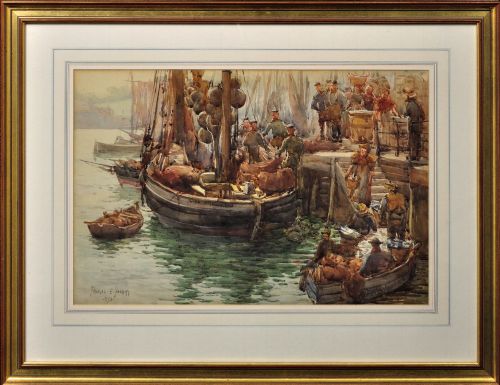
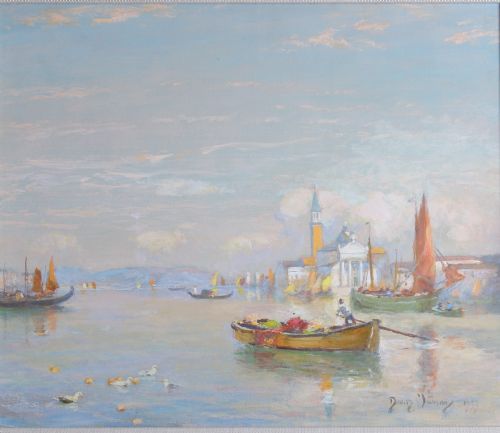
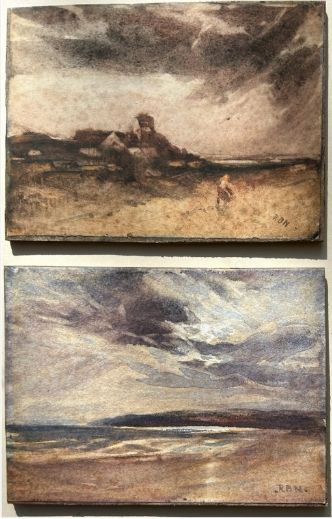
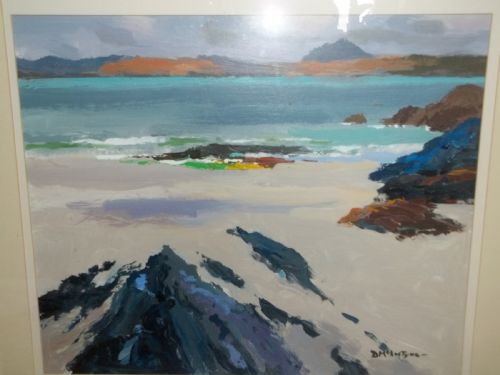
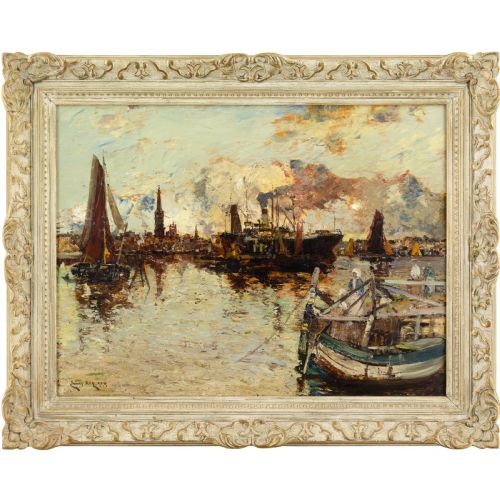
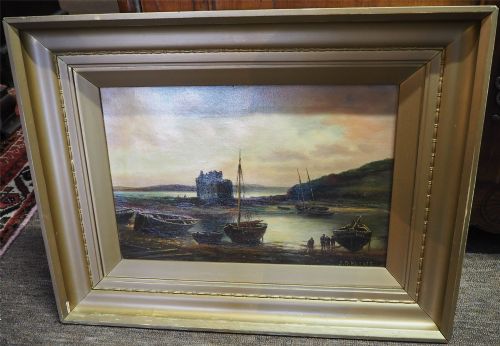
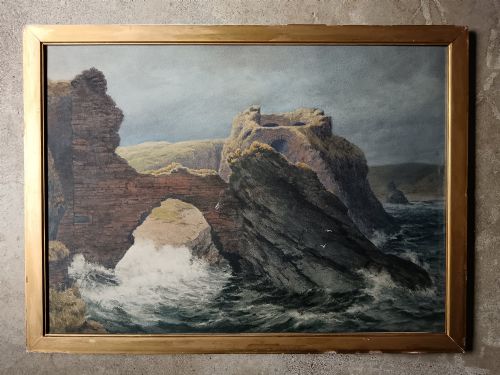
Scottish seascape art encompasses paintings and watercolours that record the maritime life, rugged shorelines and coastal waters of Scotland. Buyers seeking these works will find pieces originating from the Victorian era through to the mid-twentieth century, capturing familiar locations from Fife to the Hebrides. The selection leans heavily towards traditional oil paintings on canvas and detailed watercolours on paper, often housed within period gilt wood frames.
The works available reflect various evolving movements, moving from nineteenth-century marine art into British impressionism and mid-century modern interpretations. Depictions range from bustling harbour scenes and fishing folk to calm shorelines and dramatic coastal sunsets. Most examples connect directly to notable Scottish artists and painters active across the nineteenth and twentieth centuries.
Materials and technique
Artists relied primarily on oil paint applied to canvas or watercolour pigments laid upon paper. Canvas supports provided the durability needed for larger compositions, while paper accommodated the fluid handling required for delicate watercolour studies of coastal light and weather.
Framing forms an integral part of these works, with many pieces retained in original or period-appropriate gilt wood frames. These frames enhance the visual depth of the paintings and protect the edges of the canvas or paper from environmental wear.
Scottish Seascape Art Retail Price Guide 2026
Typical asking prices for scottish seascape art among the pieces listed under this phrase on Sellingantiques today, from the lower quarter to the upper quarter. They describe what is for sale here now, not the wider market.
The selection includes both large landscape watercolours and detailed marine oil paintings depicting various Scottish coastal locations.
Quality factors
Quality rests significantly upon the artist's handling of light, atmosphere and coastal topography. Works that capture the specific quality of northern light with confident brushwork stand apart from more formulaic topographical records.
The relationship between the painting and its original framing also influences the piece. Well-preserved surfaces free from excessive restoration, combined with complementary period frames, represent the higher tier of these historic works.
Robert Buchan Nisbet·Sir David Murray·Donald McIntyre·James Kay·Joseph Farquharson·John Moxon·John Douglas Perrett·Alfred Henry Vickers·James Torrington Bell·Owen Bowen·Robert Macaulay Stevenson·Richard Ball Spencer·Hirst Walker·James G Faulds·Samuel Bough
The Scottish Seascape Art Glossary
- Canvas
- A heavy woven fabric stretched across a wooden frame to serve as a sturdy support for oil paint. It provides a textured surface that holds thick layers of pigment.
- Watercolour
- A painting method where fine pigment particles are suspended in a water-soluble binder applied to paper. This medium allows for luminous, translucent washes of colour.
- Gilt wood
- Timber carved and coated with a thin layer of gold leaf or metallic gilt paint. It is commonly found on traditional frames surrounding nineteenth-century paintings.
- Impressionism
- An art movement focusing on accurate depictions of light and its shifting qualities rather than strict detail. Scottish artists adopted these looser brush techniques to render coastal weather.
- Marine art
- Any form of art that draws its primary inspiration from the sea, ships and coastal environments. This genre includes depictions of harbours, naval vessels and coastal fishing communities.
Scottish Seascape Art: Frequently Asked Questions
What periods do these paintings come from?
The available works span from the Victorian period through the late nineteenth century and into the mid-twentieth century, specifically covering dates up to the nineteen-sixties.
This timeline demonstrates how artistic interpretations of Scottish coasts evolved from traditional maritime recording towards impressionistic treatments.
How should I care for a watercolour painting?
Watercolours on paper require careful placement away from direct sunlight to prevent the pigments and paper from fading over time. Glazing with protective glass helps shield the delicate surface from moisture and atmospheric dust.
Keeping the piece in a stable environment with moderate humidity protects both the paper and its original frame.
What subjects typically appear in these scenes?
Common subjects include stormy northern seas, quiet harbour walls, fishing boats, and figures gathering oysters or netting salmon along the shore. Specific locations across Scotland, such as the Hebrides, the Mull of Kintyre and Crail Harbour, frequently feature in the titles.
These depictions offer a historical record of coastal industries and settlements as artists observed them.
Are these works painted on canvas or paper?
The pieces utilise either canvas or paper depending on the medium chosen by the artist. Oil paintings are typically executed on canvas or wooden supports, while watercolours are executed on paper.
Both supports reflect the traditional working methods of nineteenth and twentieth-century painters working in Britain.