

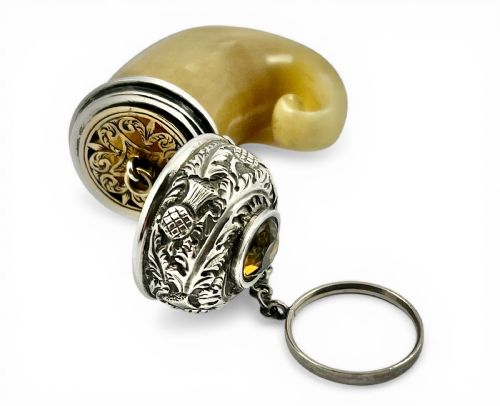


Scottish Horn Mull
A Scottish horn mull is a practical piece of traditional folk art designed for carrying snuff, combining organic materials with metalwork.
Scottish Horn Mull
A Scottish horn mull is an item created for holding snuff, appearing in forms such as snuff boxes, snuff mulls, and vinaigrettes. These pieces date across the Georgian and Victorian eras, including specific years like 1850, 1860, 1880, and 1886.
The objects stem from 19th Century Scottish traditions, spanning Scottish folk art and vernacular styles. Buyers frequently encounter traditional horn containers shaped as mulls or boxes.
Materials and construction lean heavily into natural horn and staghorn, paired with precious and base metals. The form remains tied to historical Scottish social customs surrounding tobacco use.
How they were made
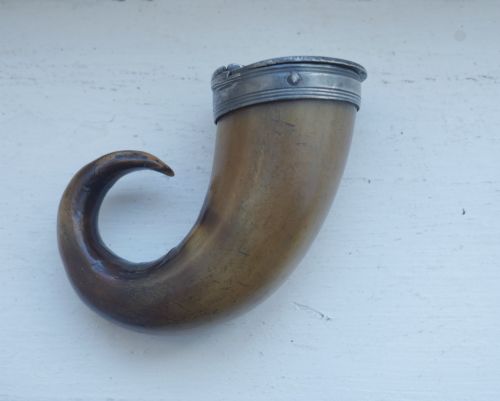
Makers shaped natural horn and staghorn through heat and pressure to form the body of the container. These organic structures were then fitted with mounts and hinges in sterling silver, white metal, pewter, or gilt metal.
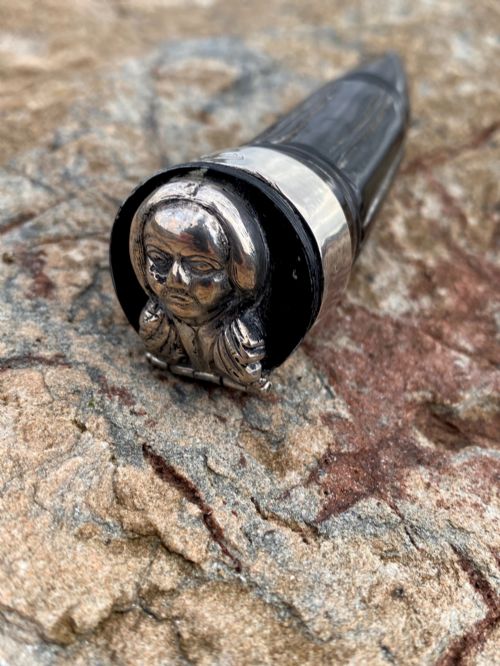
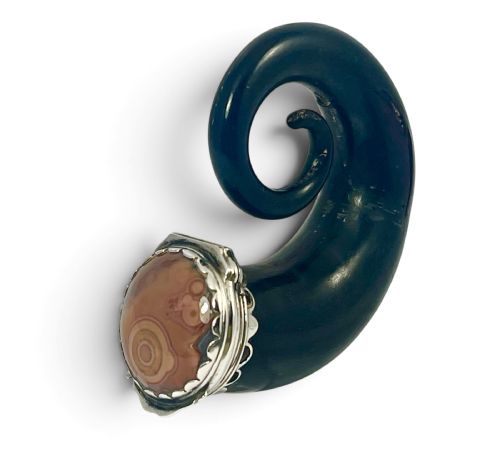
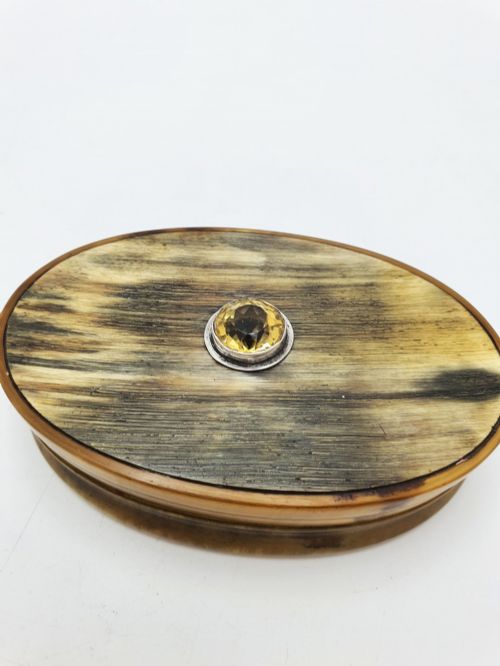
Surface ornamentation integrates faceted gemstones such as citrine and agate set directly into the metal mounts. Carving and sculptural elements, including allegorical silver heads, appear on selected examples alongside metalwork.
Scottish Horn Mull Retail Price Guide 2026
Typical asking prices for scottish horn mull among the pieces listed under this phrase on Sellingantiques today, from the lower quarter to the upper quarter. They describe what is for sale here now, not the wider market.
Listings feature items exclusively from the Georgian and Victorian periods, spanning the 19th century.
What varies in quality
Quality depends on the complexity of the metalwork and the integration of the mounts with the natural horn body. Refined examples display detailed carving and careful fitting of sterling silver components.
The inclusion of specific decorative elements like faceted citrine or agate stones elevates the execution. Simpler pieces rely on plain horn and base metals such as pewter or white metal without auxiliary ornamentation.
The Scottish Horn Mull Glossary
- Mull
- A traditional Scottish vessel used for holding and dispensing pinches of snuff. These containers are commonly fashioned from animal horn.
- Vinaigrette
- A small ornamental box featuring an internal perforated grille, used to hold a sponge soaked in aromatic vinegar. They frequently incorporate silver mounts.
- Citrine
- A yellow variety of quartz often faceted and set into the metal mounts of Scottish accessories. It appears frequently in Victorian jewellery and boxes.
- Staghorn
- The antler of a stag utilised in the production of rustic boxes and mulls. This material retains its natural texture and contours.
- White metal
- An alloy of various non-precious metals used for mounts and hinges where sterling silver was not utilised.
Scottish Horn Mull: Frequently Asked Questions
What is a Scottish horn mull?
A Scottish horn mull is a traditional container fashioned from animal horn and used to hold snuff during the 19th century and earlier periods.
These pieces reflect Scottish folk art traditions and often feature metal mounts or stone decorations.
How were snuff mulls used?
Users carried these vessels in pockets or waistbands to store powdered tobacco, known as snuff, for personal consumption.
The hinged lids allowed easy access to the contents while keeping the snuff dry.
What materials are used in these pieces?
The primary material is natural horn or staghorn, shaped into boxes and mulls by historical makers.
Mounts and decorative elements incorporate sterling silver, pewter, white metal, citrine, and agate.
How do I identify Victorian pieces?
Victorian examples date from the mid to late 19th century, often showing specific stylistic traits associated with Scottish vernacular design.
Documentation or hallmarks on the silver mounts can help narrow down the production period.